Speaking test #505
Part 1 · Interview
4 to 5 minutes. The examiner asks about you and familiar topics.
Can you tell me your full name?
Where are you from?
Do you work or are you a student?
How well do you know the people who live next door to you?
I would say that I know them quite well. We frequently have casual conversations when we run into each other outside, and we've even had a few dinner parties together. They are a nice couple and we get along well.
How often do you see them?
I see them at least a few times a week. Sometimes we'll have a quick chat when we're leaving for work or coming home, or we'll run into each other in the shared garden.
What kinds of problem do people sometimes have with their neighbours?
Some common issues that people have with their neighbours include noise complaints, disputes over property lines or shared spaces, and differences in lifestyle or values. These issues can range from minor annoyances to major conflicts that can cause a lot of stress.
How do you think neighbours can help each other?
I think that neighbours can help each other in a variety of ways. One of the most important things is to be considerate and respectful of each other's needs and boundaries. Neighbours can also help each other by being open to communication and working together to resolve any issues that may arise. Additionally, neighbours can help each other by being there for each other in times of need, such as offering assistance during emergencies or lending a helping hand with tasks like gardening or moving.
Do you like trying new activities? Why?
I absolutely love trying new activities. I think it is a great way to challenge myself and step out of my comfort zone. It also allows me to discover new interests and passions, and learn new skills. Plus, it makes life more exciting and interesting.
Is there any activities you want to try? Why?
I have always been fascinated by rock climbing, and I would love to try it one day. I think it would be an incredible physical and mental challenge, and it would give me a sense of accomplishment to conquer a difficult climb. Plus, the views from the top would be breathtaking.
What kinds of activities did you try in the past?
I have tried a variety of activities in the past, such as hiking, scuba diving, and painting. I have also taken up martial arts and yoga for fitness and self-defense. I have even tried bungee jumping, which was a thrilling and exhilarating experience.
Would you like to try new activities alone or in a group?
I am open to both options. Sometimes it can be nice to try something alone and focus on my own personal goals, but other times it can be more fun and motivating to try something new with friends or a group. It depends on the activity and my mood at the time.
You will have to talk about the topic for one to two minutes. You have one minute to think about what you are going to say. You can make some notes to help you if you wish.
Describe a skill that you can teach other people
You should say:
- What skill it is
- How you learned this skill
- Why you think it is important to teach this skill
- How you would go about teaching this skill to others
What skill it is
I would like to talk about a skill that I am passionate about teaching, which is traditional Indian cooking. Growing up in India, I learned this skill from my grandmother who was a fantastic cook and passed down her recipes to me. Through years of practice and experimentation, I have honed my skills in preparing authentic Indian dishes with rich flavors and aromatic spices.
How you learned this skill
I believe that teaching traditional Indian cooking is important because it preserves our cultural heritage and brings people together through the joy of food. Cooking is not just about preparing a meal; it is a way to connect with our roots, share stories, and create memories with loved ones. By teaching this skill, I aim to empower others to explore new flavors, appreciate diverse cuisines, and foster a sense of community through shared meals.
Why you think it is important to teach this skill
To teach traditional Indian cooking to others, I would start by introducing them to basic ingredients, spices, and cooking techniques used in Indian cuisine. I would then demonstrate step-by-step instructions for preparing popular dishes such as curry, biryani, and naan bread. Hands-on practice is crucial, so I would encourage students to actively participate in the cooking process, ask questions, and experiment with flavors to develop their own unique style.
How you would go about teaching this skill to others
In conclusion, teaching traditional Indian cooking is not just about sharing recipes; it is a way to celebrate culture, promote diversity, and create meaningful connections. Through my guidance and support, I hope to inspire others to appreciate the art of cooking, explore different culinary traditions, and savor the delights of Indian cuisine.
- Words
- 259
- Sentences
- 11
- Words per sentence
- 23.5
- Speaking time
- about 2.0 min
Counted at 130 words a minute. The exam gives you one to two minutes.
Part 3 · Discussion
4 to 5 minutes. The examiner asks broader questions linked to the cue card topic.
How can teaching a skill to someone else be different from learning it yourself?
Teaching a skill to others can be quite different from learning it oneself, primarily because it involves a deeper understanding of the subject matter. When you teach, you have to break down complex ideas into digestible parts, which often requires you to articulate your knowledge clearly and effectively. This process can lead to a greater mastery of the skill, as you may discover nuances that you hadn’t considered before. Moreover, teaching involves adapting your methods to suit different learning styles, which can be a rewarding challenge. In contrast, learning a skill is often a more personal journey where you can progress at your own pace without the pressure of ensuring someone else understands. Ultimately, both experiences are invaluable, but they engage different cognitive and emotional faculties.
How do some people feel about sharing what they know with others?
Many individuals have varying feelings about sharing their skills with others. On one hand, some people experience a profound sense of fulfillment when they pass on their knowledge, as it can foster a sense of community and create lasting relationships. For instance, teachers often find great joy in seeing their students grow and succeed. On the other hand, there are those who might feel a sense of insecurity or fear of being overshadowed by others’ talents. They might worry that sharing their expertise could lead to competition rather than collaboration, which can be a significant barrier to openness. Overall, the act of sharing skills can be incredibly rewarding, but it often hinges on individual perspectives and experiences.
How do skills help with personal and work growth?
Skills are absolutely pivotal in both personal and professional development. In a personal context, acquiring new skills can enhance our confidence and enrich our lives, allowing us to explore new hobbies or interests. On the professional front, having a diverse skill set can significantly improve one’s employability and open doors to career advancement. For instance, mastering digital tools or communication techniques can lead to better job performance and greater recognition in the workplace. Ultimately, the continuous development of skills not only boosts our competence but also keeps us adaptable in an ever-changing world.
Why do people usually enjoy teaching skills they are good at?
People often find it incredibly rewarding to teach skills they are proficient in because it allows them to share their passion and knowledge with others. When someone is deeply skilled in a particular area, imparting that expertise can create a real sense of fulfillment, especially when they see their students make progress. Additionally, teaching can foster a strong sense of community, as it brings people together around a shared interest. Moreover, it often reinforces the teacher's own understanding and mastery of the subject, creating a virtuous cycle of learning and growth. Ultimately, the joy of seeing someone else succeed can be one of the most gratifying experiences in life.
What skills might be needed more in the future?
In the future, I believe we will see a significant shift towards digital literacy as a fundamental skill, driven by the rapid advancement of technology. As artificial intelligence and automation become more integrated into various industries, skills related to data analysis and cybersecurity will be in high demand. Additionally, the importance of emotional intelligence cannot be overstated; as machines take over more technical tasks, the ability to connect with others and manage relationships will be crucial in the workplace. Moreover, with the rise of remote work, skills in virtual collaboration and project management will also become increasingly valuable. Overall, the future job market will likely favor those who can adapt and continuously learn, making lifelong learning an essential skill in its own right.
What ways can we motivate more people to share their skills with others?
To encourage more people to share their skills, one effective approach could be creating a vibrant community platform where individuals can connect based on their interests and expertise. This could be facilitated through local workshops or online forums, fostering a sense of collaborative spirit that motivates individuals to contribute. Additionally, offering incentives, such as recognition or rewards for those who actively participate, can further stimulate engagement. Finally, showcasing success stories of people who have benefited from sharing their skills might inspire others to do the same, creating a ripple effect of knowledge exchange. Overall, cultivating an environment that values and celebrates skill-sharing can lead to a more interconnected and skilled community.
Go further with the books
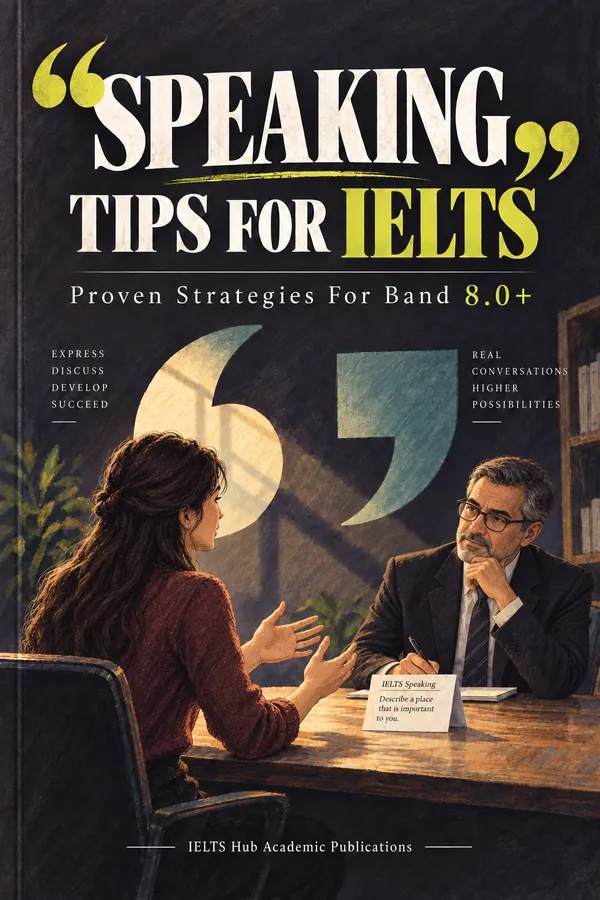
Speaking
Speaking Tips for IELTS
Proven Strategies for Band 8.0+
₹299$9.99CAD 13.99AUD 14.99£7.99NZD 16.99€8.99AED 39SGD 12.99
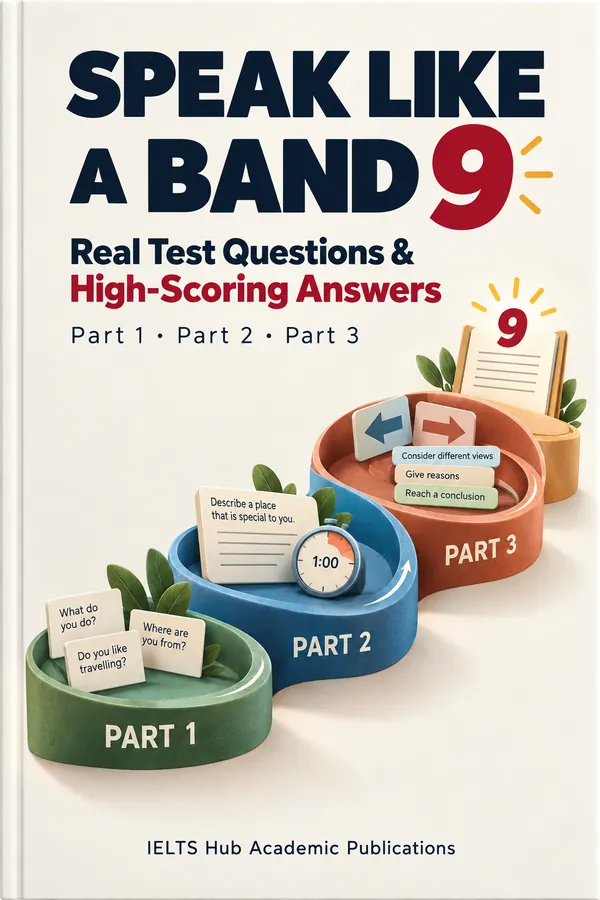
Speaking
Speak Like a Band 9
Real Test Questions & High-Scoring Answers
₹299$9.99CAD 13.99AUD 14.99£7.99NZD 16.99€8.99AED 39SGD 12.99
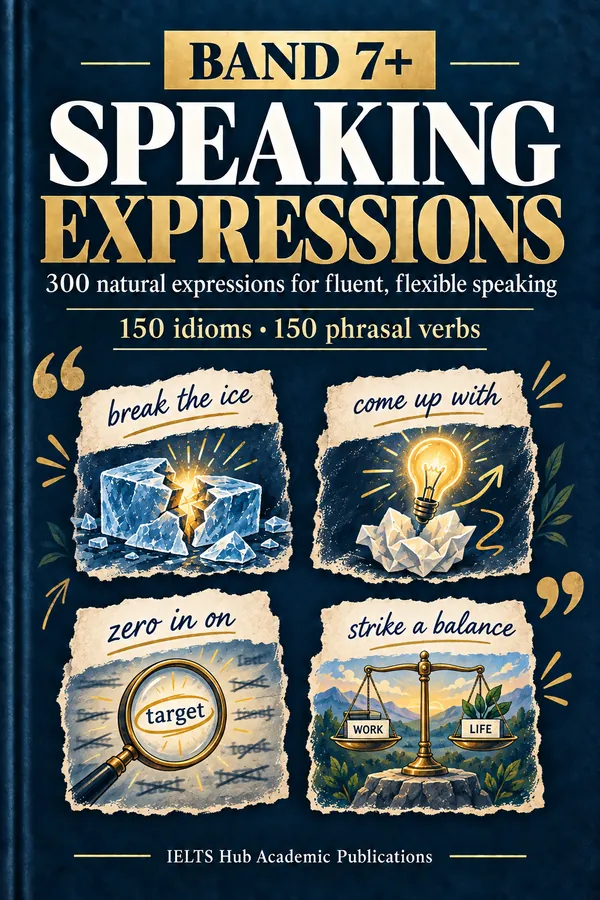
Speaking
Band 7+ Speaking Expressions
300 natural expressions for fluent, flexible speaking
₹199$6.99CAD 8.99AUD 9.99£4.99NZD 10.99€5.99AED 24SGD 8.99