Speaking test #518
Part 1 · Interview
4 to 5 minutes. The examiner asks about you and familiar topics.
Can you tell me your full name?
Where are you from?
Do you work or are you a student?
Do you like to read?
I absolutely adore reading! There's nothing quite like getting lost in a good book, whether it's a gripping thriller or a heart-wrenching romance. I find it to be a wonderful escape from the hustle and bustle of everyday life, and a great way to learn new things and expand my horizons.
Do you ever visit the library?
Yes, I visit the library quite frequently. I find it to be a great resource for finding new books to read, and I also love the peaceful and quiet atmosphere. Plus, it's a great way to support my local community and promote literacy.
Do you prefer reading books or watching films?
This is a tough question, as I love both reading books and watching films. However, if I had to choose, I would say that I prefer reading books. There's something about getting lost in the written word that I find incredibly captivating. Plus, books often offer a deeper and more complex exploration of characters and themes than films do.
Do you think it is essential that children read regularly?
Absolutely! Reading is such a crucial skill for children to develop, as it helps with everything from language development to problem-solving skills. Plus, reading is a great way for children to learn about the world around them, and to develop empathy and understanding for others. Regular reading can also be a great way to promote a lifelong love of learning and curiosity.
Do you recycle? Why?
Yes, I recycle. I believe it is our responsibility as citizens to do our part in protecting the environment. Recycling reduces the amount of waste that ends up in landfills and reduces the need for new resources to be extracted, which in turn helps to preserve our natural resources. Additionally, recycling can also help to conserve energy and reduce greenhouse gas emissions.
Did you recycle when you were a kid?
Yes, I did recycle when I was a kid. My parents always taught me the importance of being environmentally conscious and I grew up with the habit of recycling. We had separate bins for different types of materials and I remember being in charge of sorting the recyclables and taking them to the designated recycling center.
Will you recycle in the future?
Absolutely. Recycling is something that I believe in and will continue to practice in the future. It is a simple yet effective way to reduce our impact on the environment and I will always make an effort to recycle as much as possible.
What kind of things do you recycle?
I recycle a variety of materials, such as paper, cardboard, glass, plastic, and metal. I also try to compost organic materials like food scraps and yard waste. Additionally, I also recycle electronic waste such as old phones and computers, which can be harmful to the environment if not disposed of properly. Overall, I make an effort to recycle as many materials as possible in order to reduce waste and protect the environment.
You will have to talk about the topic for one to two minutes. You have one minute to think about what you are going to say. You can make some notes to help you if you wish.
Describe a time when you were afraid of something
You should say:
- What situation made you afraid
- How you dealt with your fear
- What was the outcome
- How it impacted you afterwards
What situation made you afraid
Fear is a universal emotion that can manifest in various situations, and one such instance that stands out in my memory is when I encountered a snake during a trek in the Western Ghats of India. The sight of the snake slithering across the path sent a shiver down my spine, triggering an intense feeling of fear within me. Being surrounded by dense foliage and miles away from any immediate help only added to the sense of vulnerability.
How you dealt with your fear
In dealing with my fear, I tried to stay calm and composed, reminding myself of the importance of not panicking in such situations. I slowly retreated a safe distance away from the snake, being cautious not to startle it. I focused on my breathing and tried to rationalize the situation, telling myself that the snake was likely more afraid of me than I was of it. Deep breathing and maintaining a steady pace helped me keep my composure.
What was the outcome
Fortunately, the snake eventually slithered away into the bushes, leaving me unharmed but significantly shaken. The outcome of this encounter was a mix of relief and lingering unease. Despite the immediate danger having passed, the adrenaline rush and the realization of how close I had come to a potentially dangerous situation stayed with me for days to come.
How it impacted you afterwards
This experience had a lasting impact on me, as it taught me the importance of staying calm under pressure and thinking rationally in moments of fear. It also heightened my awareness of the potential risks that come with exploring nature and the necessity of being prepared for unexpected encounters. Overall, facing and overcoming this fear has made me more resilient and better equipped to handle similar situations in the future.
- Words
- 284
- Sentences
- 13
- Words per sentence
- 21.8
- Speaking time
- about 2.2 min
Counted at 130 words a minute. The exam gives you one to two minutes.
Part 3 · Discussion
4 to 5 minutes. The examiner asks broader questions linked to the cue card topic.
How do fears from childhood compare to fears we have as adults?
That's a fascinating question! In childhood, fears are often rooted in the imagination and are typically associated with fantastical elements, like monsters under the bed or the dark. These fears are often fleeting and can be alleviated by comforting figures, like parents. In contrast, fears experienced in adulthood tend to be more complex and can stem from real-life challenges such as job insecurity, relationships, or health concerns. Adults face fears that are often linked to responsibilities and societal expectations, which can feel more overwhelming. Ultimately, while childhood fears may seem trivial to adults, they play a crucial role in shaping emotional resilience, whereas adult fears can lead to a deeper understanding of life's pressures.
How much can we say that fear is a normal reaction to danger?
Fear is undoubtedly a natural response to danger, as it has evolved over millennia to protect us from threats. When we encounter a perilous situation, our body triggers a fight-or-flight response, which prepares us to either confront the danger or escape from it. This instinctive reaction is essential for survival, allowing us to react swiftly in emergencies. However, not all fear is rooted in immediate danger; sometimes, it can be a learned response based on past experiences. So while fear can serve as an important protective mechanism, it’s crucial to recognize when it becomes irrational and holds us back from living fully.
How does fear encourage people to be careful in their everyday lives?
Fear can be a powerful motivating factor in our lives, often pushing individuals to take necessary precautions. For instance, when people are aware of potential dangers, such as health risks or safety threats, their instinctual reaction is to protect themselves and their loved ones. This can lead to behaviors like wearing seatbelts, getting vaccinations, or even staying informed about current events. However, while fear can drive proactive measures, it can also lead to irrational decisions if not managed properly. Ultimately, a balanced approach that acknowledges fear while fostering informed choices can empower individuals to navigate risks more effectively.
Why do some people feel fear more strongly than others in the same situations?
That's a fascinating question! Fear is such a complex emotion and can vary dramatically from person to person, even in identical situations. One reason some individuals might experience fear more intensely is due to their personal history or previous experiences. For instance, someone who has had a traumatic event associated with a specific scenario may react more strongly than someone who hasn't. Additionally, biological factors play a significant role; some people might have a heightened sensitivity in their nervous system, making them more likely to react with greater intensity. Lastly, cultural influences and societal expectations can shape how we perceive fear, leading some to embrace or suppress it differently. Overall, it’s a combination of these factors that creates such a rich tapestry of human emotion!
How might society's view of fear change in the coming decades?
That's a fascinating question! I believe that as we move into the future, society's perception of fear will undergo significant transformations, largely influenced by advancements in technology and mental health awareness. With the rise of digital communication and social media, people may become more connected, leading to a greater understanding of each other's fears and anxieties. This could foster a more empathetic society, where fear is seen not just as a weakness but as a shared human experience. Moreover, as mental health issues gain more visibility and acceptance, fear may be reframed as something that can be managed and understood rather than suppressed or stigmatized. We might also see a shift towards embracing fear as a catalyst for personal growth, encouraging individuals to confront their fears head-on. Overall, I think this shift could create a more resilient society, where fear is viewed as a natural part of life that can lead to meaningful change.
What steps can be taken to help people handle their fears better?
To effectively manage fears, a multifaceted approach can be incredibly beneficial. Firstly, cognitive-behavioral therapy (CBT) has proven to be an effective way for people to confront and reframe their fears. This method allows individuals to challenge their negative thought patterns and gradually desensitize themselves to their fears. Additionally, engaging in mindfulness practices like meditation can help people develop a greater sense of self-awareness and emotional regulation. Finally, creating a supportive environment—whether through friends, family, or support groups—can provide the encouragement and accountability needed to face fears head-on. Wouldn't it be amazing if more people recognized these tools and used them to transform their lives?
Go further with the books
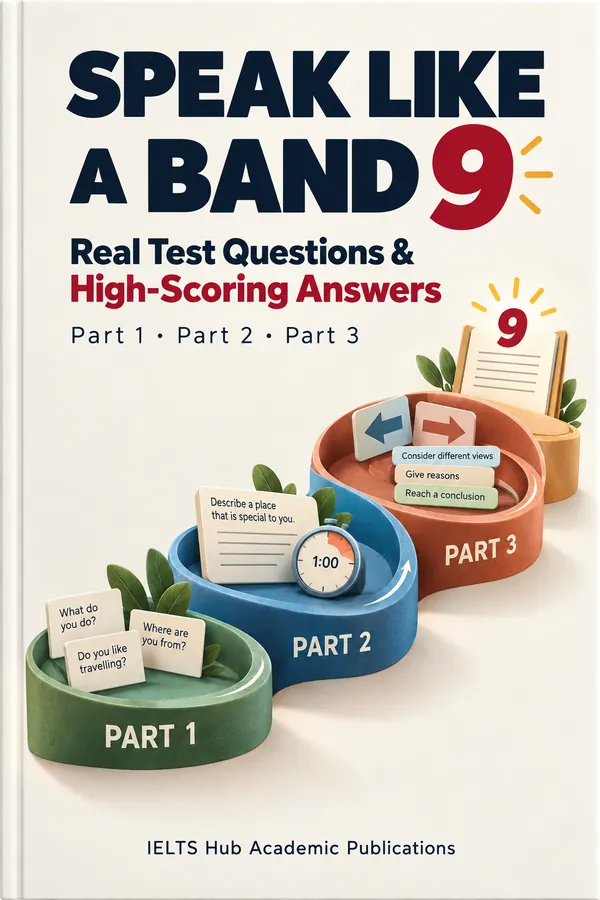
Speaking
Speak Like a Band 9
Real Test Questions & High-Scoring Answers
₹299$9.99CAD 13.99AUD 14.99£7.99NZD 16.99€8.99AED 39SGD 12.99
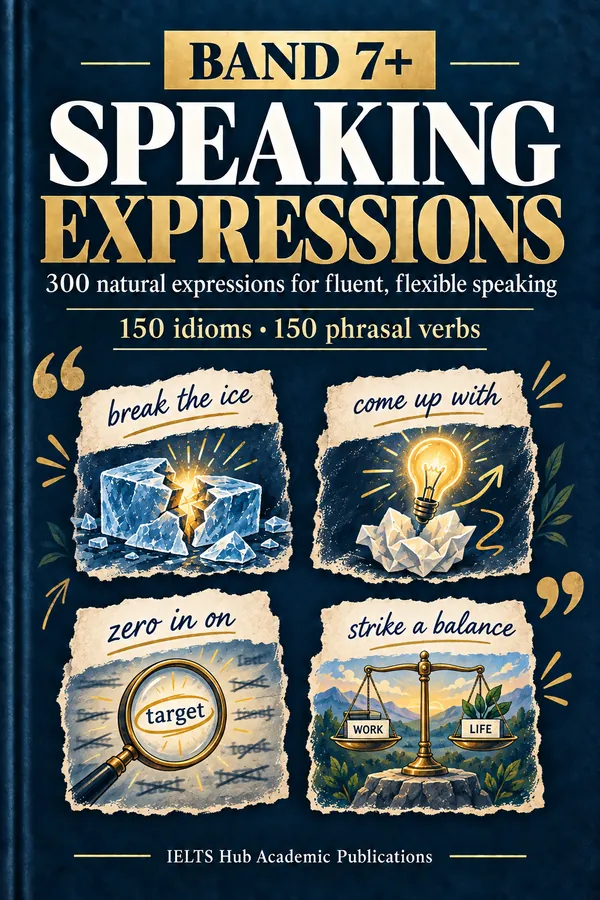
Speaking
Band 7+ Speaking Expressions
300 natural expressions for fluent, flexible speaking
₹199$6.99CAD 8.99AUD 9.99£4.99NZD 10.99€5.99AED 24SGD 8.99
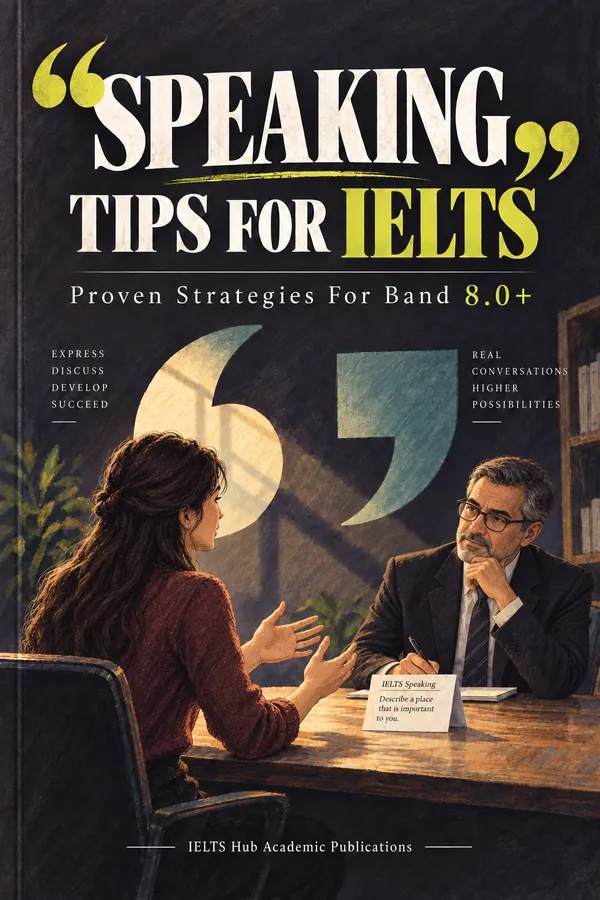
Speaking
Speaking Tips for IELTS
Proven Strategies for Band 8.0+
₹299$9.99CAD 13.99AUD 14.99£7.99NZD 16.99€8.99AED 39SGD 12.99