Speaking test #534
Part 1 · Interview
4 to 5 minutes. The examiner asks about you and familiar topics.
Can you tell me your full name?
Where are you from?
Do you work or are you a student?
Do you like to buy/taste street food?
I am a huge fan of street food. I love the unique flavors and the diversity of options available on the streets. The experience of trying new and authentic street food is always exciting for me.
What kind of street food do you like?
I am particularly fond of street food from Southeast Asian countries such as Thailand, Vietnam, and Malaysia. I find the combination of spices and herbs used in their street food to be incredibly flavorful and delicious. I also enjoy street food from Mexico and India, as they have a wide variety of options that are rich in flavor and culture.
Do you like to buy street food when you travel to a new place?
Definitely, one of the first things I like to do when I travel to a new place is to try out the street food. I find it to be a great way to immerse myself in the local culture and to discover new flavors and ingredients. Street food is also a great way to experience a more authentic and local perspective of a new place.
What kind of street food would you like to try out in the future?
In the future, I would love to try street food from Africa. I have heard that African street food is incredibly diverse, with a wide range of options that are influenced by the different cultures and cuisines on the continent. I am particularly interested in trying street food from countries such as Ethiopia and Senegal, as I have heard that their street food is incredibly flavorful and unique.
What do people usually buy on the street market?
Typically, people will purchase a wide range of goods on street markets, such as fresh produce, clothing, accessories, and trinkets. Additionally, street markets are often popular for their unique, handcrafted items that are not typically found in large retail stores.
Do you prefer to go shopping in the shopping mall or on the street market?
Personally, I have a preference for street markets as they offer a more authentic and immersive shopping experience. The hustle and bustle of the market, the vibrant colors, and the sound of vendors calling out their wares all contribute to a sense of excitement and energy that can't be found in a sterile shopping mall.
When was the last time you went to a street market?
I recently visited a street market in my hometown just last week. It was a bustling, vibrant market that offered an array of goods, including fresh produce, clothing, and unique trinkets.
Are there many street markets in your country (India)?
Yes, street markets are quite prevalent in India and can be found in nearly every city and town. They offer a wide range of goods, from fresh produce and handcrafted items to clothing and accessories. They are also a great place to experience local culture and traditions.
You will have to talk about the topic for one to two minutes. You have one minute to think about what you are going to say. You can make some notes to help you if you wish.
Someone or something that makes a lot of noise
You should say:
- What or who makes the noise
- When does the noise usually occur
- How the noise affects you
- What you do to cope with the noise
What or who makes the noise
In the bustling city of Mumbai, where I currently reside, the local trains are a prime source of incessant noise. These trains, with their screeching wheels and blaring horns, create a cacophony that resonates throughout the day. The rhythmic chugging of the engines and the loud announcements further contribute to the overall clamor.
When does the noise usually occur
The noise from the trains is most prominent during rush hours, particularly in the mornings and evenings when commuters pack into the carriages like sardines. The platforms transform into chaotic hubs of activity, with the cacophony of departing and arriving trains blending into a symphony of urban hustle and bustle.
How the noise affects you
The constant noise from the trains can be overwhelming at times, making it challenging to concentrate or relax. It often leads to a sense of fatigue and irritability, affecting my mood and productivity. As someone who values peace and tranquility, the disruptive nature of the noise pollution can be quite distressing.
What you do to cope with the noise
To cope with the relentless noise from the trains, I have incorporated various strategies into my daily routine. I often listen to soothing music or podcasts through noise-canceling headphones during my commute, which helps create a bubble of calm amidst the chaos. Additionally, practicing mindfulness and deep breathing exercises has proven to be effective in reducing stress levels caused by the persistent noise pollution. Overall, these coping mechanisms have enabled me to navigate the urban clamor and maintain a sense of inner peace in the midst of the bustling city life.
- Words
- 245
- Sentences
- 12
- Words per sentence
- 20.4
- Speaking time
- about 1.9 min
Counted at 130 words a minute. The exam gives you one to two minutes.
Part 3 · Discussion
4 to 5 minutes. The examiner asks broader questions linked to the cue card topic.
How do noisy places affect people's well-being differently than quiet ones?
Loud environments and quieter ones have quite distinct impacts on people's well-being. In bustling, noisy settings, individuals often experience heightened levels of stress and anxiety, which can lead to long-term health issues if not managed properly. Conversely, quieter spaces tend to foster a sense of calm and relaxation, allowing people to recharge and focus better. Moreover, exposure to constant noise can disrupt sleep patterns, negatively affecting overall mood and productivity, while tranquil environments encourage restorative sleep, enhancing both mental and physical health. Ultimately, the contrast in these environments highlights the importance of soundscapes in our daily lives and their profound influence on our well-being.
How do you think noise pollution affects city life?
Noise pollution in urban areas is a significant concern that can substantially affect the quality of life for residents. First and foremost, excessive noise can lead to a variety of health problems, including stress, sleep disturbances, and even cardiovascular issues. It's fascinating to consider how constant exposure to sounds from traffic, construction, and nightlife can create an environment that feels chaotic and overwhelming. Additionally, this cacophony of sounds can hinder communication and reduce social interactions, making communities feel less cohesive. Ultimately, addressing noise pollution is crucial for fostering a more harmonious urban living experience, as it not only enhances individual well-being but also strengthens community bonds.
How important is sound in influencing how we feel and interact with others?
Sound plays an incredibly significant role in shaping human experiences and interactions. For instance, the emotional resonance of music can profoundly influence our mood and even alter our perceptions of events. Think about a wedding: the joyful melodies create an atmosphere of celebration, while a somber piece at a funeral can bring about a sense of reflection and mourning. Additionally, in everyday conversations, the tone and volume of our voices can convey nuances of meaning that words alone cannot express. This interplay of sound enriches our communication, making it more layered and impactful.
Why do you think some people are more sensitive to sounds than others?
I believe sensitivity to noise can stem from a variety of factors, including genetic predisposition and environmental influences. For some people, their nervous system might be wired to respond more intensely to auditory stimuli, which means they might find certain sounds more overwhelming. Additionally, personal experiences play a significant role; for instance, someone who has experienced trauma or stressful situations related to noise may develop a heightened sensitivity. Social factors also come into play; individuals raised in quieter environments might find city noises particularly jarring compared to those accustomed to bustling surroundings. Ultimately, it’s a fascinating interplay of biology and personal history that shapes our reactions to noise!
How could the future of city planning change when it comes to handling noise?
The future of urban design is likely to undergo a remarkable transformation when it comes to noise management. As cities continue to grow, the need for creating peaceful environments will become increasingly crucial. We may see innovative solutions like soundproof materials being integrated into buildings, which could significantly reduce noise pollution. Additionally, urban planners might prioritize green spaces and natural barriers, such as trees and parks, to act as sound buffers. Furthermore, with advancements in technology, smart city solutions may incorporate noise monitoring systems that enable real-time adjustments to manage sounds effectively. Overall, I believe these changes will lead to more harmonious living conditions in urban areas.
How can communities lessen loud noise in public areas?
Communities can implement several effective measures to tackle excessive noise in public spaces. For starters, they could establish designated quiet zones, such as parks or libraries, where noise is kept to a minimum, allowing people to relax and enjoy their surroundings without disturbance. Additionally, enforcing stricter regulations on loud activities, like construction or events, during certain hours could significantly reduce noise pollution. Community engagement is also key; hosting workshops to raise awareness about the impact of noise can encourage residents to adopt more considerate behaviors. Lastly, the installation of sound barriers or planting trees can help to absorb sound, creating a more tranquil environment for everyone to enjoy.
Go further with the books
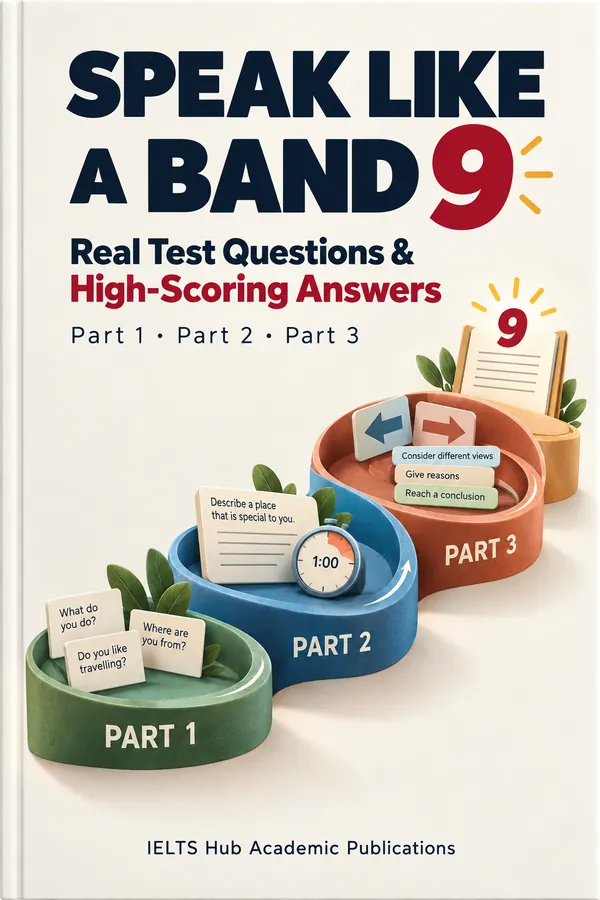
Speaking
Speak Like a Band 9
Real Test Questions & High-Scoring Answers
₹299$9.99CAD 13.99AUD 14.99£7.99NZD 16.99€8.99AED 39SGD 12.99

Speaking
Band 7+ Speaking Expressions
300 natural expressions for fluent, flexible speaking
₹199$6.99CAD 8.99AUD 9.99£4.99NZD 10.99€5.99AED 24SGD 8.99
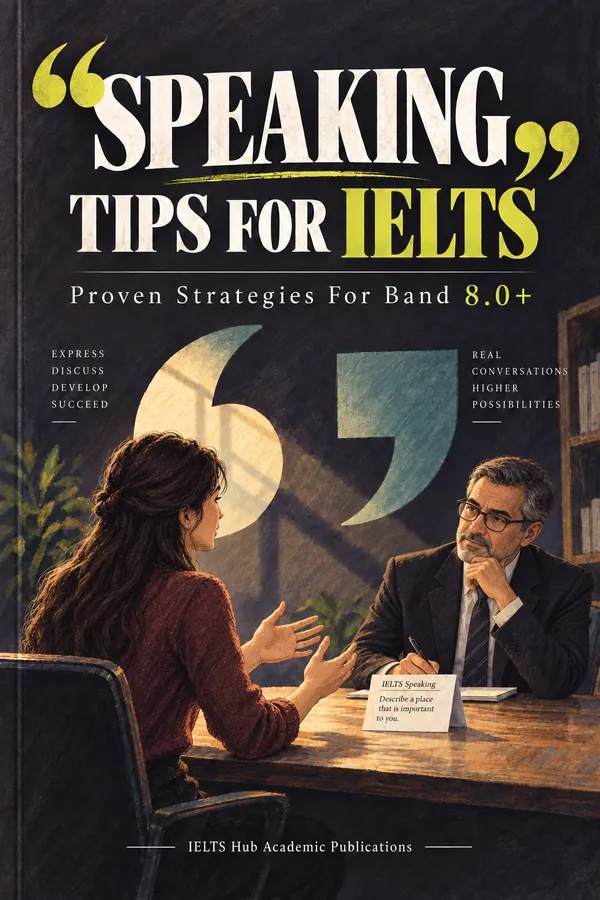
Speaking
Speaking Tips for IELTS
Proven Strategies for Band 8.0+
₹299$9.99CAD 13.99AUD 14.99£7.99NZD 16.99€8.99AED 39SGD 12.99