Speaking test #537
Part 1 · Interview
4 to 5 minutes. The examiner asks about you and familiar topics.
Can you tell me your full name?
Where are you from?
Do you work or are you a student?
Do you prefer a long break or several short breaks?
Personally, I tend to prefer several short breaks throughout the day. I find that this allows me to recharge and refocus more effectively, rather than feeling sluggish after a long break. Additionally, I find that taking several short breaks allows me to be more productive overall.
What do you usually do during a break?
During my breaks, I like to engage in a variety of activities. Sometimes, I'll take a short walk outside to get some fresh air and clear my mind. Other times, I'll read a book or listen to music as a way to relax and unwind. I also enjoy chatting with colleagues or friends during breaks, as it allows me to socialize and connect with others.
How often do you take a break?
I try to take a break every couple of hours, depending on the task or project that I am working on. I find that this helps me to maintain a good balance between productivity and rest, and allows me to remain focused and energized throughout the day.
Why do some people not take breaks?
There can be a variety of reasons why some people choose not to take breaks. Some may feel that taking breaks would disrupt their workflow or productivity, while others may feel pressure from their employer or colleagues to work continuously. Additionally, some people may simply not be aware of the benefits of taking breaks, or may not know how to effectively manage their time to include breaks in their schedule.
Do you often read books? When?
Yes, I'm an avid reader and I try to make time for reading every day, whether it's before bed or during my lunch break at work.
Are your reading habits now different than before?
Yes, they definitely have changed over the years. When I was younger, I used to only read fiction, but now I enjoy a wider range of genres, including non-fiction, biographies, and even self-help books.
Have you ever read a novel that has been adapted into a film?
Yes, many times actually. One of my favorite examples is the Harry Potter series - I read all of the books before seeing any of the movies, and it was such a different experience watching the films knowing the plot and characters so well.
Which do you prefer, reading books or watching movies?
It's tough to choose just one, because I really enjoy both activities for different reasons. Reading allows me to escape into different worlds and really immerse myself in the story, whereas watching movies is a great way to relax and unwind after a long day. Ultimately, I think it just depends on my mood and how much time I have available.
You will have to talk about the topic for one to two minutes. You have one minute to think about what you are going to say. You can make some notes to help you if you wish.
Describe a crowded place that you have visited
You should say:
- Where the crowded place was located
- When you visited this crowded place
- Why the place was crowded
- How you felt being in such a crowded place
Where the crowded place was located
I would like to talk about my experience visiting the iconic Chandni Chowk market in Old Delhi, India. Chandni Chowk is one of the oldest and busiest markets in the heart of Delhi and is famous for its vibrant atmosphere and diverse range of goods. I visited this bustling market last summer during the festive season.
When you visited this crowded place
I went to Chandni Chowk to shop for traditional Indian attire for a family wedding. The place was particularly crowded during my visit due to the combination of the wedding season and the upcoming festivals. The narrow lanes were packed with people shopping for clothes, jewelry, and accessories, creating a lively and chaotic environment.
Why the place was crowded
Being in such a crowded place was both overwhelming and exhilarating. The sights, sounds, and smells of Chandni Chowk were a sensory overload, with vendors calling out to customers, the honking of rickshaws, and the aroma of street food wafting through the air. Despite the crowd, there was a sense of energy and excitement that made the experience unforgettable.
How you felt being in such a crowded place
Overall, my visit to Chandni Chowk left me with a lasting impression of the vibrant culture and spirit of Delhi. The hustle and bustle of the market, combined with the warmth and hospitality of the people, made it a truly memorable experience. Despite the challenges of navigating through the crowds, I cherished the opportunity to immerse myself in the rich tapestry of sights and sounds that Chandni Chowk had to offer.
- Words
- 240
- Sentences
- 12
- Words per sentence
- 20.0
- Speaking time
- about 1.8 min
Counted at 130 words a minute. The exam gives you one to two minutes.
Part 3 · Discussion
4 to 5 minutes. The examiner asks broader questions linked to the cue card topic.
How might experiences in busy places be different in cities compared to the countryside?
Experiences in crowded places can vary significantly between urban and rural settings, primarily due to the density of people and the nature of the environment. In urban areas, for instance, a crowded space often means a vibrant atmosphere filled with diverse cultures and activities. You might find yourself at a bustling market or a lively festival, where the energy is palpable and there’s always something exciting happening. In contrast, rural crowded places, such as local fairs or community events, tend to foster a sense of closeness among attendees, creating a more intimate atmosphere where people know each other. This can lead to a different kind of experience—one that feels more personal and community-oriented. Ultimately, while both settings can be crowded, the context and the interactions involved shape the overall experience quite differently.
How much do you think people like being in crowded places, looking at both the good and bad sides?
I think the enjoyment of crowded places really depends on the individual and the context. For some, the buzz of a lively environment can be exhilarating; it fosters a sense of community and connection. Events like concerts or festivals often bring people together, creating a vibrant atmosphere that many find uplifting. On the flip side, crowded places can also feel overwhelming, leading to feelings of anxiety or discomfort, especially for those who prefer solitude or quieter environments. Ultimately, it’s a mix of both the positive energy and the potential for overstimulation that shapes our experiences in such settings.
How do busy places help people connect and build communities?
Crowded places are absolutely vital for fostering social interactions and building a sense of community. When people gather in busy environments, such as markets or parks, they create opportunities for spontaneous conversations and connections, which can lead to lasting friendships. These bustling spaces often act as melting pots of diverse cultures and ideas, enriching our social fabric and encouraging a sense of belonging. Moreover, such environments can spark a sense of collective identity, as individuals come together to share experiences, whether it's at a concert or a local festival. Overall, crowded places serve as vibrant hubs that not only facilitate interaction but also strengthen the ties that bind us as a community.
Why do you think some people like busy places while others enjoy being alone?
That's a fascinating question! I believe that some individuals are naturally inclined towards social environments, finding energy and excitement in the hustle and bustle of crowded locations. For them, these spaces offer a sense of community and a chance to connect with diverse people, which can be incredibly invigorating. Conversely, others may prefer solitude because it provides a sanctuary for self-reflection and a chance to recharge away from the noise. Those who cherish quiet moments often find that solitude allows for deeper concentration and creativity. Ultimately, it seems to boil down to personal temperament and what one finds most fulfilling.
How could crowded places change in the future because of more technology and online interactions?
The dynamics of crowded places are likely to undergo significant transformation as technology continues to evolve and remote interactions become more prevalent. For instance, we might see a shift towards more smart environments, where digital interfaces enable individuals to engage with their surroundings without being physically present. Imagine a scenario where augmented reality allows people to experience a crowded event from the comfort of their homes, making it feel as though they are part of the action without the hassle of navigating through a throng of people. Moreover, the rise of virtual reality could lead to a decline in the need for physical gatherings, as people may prefer to connect with others in immersive digital spaces. This could also create a more inclusive atmosphere, as individuals with mobility issues or those living in remote areas would have greater access to events and social interactions. Ultimately, while crowded places may still exist, their purpose and function could shift dramatically, leading to a new era of socializing that blends the physical and digital worlds seamlessly.
What steps can be taken to improve the experience of people in busy places?
To enhance the experience of individuals in crowded areas, several measures could be implemented. Firstly, creating designated quiet zones can provide a much-needed respite for those seeking a break from the hustle and bustle. Additionally, improving the layout of these spaces with clearly marked pathways can help alleviate congestion, allowing for a more seamless flow of foot traffic. Incorporating more greenery, like plants or trees, can also significantly elevate the atmosphere, making crowded areas feel less overwhelming. Lastly, utilizing technology, such as real-time crowd monitoring apps, can keep individuals informed about peak times, helping them plan their visits more effectively.
Go further with the books
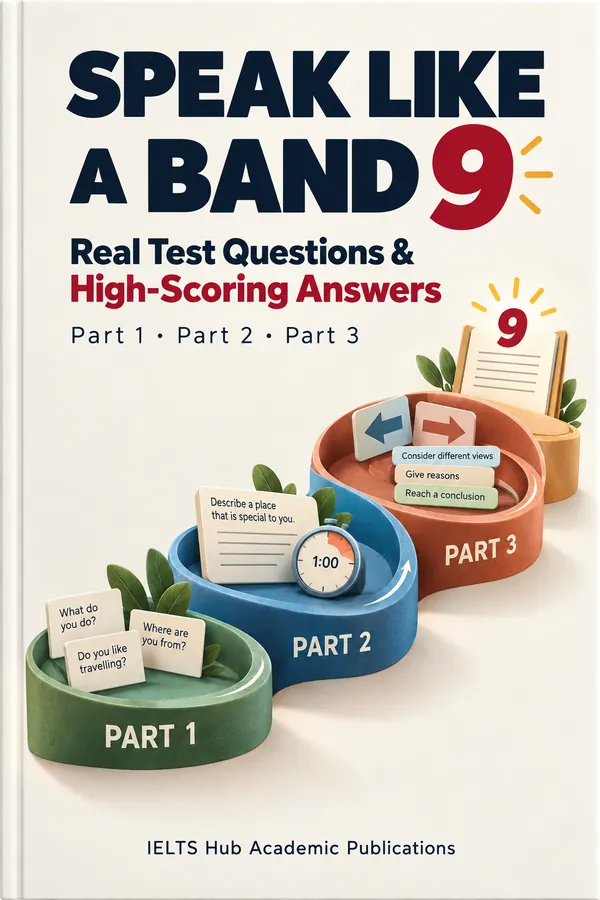
Speaking
Speak Like a Band 9
Real Test Questions & High-Scoring Answers
₹299$9.99CAD 13.99AUD 14.99£7.99NZD 16.99€8.99AED 39SGD 12.99
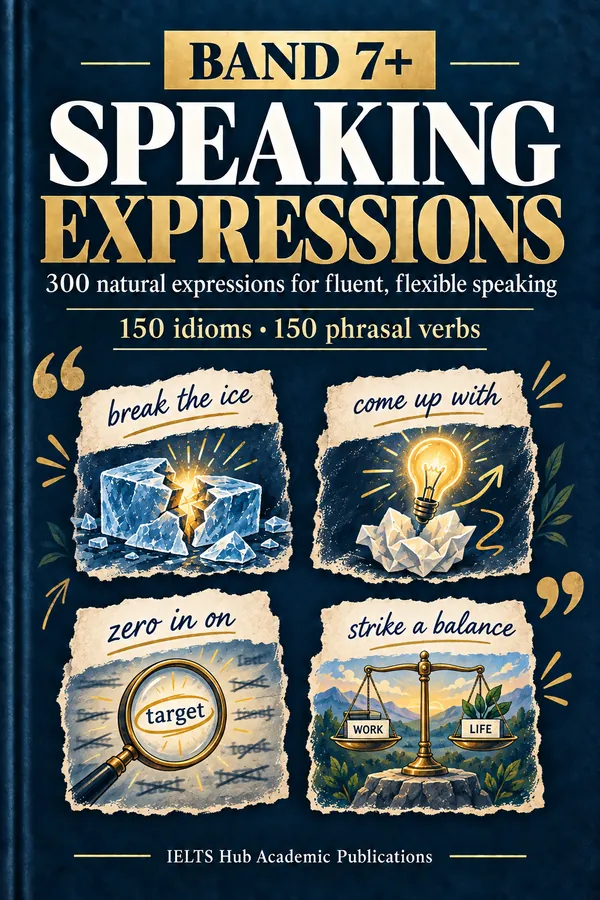
Speaking
Band 7+ Speaking Expressions
300 natural expressions for fluent, flexible speaking
₹199$6.99CAD 8.99AUD 9.99£4.99NZD 10.99€5.99AED 24SGD 8.99
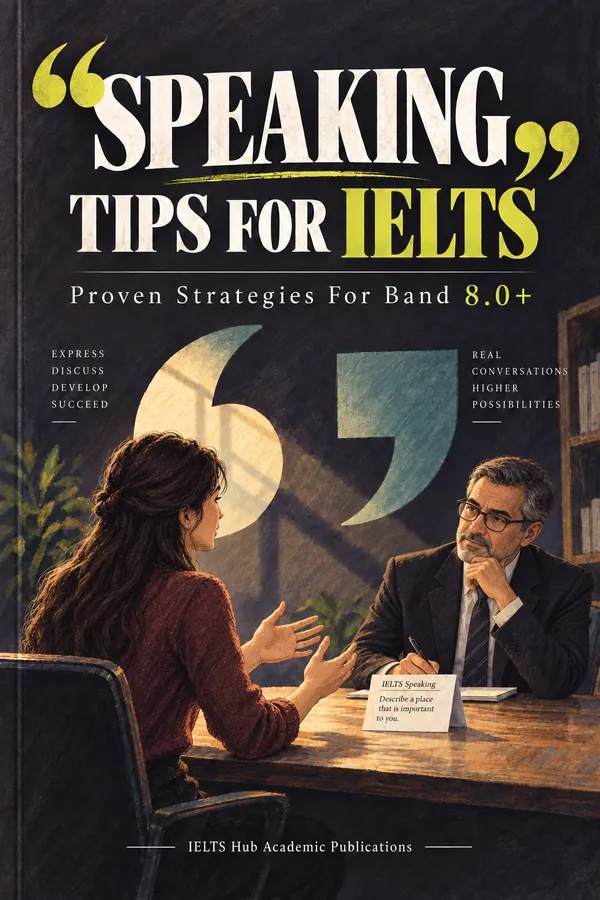
Speaking
Speaking Tips for IELTS
Proven Strategies for Band 8.0+
₹299$9.99CAD 13.99AUD 14.99£7.99NZD 16.99€8.99AED 39SGD 12.99