Speaking test #547
Part 1 · Interview
4 to 5 minutes. The examiner asks about you and familiar topics.
Can you tell me your full name?
Where are you from?
Do you work or are you a student?
How often do you visit your relatives?
I visit my relatives on a fairly regular basis, usually every few months or so. It all depends on my schedule and how busy I am with work and other commitments. But I always try to make time to see them, as I value family greatly.
What do you do when you visit your relatives?
When I visit my relatives, we usually catch up on everything that's been going on in our lives. We'll talk about what's been happening with work, school, and any recent accomplishments or milestones. We'll also usually cook together and share meals, which is always a lot of fun.
Do people need to visit their relatives?
I believe that it's important for people to visit their relatives, as it helps to strengthen family bonds and keep those relationships strong. Regular visits can also be a great way to stay connected and in touch with loved ones, even if they live far away.
Do you prefer to visit your relatives or friends?
I enjoy visiting both my relatives and friends, but I have to say that I probably have a slight preference for visiting my relatives. I find that spending time with family is always comforting and grounding, and I always leave feeling recharged and refreshed. But I also love spending time with my friends, as it's a great way to relax and have fun.
Has your voice ever changed?
Yes, my voice has definitely undergone some changes over the years. As I have grown older, it has become deeper and more mature. Additionally, I have also developed better control and modulation of my voice through years of public speaking and acting.
Do you enjoy recording your voice and listening to it?
I must admit, I am not particularly fond of listening to my own voice. I find that it can be quite disconcerting, as it can sound quite different to how I perceive it in my head. However, I do appreciate the value of recording my voice for self-evaluation and improvement, particularly when it comes to public speaking or acting.
Are there some people’s voices you don’t like?
I wouldn’t say that I dislike any particular person's voice, but there are certain voices that I find less appealing than others. For example, I find high-pitched or nasal voices to be quite grating on the ears. However, I do understand that everyone's voice is unique and that it is not fair to judge someone based on their voice alone.
How does your voice change in different situations?
My voice can change quite dramatically depending on the situation. For example, when I am in a formal setting, such as a business meeting, I tend to speak in a more measured and controlled tone. However, when I am in a more relaxed and casual setting, such as with friends or family, my voice tends to be more animated and expressive. Additionally, when I am feeling particularly emotional, such as when I am feeling excited or upset, my voice can become quite high-pitched and dramatic.
You will have to talk about the topic for one to two minutes. You have one minute to think about what you are going to say. You can make some notes to help you if you wish.
When you went to an event and arrived early
You should say:
- What event it was
- Why you arrived early
- How you spent your time while waiting
- How you felt about arriving early
What event it was
I recently attended a traditional Indian wedding ceremony in my hometown, and on that particular day, I made a conscious decision to arrive early at the venue. Attending a wedding holds great significance in our culture, and I wanted to ensure that I could pay my respects to the newlyweds and their families before the hustle and bustle of the event began.
Why you arrived early
Arriving early provided me with the opportunity to observe the intricate decorations and arrangements at the venue. I marveled at the vibrant colors of the flowers adorning the hall and the elaborate traditional motifs that adorned the walls. Additionally, I took advantage of the extra time to greet and catch up with other early guests, which helped create a warm and welcoming atmosphere.
How you spent your time while waiting
While waiting for the ceremony to commence, I engaged in light conversations with fellow attendees and shared anecdotes about past weddings we had attended. Some guests played traditional Indian musical instruments, filling the air with melodious tunes that added to the festive ambiance. I also took the time to admire the bride's stunning attire and intricate jewelry, which further heightened my anticipation for the upcoming celebration.
How you felt about arriving early
Overall, arriving early at the wedding event not only allowed me to soak in the cultural richness and beauty of the occasion but also enabled me to connect with friends and family in a relaxed setting. I felt a sense of contentment and gratitude for being part of such a joyous celebration, and my decision to arrive early proved to be a rewarding experience that enhanced my overall enjoyment of the event.
- Words
- 263
- Sentences
- 10
- Words per sentence
- 26.3
- Speaking time
- about 2.0 min
Counted at 130 words a minute. The exam gives you one to two minutes.
Part 3 · Discussion
4 to 5 minutes. The examiner asks broader questions linked to the cue card topic.
What is the difference between getting to an event early and getting there right on time or late?
Arriving early at an event can be such a rewarding experience! For starters, it allows you to soak in the atmosphere and get acquainted with the venue, which can really enhance your overall experience. You have the opportunity to network and engage with other attendees before things get too hectic, creating a more relaxed environment. In contrast, arriving just on time often means you miss out on those precious moments of connection and simply jump straight into the main activities. Moreover, if you're late, the scenario shifts dramatically; you might feel a bit flustered and disrupt the flow of the event, which can be quite uncomfortable. Overall, timing can greatly influence not only your mood but also the quality of your interactions at any gathering!
Some people believe getting there early is important for a good time, while others feel it's not needed. What do you think about this?
I genuinely believe that arriving early can significantly enhance one’s experience, especially in social or professional settings. By getting there ahead of time, you have the opportunity to settle in and acclimatize to your surroundings, which can make a world of difference in how you feel during the event. It also allows you to network and connect with others before things get underway, creating a more relaxed atmosphere. On the flip side, I understand that some people thrive on spontaneity and may find that showing up at the last minute adds a bit of excitement to their experience. Ultimately, it boils down to personal preference, but I lean towards the idea that arriving early can unlock a more enjoyable and less stressful experience.
Why is arriving early important in different cultures or social situations?
Arriving early can carry a range of meanings depending on the culture or social context, and it often reflects one's values and attitudes towards time. In many Western cultures, for instance, punctuality is seen as a sign of respect and professionalism, so arriving early for a meeting or event demonstrates a strong commitment to the occasion. Conversely, in some Mediterranean or Latin American cultures, a more relaxed approach to time is common, where arriving late might not be viewed as disrespectful at all; it can even be a part of the social fabric. However, regardless of the cultural perspective, arriving early often allows for meaningful interactions and can set a positive tone for the event, fostering a sense of camaraderie among participants. It’s fascinating how something as simple as being on time can encapsulate such a rich tapestry of social values!
Why do you think some people like to get to events early instead of socializing or coming later?
I believe that some individuals prefer to arrive early at events for a few compelling reasons. Firstly, arriving early allows them to secure a prime spot, whether it’s a good seat at a concert or an advantageous position at a networking event. Additionally, early arrivals often find it easier to break the ice with other attendees, creating a more relaxed atmosphere for themselves. It can also be about avoiding the stress of last-minute rushes, as they can take their time, settle in, and enjoy the event without feeling flustered. Ultimately, for these individuals, being early can enhance their overall experience and lead to more meaningful interactions.
How could technology change how people plan the timing of events in the future?
That's a fascinating question! As technology continues to evolve, I believe we will see a significant shift in how people approach event timing. For instance, with the advent of smart devices and real-time data analytics, individuals could receive personalized notifications about optimal times to schedule events based on their preferences and availability. This could lead to a more seamless integration of personal and professional commitments, allowing for a better work-life balance. Moreover, advancements in augmented reality and virtual reality might allow people to experience events in entirely new ways, perhaps even adjusting the timing to maximize engagement, regardless of geographical constraints. Imagine attending a concert that takes place at a time that’s convenient for you, regardless of the time zone! Overall, I think these technological changes will not only enhance our scheduling efficiency but also enrich our overall experience of events.
What steps can event planners take to get attendees to show up earlier?
To encourage attendees to arrive earlier, event organizers could implement several engaging strategies. Firstly, offering incentives such as early bird discounts or exclusive access to certain activities can create a buzz and motivate people to arrive on time. Additionally, hosting pre-event activities or entertainment can draw attendees in earlier, making the wait more enjoyable. Another effective measure could be to provide enticing refreshments or complimentary snacks, which can transform the arrival experience into a social occasion. Ultimately, by combining these elements, organizers can foster a sense of anticipation and excitement that encourages timely attendance.
Go further with the books
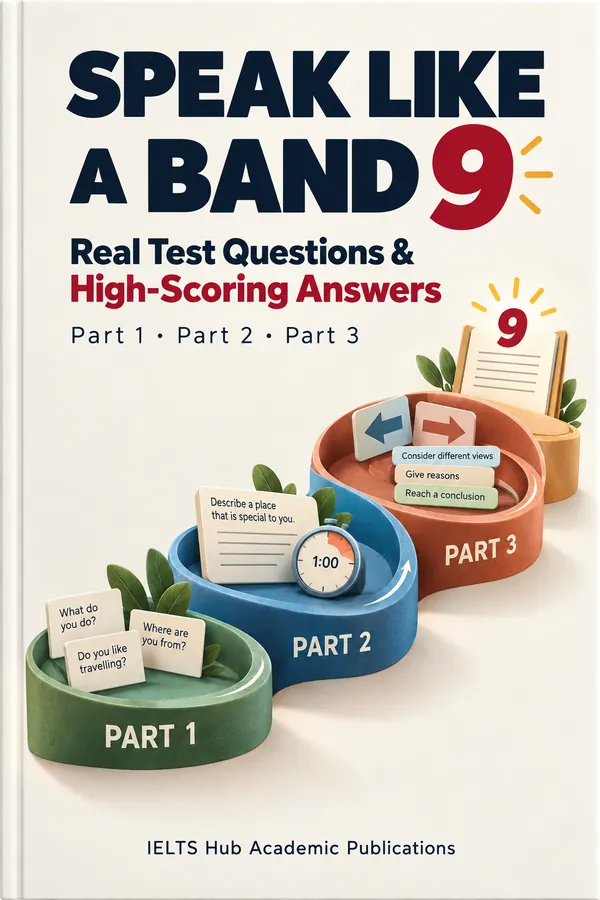
Speaking
Speak Like a Band 9
Real Test Questions & High-Scoring Answers
₹299$9.99CAD 13.99AUD 14.99£7.99NZD 16.99€8.99AED 39SGD 12.99

Speaking
Band 7+ Speaking Expressions
300 natural expressions for fluent, flexible speaking
₹199$6.99CAD 8.99AUD 9.99£4.99NZD 10.99€5.99AED 24SGD 8.99
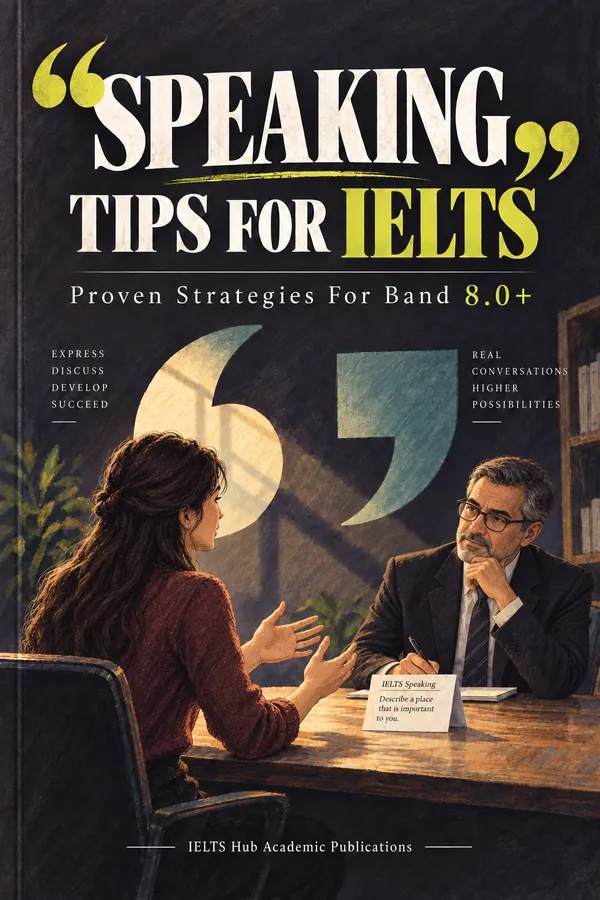
Speaking
Speaking Tips for IELTS
Proven Strategies for Band 8.0+
₹299$9.99CAD 13.99AUD 14.99£7.99NZD 16.99€8.99AED 39SGD 12.99