Speaking test #552
Part 1 · Interview
4 to 5 minutes. The examiner asks about you and familiar topics.
Can you tell me your full name?
Where are you from?
Do you work or are you a student?
How do you usually spend your weekends?
I typically spend my weekends engaging in a variety of leisure activities. On Saturdays, I like to go for a hike or bike ride in the morning to get some fresh air and exercise. In the afternoon, I might catch up with friends over lunch or spend time working on a hobby, such as photography or painting. On Sundays, I like to relax and unwind by reading a book or watching a movie. I also make sure to set aside some time for self-care, such as practicing yoga or meditation.
Which is your favourite part of the weekend?
My favourite part of the weekend is undoubtedly the sense of freedom and relaxation that comes with having two days off from work. I really enjoy having the time to pursue my interests and hobbies without feeling rushed or constrained by the demands of my job. Additionally, I treasure the opportunity to spend quality time with my loved ones, whether that be catching up over a meal or engaging in a fun activity together.
Do you think your weekends are long enough?
I believe that two days is a sufficient amount of time to recharge and rejuvenate after a busy week of work. However, I do think that having a longer weekend, such as a four-day weekend, would be even better. It would allow me to have more time to travel or pursue more ambitious projects.
How important do you think it is to have free time at the weekends?
I think it is extremely important to have free time at the weekends in order to maintain a healthy work-life balance. Having the time to pursue hobbies and interests, spend time with loved ones, and simply relax and unwind is essential for our well-being. Without this time to recharge, we may become burnt out or stressed, which can have negative effects on our mental and physical health. Furthermore, having free time can be a great opportunity to gain new experiences, explore new places, and try new things.
Are you interested in wild animals?
Oh absolutely, I have always had a deep fascination with wild animals and their unique behaviors and habitats. From the majestic elephants of Africa to the elusive snow leopards of the Himalayas, I find myself constantly drawn to learning more about these incredible creatures and the ways in which they interact with their environment.
Do you like to watch TV programs about wild animals?
Definitely, I find that watching documentaries and other TV programs about wild animals is a great way to deepen my understanding of these creatures and the challenges they face in the wild. Whether it's a National Geographic special on the great apes or a BBC series on the marine life of the Great Barrier Reef, I always find these programs to be both informative and entertaining.
Did you learn something about wild animals at school?
Yes, I was fortunate enough to have a number of classes in school that focused on wildlife biology and conservation. These classes covered a wide range of topics, from the different types of animals found in different regions of the world to the ways in which humans can impact the survival of these animals. Through these classes, I was able to gain a deeper understanding of the complex relationships between wild animals and the natural world, which has greatly enhanced my appreciation of these creatures.
Where can you see wild animals in your country (India)?
India is home to a wide variety of wild animals, many of which can be found in the country's numerous national parks and wildlife reserves. For example, the Kaziranga National Park in Assam is known for its large population of Indian rhinos, while the Gir Forest in Gujarat is home to the last remaining population of Asiatic lions. Additionally, the Indian Himalayas are home to a number of endangered species such as snow leopards and the blue sheep. Overall, India offers a wealth of opportunities for wildlife viewing, and I highly recommend visiting these areas for anyone interested in seeing wild animals in their natural habitat.
You will have to talk about the topic for one to two minutes. You have one minute to think about what you are going to say. You can make some notes to help you if you wish.
An interesting conversation you had with someone
You should say:
- Who you had the conversation with
- Where and when the conversation took place
- What you talked about
- Why you found the conversation interesting
Who you had the conversation with
I vividly recall a fascinating conversation I had with my grandfather, whom I deeply admire for his wisdom and life experiences. This memorable interaction took place in the peaceful setting of his garden during a balmy summer evening. As the golden rays of the setting sun bathed the surroundings in a warm glow, we engaged in a profound discussion that left a lasting impact on me.
Where and when the conversation took place
During our conversation, my grandfather shared captivating stories from his youth, recounting his adventures and challenges with vivid detail. He spoke about his journey of overcoming obstacles and pursuing his dreams with unwavering determination. His anecdotes were not only captivating but also filled with valuable life lessons that resonated with me on a profound level.
What you talked about
What made this conversation truly remarkable was the depth of insight and perspective that my grandfather offered. His words carried a weight of wisdom that only comes with age and experience. As he shared his pearls of wisdom, I found myself hanging onto every word, eager to absorb the invaluable knowledge he imparted.
Why you found the conversation interesting
The conversation with my grandfather was not just interesting but also profoundly inspiring. It sparked a newfound appreciation for the importance of resilience, perseverance, and the power of storytelling. I left our conversation feeling enriched and motivated to approach life's challenges with a renewed sense of purpose and determination. This experience reinforced the timeless adage that the best conversations are not just exchanges of words but connections that touch the heart and soul.
- Words
- 247
- Sentences
- 13
- Words per sentence
- 19.0
- Speaking time
- about 1.9 min
Counted at 130 words a minute. The exam gives you one to two minutes.
Part 3 · Discussion
4 to 5 minutes. The examiner asks broader questions linked to the cue card topic.
How can talking to a close friend be different from talking to a stranger?
Conversations with close friends often have a broad sense of intimacy and understanding that you just don’t get with strangers. When I chat with a friend, there's usually a shared history and a level of comfortable familiarity that allows us to be more open and authentic. For instance, I might share personal stories or emotions that I wouldn't dare reveal to someone I just met. In contrast, conversations with strangers tend to be more formal and reserved, often revolving around small talk or surface-level topics. The lack of shared experiences means I have to tread carefully, which can sometimes feel a bit stilted. Overall, the depth and genuine connection in conversations with friends can make those interactions far more enriching.
How can people have different feelings about the importance of casual chats compared to serious talks?
Individuals often have varied perceptions of the value of casual conversations compared to deep discussions, largely influenced by their personalities and social contexts. For some, light-hearted banter serves as a vital means of social connection, creating a relaxed atmosphere where they feel comfortable and at ease. On the other hand, those who gravitate towards profound dialogue may find deep discussions fulfilling as they foster a sense of understanding and emotional intimacy. Interestingly, casual conversations can act as a social lubricant, helping to break the ice and build rapport, while deeper discussions often allow for a more meaningful exchange of ideas and beliefs. Ultimately, both forms of communication have their own unique value, catering to varying needs and preferences in different situations.
How do talks help people form relationships?
Conversations are absolutely fundamental in building relationships among individuals. They act as the glue that holds connections together, allowing people to share experiences, thoughts, and feelings. Through dialogue, we can develop a deeper understanding of one another, which is crucial for fostering trust and empathy. Not only do conversations help to clarify intentions, but they also create opportunities for meaningful exchanges that can strengthen bonds. Ultimately, it’s through these interactions that we can cultivate lasting friendships and connections, making our social lives richer and more fulfilling.
Why do you think some people struggle to have deep conversations?
I believe there are several reasons why some individuals struggle to engage in meaningful conversations. For one, many people feel a sense of social anxiety that can make initiating or maintaining dialogue quite daunting. They might worry about being judged or fear that they won't be able to articulate their thoughts clearly. Additionally, the rise of digital communication has led to a decrease in face-to-face interactions, which can hinder the development of crucial conversational skills. Lastly, some individuals may lack the necessary emotional intelligence to read social cues, making it challenging for them to connect with others on a deeper level.
How could conversations change in the future with new technology?
That's a fascinating question! As technology continues to advance, I believe conversations will become increasingly immersive and dynamic. With the rise of virtual and augmented reality, we might find ourselves engaging in conversations that feel almost like face-to-face interactions, no matter where we are in the world. Additionally, AI-driven tools could help facilitate smoother communication by offering real-time translations, breaking down language barriers and making global conversations more accessible. However, it’s crucial that we also consider the potential downsides, such as a possible decline in genuine human connection if we rely too heavily on technology for our interactions. Overall, the future of conversations promises to be both exciting and complex!
What ways can we promote more open and engaging conversations in communities?
To foster more open and engaging discussions within communities, it’s essential to create inclusive environments where everyone feels comfortable sharing their thoughts. Organizing regular community forums or workshops can be a fantastic way to bring people together and encourage dialogue on various topics. Additionally, utilizing social media platforms to initiate discussions can reach a wider audience and engage younger members of the community who may not participate in traditional settings. It's also important to actively listen and validate different perspectives, as this can lead to a richer exchange of ideas and foster a sense of belonging among participants. Ultimately, promoting respect and understanding will create a culture where open discussions thrive.
Go further with the books
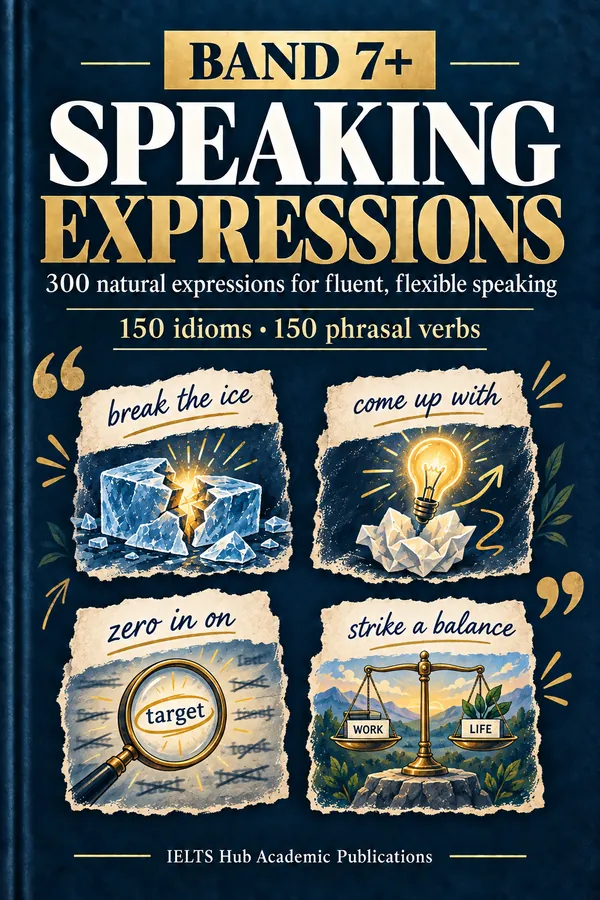
Speaking
Band 7+ Speaking Expressions
300 natural expressions for fluent, flexible speaking
₹199$6.99CAD 8.99AUD 9.99£4.99NZD 10.99€5.99AED 24SGD 8.99
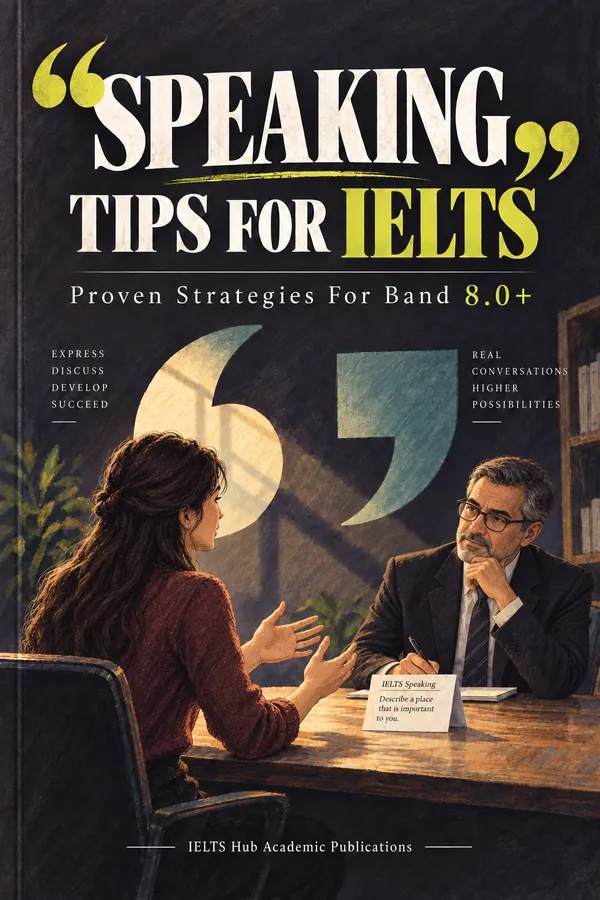
Speaking
Speaking Tips for IELTS
Proven Strategies for Band 8.0+
₹299$9.99CAD 13.99AUD 14.99£7.99NZD 16.99€8.99AED 39SGD 12.99

Speaking
Speak Like a Band 9
Real Test Questions & High-Scoring Answers
₹299$9.99CAD 13.99AUD 14.99£7.99NZD 16.99€8.99AED 39SGD 12.99