Speaking test #555
Part 1 · Interview
4 to 5 minutes. The examiner asks about you and familiar topics.
Can you tell me your full name?
Where are you from?
Do you work or are you a student?
Do you like sweets? [Why/ Why not?
?] I absolutely adore sweets! There's just something so satisfying about indulging in a tasty treat every now and then. Plus, they make me feel happy and bring back fond memories of my childhood.
Have you made desserts or cakes before? [Why/ Why not?
?] Yes, I have definitely dabbled in the world of desserts and cakes before. I find the process of creating something sweet and delicious to be incredibly therapeutic and relaxing. Plus, it's always a treat to be able to share my creations with others and see the joy it brings them.
Do people usually have desserts after dinner? [Why/ Why not?
?] It really depends on the culture and personal preferences of the individuals involved. In some cases, it's a common practice to have a small dessert after a meal to round out the dining experience. However, others may opt for a more savory option or simply skip dessert altogether.
Are desserts considered healthy in your country (India)? [Why/ Why not?
?] It's a bit of a mixed bag when it comes to the perception of desserts in India. While some people may view them as an indulgence that should be enjoyed in moderation, others may not consider them to be particularly healthy due to their high sugar and calorie content. That being said, there are certainly healthier options available, such as fruit-based desserts or those made with natural sweeteners.
Do you like to travel by car?
Absolutely! There's just something about the freedom and flexibility of being able to drive yourself that I really enjoy. Plus, it's a great way to see more of a place and discover hidden gems you might not have found otherwise.
When do you travel by car?
I tend to travel by car most often when I'm going on longer road trips or when I'm visiting a place that doesn't have great public transportation. It's just easier to have your own vehicle and not have to rely on buses or trains to get around.
Where is the farthest place you have travelled to by car?
I've been lucky enough to take a few really long road trips in my life, but the farthest I've ever driven is probably from the East Coast of the United States all the way to the West Coast. It was an amazing journey and I saw so much of the country that I never would have seen otherwise.
Do you like to sit in the front or back when travelling by car?
It really depends on the situation. If I'm driving, I obviously prefer to sit in the front. But if I'm a passenger and there's someone else driving, I'm happy to sit in the back. It's just nice to have the option to stretch out and relax a little bit when you're on a long road trip.
You will have to talk about the topic for one to two minutes. You have one minute to think about what you are going to say. You can make some notes to help you if you wish.
Something important you have learned recently
You should say:
- What you learned
- How you learned it
- Why it was important
- How it has impacted you
What you learned
Recently, I have learned the significance of practicing mindfulness in my daily life. Mindfulness is the practice of being fully present in the moment, aware of your thoughts and feelings without judgment. I came across this concept while reading a book on personal development, where it was highlighted as a powerful tool for reducing stress and improving overall well-being.
How you learned it
I learned about mindfulness through various resources such as books, online articles, and guided meditation sessions. These resources provided me with practical techniques to incorporate mindfulness into my daily routine, such as deep breathing exercises, body scans, and focusing on the present moment. By consistently practicing these techniques, I gradually developed a greater sense of awareness and clarity in my thoughts and actions.
Why it was important
The importance of mindfulness became evident to me as I noticed a significant reduction in my stress levels and an improvement in my ability to manage challenging situations. It allowed me to break free from the cycle of overthinking and worrying about the past or future, enabling me to focus on the present moment with a sense of peace and calm. This newfound perspective not only enhanced my mental well-being but also positively impacted my relationships and productivity.
How it has impacted you
Overall, integrating mindfulness into my daily life has been transformative. It has helped me cultivate a deeper sense of self-awareness and inner peace, enabling me to navigate life's challenges with resilience and clarity. I now recognize the value of being fully present in each moment, appreciating the beauty of the present rather than being consumed by worries or regrets. Mindfulness has become an essential part of my daily routine, guiding me towards a more balanced and fulfilling life.
- Words
- 278
- Sentences
- 13
- Words per sentence
- 21.4
- Speaking time
- about 2.1 min
Counted at 130 words a minute. The exam gives you one to two minutes.
Part 3 · Discussion
4 to 5 minutes. The examiner asks broader questions linked to the cue card topic.
How can learning something new be different from learning something we already know?
Learning something new often involves a steep learning curve, where we encounter unfamiliar concepts and need to develop a solid foundation. This can be both exciting and daunting, as our brains are essentially working overtime to make new connections. On the other hand, learning something familiar allows us to build on existing knowledge, making the process feel more intuitive and comfortable. In this case, we can often apply previous experiences or skills, leading to a quicker mastery of the topic. Ultimately, the emotional response to learning can differ significantly; new learning may feel like an adventure, while familiar learning can evoke a sense of nostalgia and confidence.
How much can recent experiences influence a person's view on important life lessons?
Recent experiences can profoundly shape an individual’s perspective on important life lessons, often acting as a catalyst for personal growth. For instance, going through a challenging situation, like a job loss or a health scare, can lead to a deeper appreciation for resilience and the necessity of adaptability. These experiences often become pivotal moments in our lives, providing us with insights that theoretical knowledge simply cannot. Moreover, the emotional weight of these experiences tends to leave a lasting imprint on our values and priorities, often prompting a shift in how we approach relationships and career choices. Ultimately, it’s fascinating how life’s unpredictability can enrich our understanding of ourselves and the world around us, making us more empathetic and aware.
How important do you believe it is for people to keep learning and adjusting as they go through life?
I believe it's incredibly significant for individuals to continually learn and adapt throughout their lives. In today’s fast-paced world, where technology and societal norms are constantly evolving, the ability to embrace change is essential. Lifelong learning not only enhances our skill sets but also keeps our minds sharp and engaged. Furthermore, adapting to new circumstances can lead to greater resilience, helping us navigate challenges with confidence. In essence, committing to personal growth can profoundly impact our overall well-being and professional success.
Why do you think people usually miss the lessons from their everyday experiences?
I believe people often overlook the invaluable lessons from their daily experiences because they get caught up in the hustle and bustle of life. In our fast-paced world, there's a tendency to focus solely on immediate tasks and responsibilities, leaving little room for reflection. Additionally, many individuals may not recognize the significance of mundane situations, assuming that profound insights only arise from extraordinary events. This lack of awareness can prevent them from learning from even the simplest interactions, which can be quite enlightening. Ultimately, if people took a moment to pause and contemplate their daily encounters, they might discover a treasure trove of wisdom waiting to be uncovered!
How could the value of lifelong learning change in the future?
The significance of lifelong learning is poised to grow exponentially in the coming years, primarily due to the rapid pace of technological advancements. As industries continue to undergo transformation through automation and artificial intelligence, individuals will increasingly need to adapt their skills to remain relevant in the workforce. Furthermore, with the rise of remote work and the gig economy, the demand for versatile skill sets is likely to increase, making continuous education not just beneficial but essential. I believe this shift will foster a culture where learning becomes an integral part of our daily lives, encouraging people to seek knowledge through various platforms, from online courses to community workshops. In essence, embracing lifelong learning will not only empower individuals but also contribute to a more resilient and innovative society.
What steps can be taken to help people be more open to new learning opportunities?
To encourage individuals to embrace new learning opportunities more readily, we could implement a variety of measures. First and foremost, creating a culture that values lifelong learning is crucial; when people see that continuous education is celebrated, they're more likely to pursue it themselves. Additionally, providing accessible resources, such as free online courses or community workshops, can help lower barriers to entry. Finally, integrating hands-on experiences into learning can make it more appealing and relevant, as people often engage better when they can apply knowledge in practical settings. Overall, fostering a supportive environment that encourages curiosity and exploration can significantly motivate individuals to seek out new opportunities.
Go further with the books
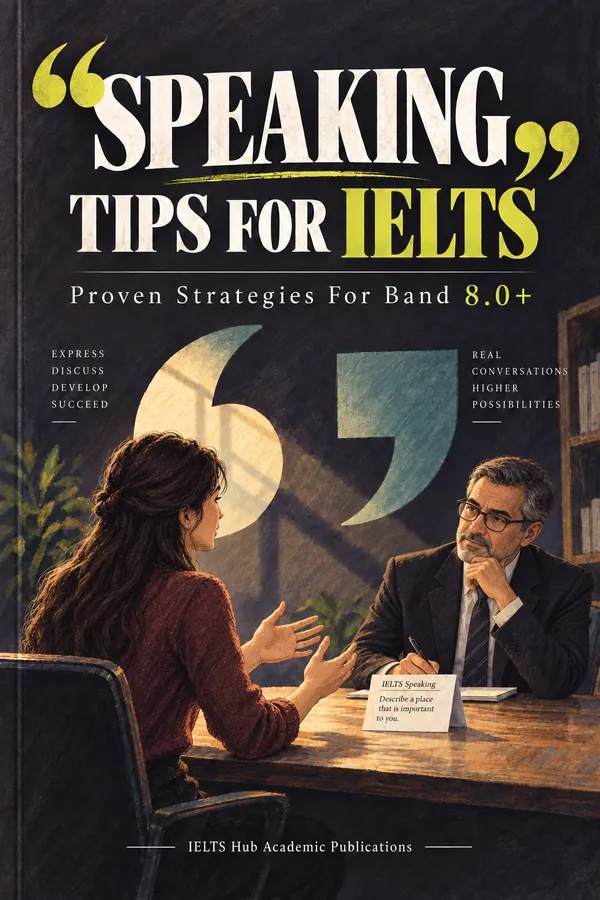
Speaking
Speaking Tips for IELTS
Proven Strategies for Band 8.0+
₹299$9.99CAD 13.99AUD 14.99£7.99NZD 16.99€8.99AED 39SGD 12.99
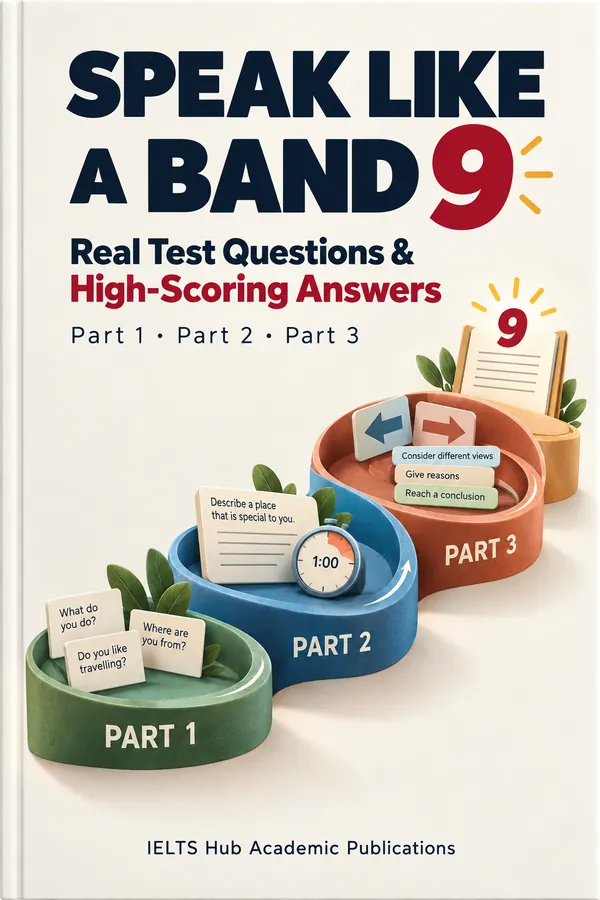
Speaking
Speak Like a Band 9
Real Test Questions & High-Scoring Answers
₹299$9.99CAD 13.99AUD 14.99£7.99NZD 16.99€8.99AED 39SGD 12.99

Speaking
Band 7+ Speaking Expressions
300 natural expressions for fluent, flexible speaking
₹199$6.99CAD 8.99AUD 9.99£4.99NZD 10.99€5.99AED 24SGD 8.99