Speaking test #566
Part 1 · Interview
4 to 5 minutes. The examiner asks about you and familiar topics.
Can you tell me your full name?
Where are you from?
Do you work or are you a student?
What's the decoration like in your home?
Well, I would say that the decoration in my home is a mix of modern and traditional elements. We have a lot of contemporary furniture and artwork, but we also have some antique pieces and colorful rugs and textiles that bring in a bit of cultural flair. Overall, I think it's a cozy and welcoming space.
What kind of decoration do you prefer?
Personally, I really enjoy a blend of styles in decorating. I think it adds character and interest to a space. I love incorporating bold patterns and pops of color, but I also appreciate the simplicity and clean lines of minimalism. So I would say I have an eclectic taste in decor.
Do the people of your country (India) like redecorating their homes?
Yes, I think many people in India enjoy redecorating their homes. It's a way to express their personal style and update the look and feel of their living spaces. And with the wide variety of affordable home decor options available in the market, it's easy for people to switch things up and try out new looks.
What's your favorite color when decorating your home?
I really love using shades of blue in my home decor. It's such a calming and soothing color, and it pairs well with a wide range of other shades and textures. Whether it's a deep navy or a light sky blue, I think it always adds a touch of sophistication and elegance to a space.
How often do you use a dictionary?
I use a dictionary quite frequently, probably a few times a week. It's a handy tool for when I come across unfamiliar words or want to double-check the meaning of something.
Do you prefer a paper dictionary or an electronic one?
I personally prefer an electronic dictionary, mainly because it's more convenient and easily accessible. I can just pull it up on my phone or laptop and search for a word in seconds. Plus, I can save words to a list or make notes on their definitions, which is helpful for language learning. However, I do appreciate the nostalgia and tactile experience of using a paper dictionary, so I still keep one on my bookshelf for reference.
How will dictionaries change in the future?
I think dictionaries will continue to evolve and adapt with technology. I envision them becoming more interactive and user-friendly, with features like audio pronunciation, sample sentences, and cultural references. They may also incorporate artificial intelligence to provide personalized recommendations or synonym suggestions.
How would you feel if somebody gave you a dictionary as a gift?
I would be thrilled if someone gave me a dictionary as a gift! It might not be the most exciting present, but to me it shows that the person values education and language learning. I would appreciate the thought and effort put into selecting a dictionary that fits my needs or interests.
You will have to talk about the topic for one to two minutes. You have one minute to think about what you are going to say. You can make some notes to help you if you wish.
A situation when you had to keep silent
You should say:
- Why you had to keep silent
- How you managed to stay quiet
- The impact of keeping silent
- What you learned from the experience
Why you had to keep silent
In a society like India, where traditional values and respect for elders hold significant importance, there are many instances where one has to keep silent despite having strong opinions. One such situation that comes to my mind is when I had to keep silent during a family gathering where a heated argument broke out between my parents and my grandparents over a trivial matter. As a younger family member, it was expected of me to maintain decorum and not interfere in the dispute.
How you managed to stay quiet
To stay quiet in that tense situation, I focused on controlling my emotions and reminding myself of the cultural values that emphasize respecting elders. I took deep breaths and diverted my attention by observing the surroundings or engaging in small talk with other family members. Despite feeling the urge to intervene and express my thoughts, I maintained my composure and chose silence over adding fuel to the fire.
The impact of keeping silent
Keeping silent had a significant impact on diffusing the tension in the room and preventing the argument from escalating further. My silence helped in de-escalating the situation and allowed the elders to resolve their differences peacefully. It also showcased my maturity and respect for the family dynamics, earning me appreciation from my parents and grandparents for handling the situation with grace.
What you learned from the experience
From this experience, I learned the importance of patience, emotional intelligence, and the power of silence in conflict resolution. It taught me that sometimes staying silent is more powerful than engaging in unnecessary arguments, especially in familial or social settings where harmony and respect play a crucial role in maintaining relationships. This incident reinforced my belief in the value of listening and understanding before speaking, highlighting the significance of communication in fostering healthy relationships.
- Words
- 286
- Sentences
- 12
- Words per sentence
- 23.8
- Speaking time
- about 2.2 min
Counted at 130 words a minute. The exam gives you one to two minutes.
Part 3 · Discussion
4 to 5 minutes. The examiner asks broader questions linked to the cue card topic.
How might the reasons for being quiet vary between different cultures?
That's a fascinating question! The reasons for staying silent can indeed vary significantly across cultures. In some cultures, silence is often seen as a form of respect, especially in situations involving elders or authority figures. For instance, in certain Asian societies, individuals might choose to remain silent during discussions to avoid confrontation or to maintain harmony within the group. On the other hand, in more individualistic cultures, silence might be interpreted as disinterest or disengagement, leading people to feel compelled to fill the void with conversation. Ultimately, the cultural context plays a crucial role in shaping how silence is perceived and when it’s deemed appropriate to use it.
Some people think that staying quiet is sometimes better than saying something. What do you think about this?
I absolutely understand where that perspective is coming from. There are certainly instances where remaining silent can be more beneficial, especially in sensitive situations where words might escalate tension or conflict. For example, during an argument, choosing to stay quiet can allow emotions to cool down and prevent hurtful comments from being exchanged. However, I also believe that speaking out is crucial in many contexts, particularly when it comes to advocating for justice or expressing one’s feelings. Ultimately, it’s about finding the right balance between knowing when to speak up and when to hold back, as both silence and speech can have profound effects on relationships and situations.
How important is it to stay quiet during conflicts or disagreements?
The ability to remain silent in situations of conflict or disagreement is incredibly significant, as it can often prevent the situation from escalating. When emotions run high, sometimes saying less can lead to more thoughtful responses later on. By choosing silence, individuals can create a space for reflection and understanding, allowing both parties to process their feelings and think more clearly. Moreover, it can be a powerful tool for fostering effective communication, as it encourages active listening rather than jumping to conclusions. Ultimately, mastering this skill not only helps in resolving conflicts but also strengthens relationships by promoting a more respectful dialogue.
Why do people sometimes decide not to speak up when they care a lot about something?
Individuals might choose to remain silent in situations where they feel passionately about an issue for a variety of reasons. For one, they may fear the potential repercussions of speaking out, such as alienating friends or colleagues, which can create a tense atmosphere. Additionally, some people might doubt the effectiveness of their voice, feeling that their opinion may not bring about any significant change. This hesitation can also stem from a desire to avoid conflict, leading them to keep their thoughts to themselves to maintain harmony in social settings. Ultimately, it’s a complex interplay of personal values, social dynamics, and the perceived impact of their words that influences their decision to stay silent.
How could the importance of silence in communication change in the future as society evolves?
The role of silence in communication is likely to undergo a fascinating transformation as society continues to evolve. With the rapid pace of technology and the rise of instant messaging, the nuances of silence might become even more significant. For instance, people may start to appreciate moments of stillness in conversation as a way to foster deeper connections, especially in a world that often feels overwhelmingly noisy. Additionally, as mental health awareness grows, silence may be increasingly recognized as a powerful tool for reflective listening and understanding. Ultimately, I believe that silence will be embraced not just as an absence of sound, but as a vital component of meaningful communication that encourages thoughtfulness and empathy.
How can we help people share their thoughts more freely when they want to stay quiet?
Encouraging individuals to express themselves more openly, especially when they feel the need to remain silent, can be quite a challenge. One effective approach is to create a supportive environment where people feel safe to share their thoughts without fear of judgment. This can be achieved through open discussions or workshops that promote active listening and empathy among participants. Additionally, utilizing creative outlets, such as art or writing, can provide a less intimidating way for individuals to articulate their feelings. Lastly, fostering a culture of vulnerability and authenticity can inspire others to be more forthcoming, as they witness the benefits of sharing their own experiences.
Go further with the books
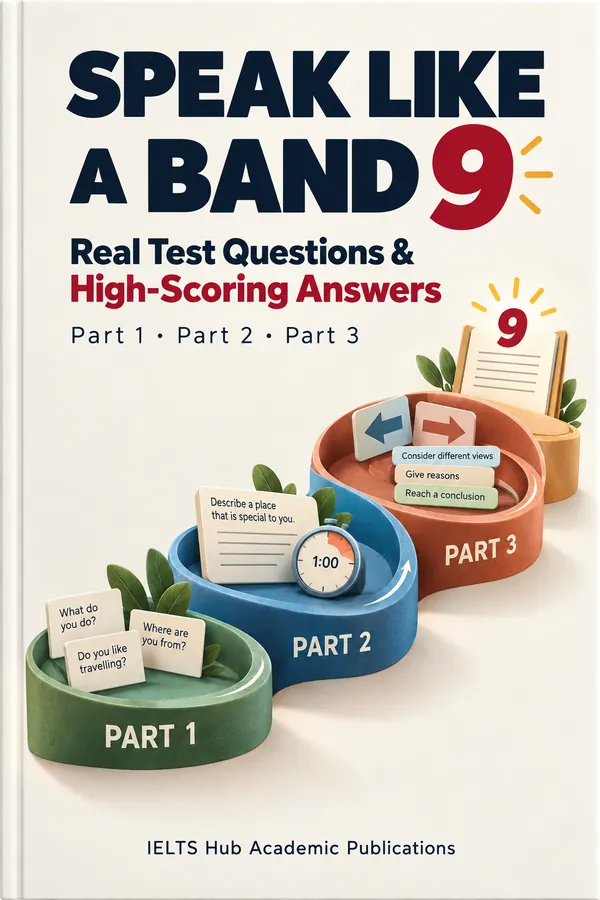
Speaking
Speak Like a Band 9
Real Test Questions & High-Scoring Answers
₹299$9.99CAD 13.99AUD 14.99£7.99NZD 16.99€8.99AED 39SGD 12.99
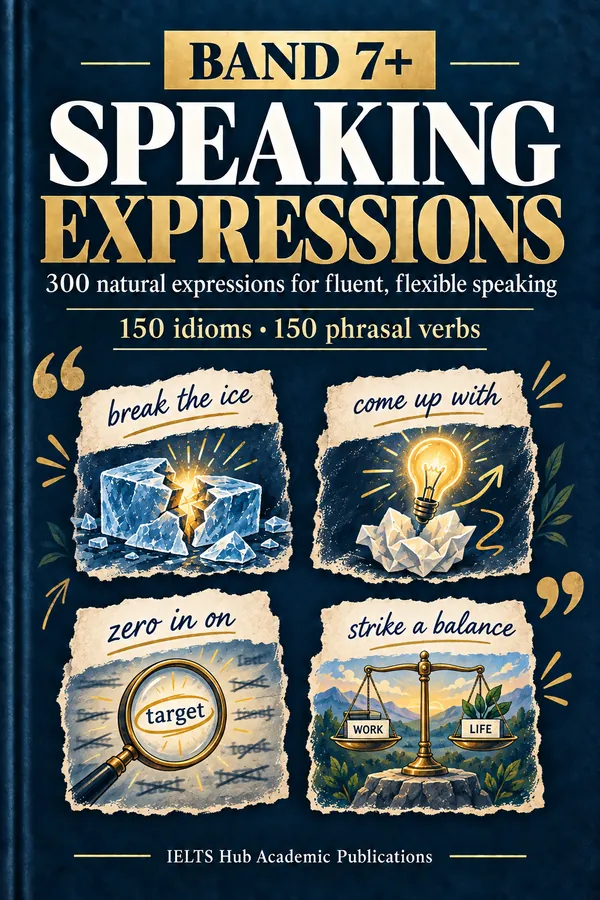
Speaking
Band 7+ Speaking Expressions
300 natural expressions for fluent, flexible speaking
₹199$6.99CAD 8.99AUD 9.99£4.99NZD 10.99€5.99AED 24SGD 8.99
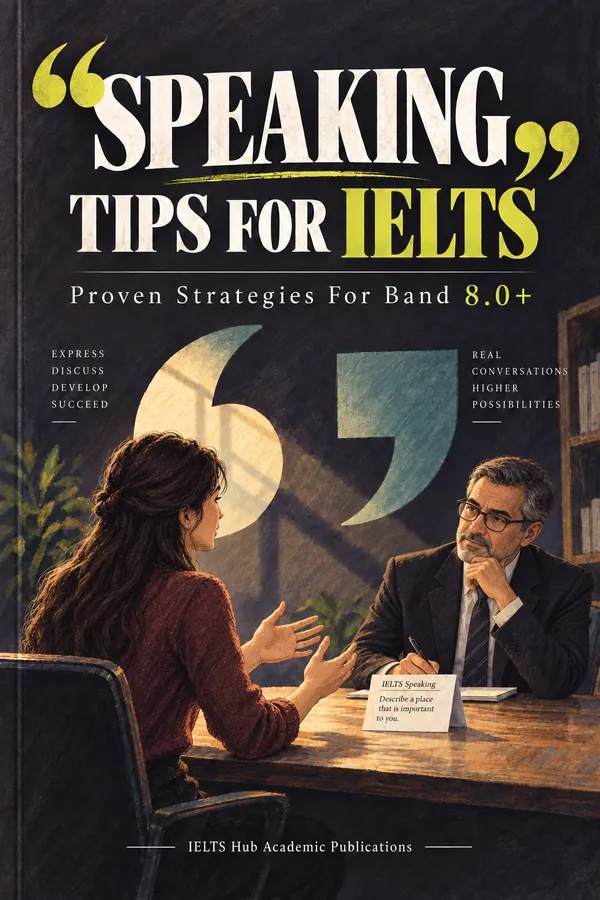
Speaking
Speaking Tips for IELTS
Proven Strategies for Band 8.0+
₹299$9.99CAD 13.99AUD 14.99£7.99NZD 16.99€8.99AED 39SGD 12.99