Speaking test #567
Part 1 · Interview
4 to 5 minutes. The examiner asks about you and familiar topics.
Can you tell me your full name?
Where are you from?
Do you work or are you a student?
What do you like to talk about?
I enjoy discussing a wide range of topics, from current events and politics, to more personal subjects such as hobbies and interests. I find that engaging in lively, thought-provoking conversations is a great way to expand my knowledge and perspectives.
Have your discussion topics changed since you were a child?
Definitely. As a child, I was more inclined to talk about more simplistic and superficial topics such as toys and games. However, as I've grown older, my interests and understanding of the world have broadened, leading to more complex and nuanced discussions.
Do you change your opinion frequently?
Not particularly. I tend to form my opinions based on a thorough examination of the facts and evidence available to me. Once I have formed an opinion, I am open to considering new information and perspectives, but it typically takes a significant amount of convincing for me to change my position on a topic.
Do you prefer to talk or listen?
I believe that effective communication requires a balance of both talking and listening. While I do enjoy expressing my own thoughts and ideas, I also value the opportunity to listen to others and gain insights from their perspectives. In general, I strive to be an active listener and participate in discussions in an open-minded and respectful manner.
What was the dream job for you when you were young?
When I was younger, I always dreamed of becoming a doctor. I loved the idea of being able to help people and make a difference in their lives. However, as I got older and learned more about the field, I realized that it wasn't the right fit for me.
Have you changed your mind about your dream job?
Yes, I have. I used to think that becoming a doctor was my ultimate career goal, but as I explored other options and learned more about myself, I realized that there were other paths that were a better fit for my interests and skills.
What do you plan to do in the future?
In the future, I hope to work in a career that allows me to use my creativity and problem-solving skills. I'm still exploring different options, but I'm considering careers in design or marketing.
What kind of jobs are popular in India?
In India, there are a wide range of popular careers. Some of the most in-demand jobs include engineering, IT, and finance. However, there are also many opportunities in fields such as healthcare, education, and government.
You will have to talk about the topic for one to two minutes. You have one minute to think about what you are going to say. You can make some notes to help you if you wish.
Describe a female leader you like
You should say:
- Who she is and what she does
- Why you like her
- What qualities she possesses as a leader
- How she has inspired you or others
Who she is and what she does
I would like to talk about Indra Nooyi, the former CEO of PepsiCo, as the female leader I admire. Indra Nooyi is a renowned business executive who served as the CEO of PepsiCo for 12 years. She is known for her exceptional leadership skills and strategic vision that transformed the company into a global powerhouse during her tenure.
Why you like her
I admire Indra Nooyi for her remarkable journey from a young girl in India to becoming one of the most powerful women in the corporate world. Her dedication, perseverance, and ability to break barriers in a male-dominated industry are truly inspiring. She has not only shattered the glass ceiling but has also paved the way for other women to strive for leadership roles in business.
What qualities she possesses as a leader
As a leader, Indra Nooyi possesses a unique blend of intelligence, empathy, and decisiveness. She is known for her strategic thinking, innovative approach, and commitment to sustainability and diversity. Her ability to lead with compassion while making tough decisions sets her apart as a role model for aspiring leaders, both male and female.
How she has inspired you or others
Indra Nooyi has inspired me and countless others by showcasing the importance of authenticity, resilience, and continuous learning in leadership. Her emphasis on work-life balance, diversity, and sustainability has had a lasting impact on the business world. She has taught us that true leadership is not just about achieving success for oneself, but also about empowering others and making a positive impact on society.
- Words
- 240
- Sentences
- 12
- Words per sentence
- 20.0
- Speaking time
- about 1.8 min
Counted at 130 words a minute. The exam gives you one to two minutes.
Part 3 · Discussion
4 to 5 minutes. The examiner asks broader questions linked to the cue card topic.
How are female leaders different from male leaders in their leadership styles?
That's a fascinating question! Female leaders often adopt a more collaborative approach, focusing on building strong relationships and fostering teamwork, whereas male leaders may lean towards a more directive style. This sense of collaboration can create an atmosphere of inclusivity, where all team members feel valued and heard. Additionally, female leaders often exhibit a higher degree of emotional intelligence, enabling them to connect with their teams on a personal level and understand their needs better. Of course, it's essential to remember that these are general trends and individual leadership styles can vary widely regardless of gender!
Some people think that women leaders offer special views when making decisions. What do you think about this?
Absolutely, I completely agree with that notion! Female leaders often bring a diverse range of experiences and insights that can significantly enhance decision-making processes. For instance, women may approach challenges with a more collaborative mindset, which can foster a more inclusive atmosphere and encourage open dialogue among team members. Additionally, their life experiences might make them more attuned to social issues, allowing them to address the needs of diverse stakeholders more effectively. Overall, having women in leadership roles can lead to more balanced and well-rounded decisions that benefit everyone involved.
How important do you think female leaders are in motivating future generations?
I believe the role of female leaders is absolutely paramount in inspiring future generations. When young girls see women in positions of power, it not only challenges traditional stereotypes but also provides them with tangible role models to look up to. These leaders often bring unique perspectives and approaches to problem-solving, which can be incredibly empowering for young minds. Moreover, their success stories can motivate the next generation to pursue their dreams, regardless of societal expectations. In essence, female leaders are not just shaping policies; they are shaping aspirations and fostering a sense of possibility that can resonate for years to come.
Why do you think there are still obstacles for women to reach leadership roles in many fields?
There are several factors contributing to the persistent barriers that women face in attaining leadership positions across various sectors. One major issue is the pervasive gender bias that still exists in many workplaces, often leading to the undervaluation of women's skills and contributions. Additionally, societal expectations and traditional roles can act as a double-edged sword, where women are often expected to juggle both professional responsibilities and family duties, which can hinder their career advancement. Furthermore, the lack of female role models in leadership can create a cycle where younger women struggle to envision themselves in such positions. It’s essential that organizations actively work to dismantle these barriers and promote a more inclusive culture, as diversity in leadership can bring about substantial benefits for everyone.
How could having more women in leadership roles change how people work together in the future?
The presence of more female leaders is likely to bring about a transformative shift in workplace dynamics. First and foremost, female leaders often foster a more collaborative environment, which can encourage open communication and teamwork. This can help to break down traditional hierarchies, making employees feel more valued and heard. Additionally, with increased representation, there’s a greater emphasis on diversity and inclusion, which can lead to more innovative solutions and ideas. As these leaders strive to create a supportive culture, we may also see a rise in work-life balance initiatives, ultimately benefiting not just women, but all employees. Overall, the increasing number of female leaders is poised to create a more equitable and dynamic workplace for everyone.
What steps can be taken to help more women become leaders in different areas?
To encourage more women to take on leadership roles, I believe it's essential to implement a multifaceted approach. First and foremost, mentorship programs can be incredibly effective. Pairing aspiring female leaders with established mentors can provide invaluable guidance and support. Additionally, promoting flexible work arrangements can help women balance their professional and personal lives more effectively, making leadership positions more accessible. Lastly, organizations should actively work to eliminate unconscious biases in hiring and promotion processes, ensuring that women are given equal opportunities to excel and shine in leadership roles. By fostering a supportive environment, we can truly empower women to step into these positions with confidence.
Go further with the books
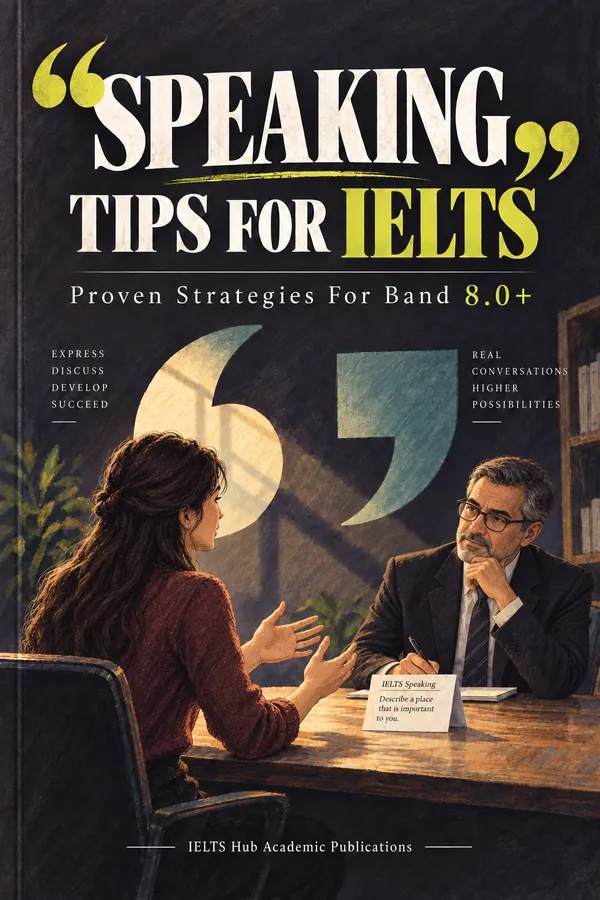
Speaking
Speaking Tips for IELTS
Proven Strategies for Band 8.0+
₹299$9.99CAD 13.99AUD 14.99£7.99NZD 16.99€8.99AED 39SGD 12.99

Speaking
Speak Like a Band 9
Real Test Questions & High-Scoring Answers
₹299$9.99CAD 13.99AUD 14.99£7.99NZD 16.99€8.99AED 39SGD 12.99

Speaking
Band 7+ Speaking Expressions
300 natural expressions for fluent, flexible speaking
₹199$6.99CAD 8.99AUD 9.99£4.99NZD 10.99€5.99AED 24SGD 8.99