Speaking test #580
Part 1 · Interview
4 to 5 minutes. The examiner asks about you and familiar topics.
Can you tell me your full name?
Where are you from?
Do you work or are you a student?
Do you like geography?
I absolutely adore geography. I find it fascinating to study the Earth's physical features, climate, and human interactions with the environment. Understanding how our planet functions as a whole is crucial for us as a society, and I find it endlessly intriguing.
Have you ever studied geography at school?
Yes, I have studied geography at school. I found it to be a very engaging and informative subject. My teachers taught us about various topics such as plate tectonics, the water cycle, and landforms, which I found very interesting. It helped me understand the world around me better.
Are you good at reading maps?
I would say I am quite skilled at reading maps. I have always had an interest in cartography and have spent a lot of time studying maps in my spare time. I am quite familiar with using different types of maps such as topographic, road, and satellite maps. I find it easy to orient myself and navigate using maps.
Would you visit a country because of its geographical location?
Yes, I would definitely consider visiting a country because of its geographical location. I think that the location of a country can play a big role in its culture, climate, and overall atmosphere. For example, if I were to find a country that is located in a tropical area and surrounded by mountains, I would be very intrigued to visit. The unique combination of a tropical climate and mountainous terrain would make for an exciting and unique trip.
Have you ever got lost when you visited a new place? [Why/Why not?
?] Yes, I have definitely gotten lost when I visited a new place before. I think it's easy to get turned around and disoriented in unfamiliar surroundings, especially if you're not familiar with the layout or the language.
Do you find it difficult to get to new places without using a map? [Why/Why not?
?] I would say that I find it somewhat difficult to get to new places without using a map, as it can be hard to orient oneself and figure out which direction to go in. However, if I have a sense of the general area and some basic landmarks, I can usually figure it out.
How do you feel when you get lost somewhere? [Why/Why not?
?] When I get lost somewhere, I usually feel a bit anxious and stressed. Being lost can be disorienting and it can be hard to figure out where to go or what to do next. However, I also try to keep a sense of perspective and remind myself that it's all part of the adventure of exploring new places.
Would you stop to help somebody who was lost? [Why/Why not?
?] Of course I would stop to help somebody who was lost. I believe that helping others is a fundamental part of being a good person, and I would want someone to do the same for me if I were lost. Furthermore, I am confident that I can help someone to get back on track, by providing them with clear direction and guidance.
You will have to talk about the topic for one to two minutes. You have one minute to think about what you are going to say. You can make some notes to help you if you wish.
A news story you have read or heard about
You should say:
- What was the news story about
- Where and when did you read or hear about it
- How did the news story impact you or others
- Do you think the news story was reported accurately
What was the news story about
The news story that caught my attention recently was about a groundbreaking medical discovery related to cancer treatment. I stumbled upon this news while browsing a reputable news website on my phone last month. The story detailed how a team of researchers had developed a new treatment method that showed promising results in curing certain types of cancer that were previously considered incurable. This news was particularly impactful as it offered hope to millions of patients and their families who are battling this deadly disease.
Where and when did you read or hear about it
The impact of this news story was profound not only on me but also on the wider community. It sparked a sense of optimism and renewed hope among those directly affected by cancer. The breakthrough in cancer treatment could potentially save countless lives and improve the quality of life for many patients. The story also served as a reminder of the importance of scientific research and the tireless efforts of medical professionals in advancing healthcare and finding cures for complex diseases.
How did the news story impact you or others
As with any news story, the accuracy of the report is crucial. In the case of the cancer treatment breakthrough, it is essential to ensure that the information presented is based on solid scientific evidence and peer-reviewed research. Given the complexity of medical advancements, it is vital for journalists to verify the facts and consult experts in the field to provide an accurate and reliable account of such significant developments. In this instance, I believe the news story was reported accurately, as it cited reputable sources and experts in the field.
Do you think the news story was reported accurately
In conclusion, the news story about the revolutionary cancer treatment discovery was not only informative but also inspiring. It highlighted the potential of scientific research to bring about positive changes in healthcare and offer hope to those in need. The impact of such news extends beyond individuals to the broader society, emphasizing the importance of accurate and responsible journalism in disseminating information that can shape perceptions and drive progress.
- Words
- 326
- Sentences
- 15
- Words per sentence
- 21.7
- Speaking time
- about 2.5 min
Counted at 130 words a minute. The exam gives you one to two minutes.
Part 3 · Discussion
4 to 5 minutes. The examiner asks broader questions linked to the cue card topic.
How do various news sources tell the same story in different ways?
Different news outlets can present the same story in remarkably diverse ways, often influenced by their target audience and editorial stance. For instance, a sensationalist tabloid might focus on the emotional aspects and dramatic details to grab attention, while a more serious publication would likely emphasize factual accuracy and in-depth analysis. The choice of language also plays a significant role; for example, some outlets might use loaded language to evoke strong reactions, whereas others maintain a more neutral tone. Additionally, visuals, such as images and headlines, can vary widely, shaping how the audience perceives the story. This highlights the importance of media literacy, as consumers must navigate these differences to form a well-rounded understanding of current events.
Why do some people have different opinions about a news story?
People can have differing opinions about a news story for several reasons, and it's quite fascinating when you think about it! Firstly, individual backgrounds play a significant role; someone’s cultural, social, or educational upbringing can shape how they interpret information. Additionally, the media bias often influences perceptions, as different outlets may present the same story in contrasting ways, which can lead to varied interpretations. Moreover, personal experiences can create a filter through which people view news, causing them to resonate with certain aspects while dismissing others. Lastly, the rise of social media has allowed for the rapid spread of opinions, which can further complicate how people perceive a news story. It's a complex web of factors that make discussions about current events so rich and engaging!
How important do you believe news media is in influencing what people think?
The role of news media in shaping public opinion is absolutely paramount in today’s society. With the sheer volume of information available at our fingertips, media outlets can significantly influence how we perceive events, issues, and even people. For instance, the framing of a news story can lead to vastly different interpretations, which often sways public sentiment one way or another. Moreover, in an age where social media is intertwined with traditional journalism, the rapid dissemination of information can amplify certain narratives, making them almost impossible to ignore. Ultimately, the responsibility of the media is enormous, as it not only informs the public but also has the power to shape collective consciousness.
Why do you think some news stories attract more people than others?
People are often drawn to certain types of news stories due to a combination of personal interests and the emotional impact those stories have. For instance, many individuals find themselves captivated by sensational news, as it tends to evoke strong emotions like shock or excitement. This emotional connection can make the story more memorable and engaging. Additionally, the way news is presented, including eye-catching headlines and compelling visuals, plays a crucial role in attracting attention. Ultimately, it’s a fascinating blend of psychology and media tactics that guides our preferences in news consumption!
How could news reporting look different in the next ten years?
The landscape of news reporting is likely to undergo a significant transformation in the next decade, primarily driven by advancements in technology. We can expect a further shift towards digital platforms, where traditional newspapers and broadcast media will continue to lose ground to online outlets. With the rise of social media influencers and citizen journalism, news will become increasingly decentralized, allowing a diverse range of voices to emerge. Additionally, the use of artificial intelligence in news curation could streamline how information is presented, making it more personalized for readers. However, this could also raise concerns about information integrity and the spread of misinformation, which will be crucial challenges for the industry to navigate. Overall, it’s an exciting but complex future for news reporting!
What steps can be taken to improve the accuracy of news reporting?
To enhance the accuracy of news reporting, several measures can be implemented. Firstly, news organizations should prioritize rigorous fact-checking before publishing any stories. This involves not just verifying the information but also cross-referencing multiple credible sources to ensure the news is reliable. Secondly, promoting media literacy among the public can empower individuals to discern between credible news and misinformation. When people are equipped with the skills to critically assess news sources, they can make informed choices about what to believe. Lastly, fostering a culture of transparency within newsrooms can build trust with audiences, as journalists openly share their sources and methodologies. Ultimately, these steps can significantly contribute to a more informed society.
Go further with the books
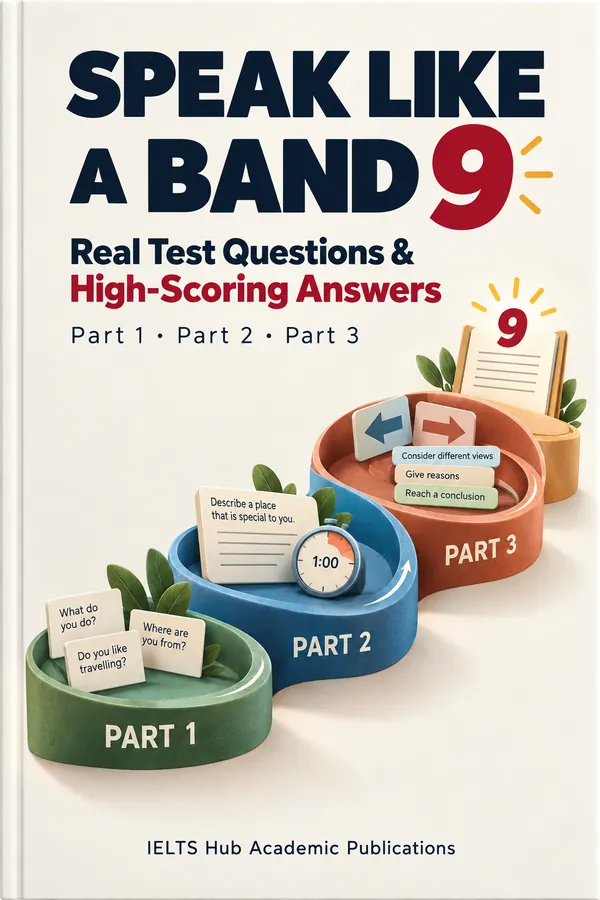
Speaking
Speak Like a Band 9
Real Test Questions & High-Scoring Answers
₹299$9.99CAD 13.99AUD 14.99£7.99NZD 16.99€8.99AED 39SGD 12.99
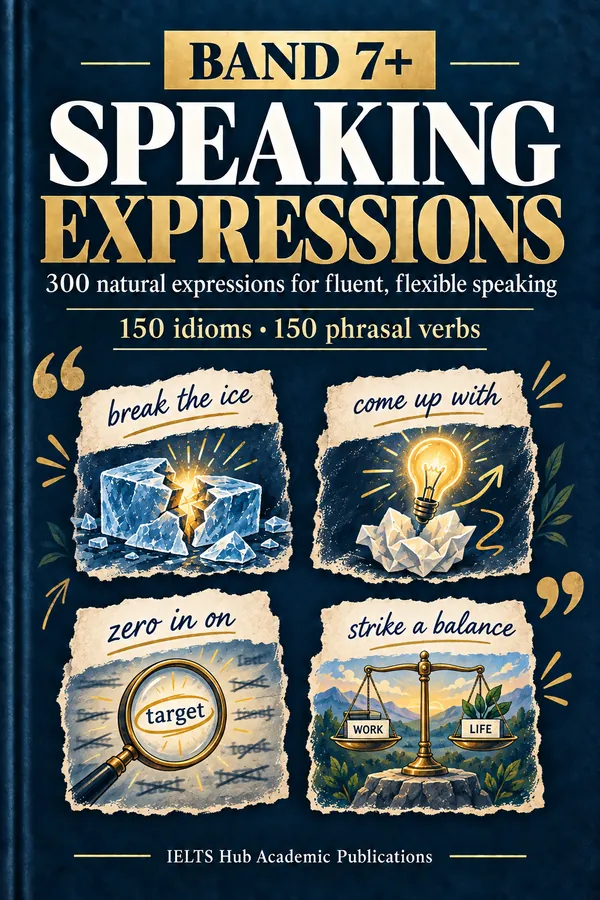
Speaking
Band 7+ Speaking Expressions
300 natural expressions for fluent, flexible speaking
₹199$6.99CAD 8.99AUD 9.99£4.99NZD 10.99€5.99AED 24SGD 8.99
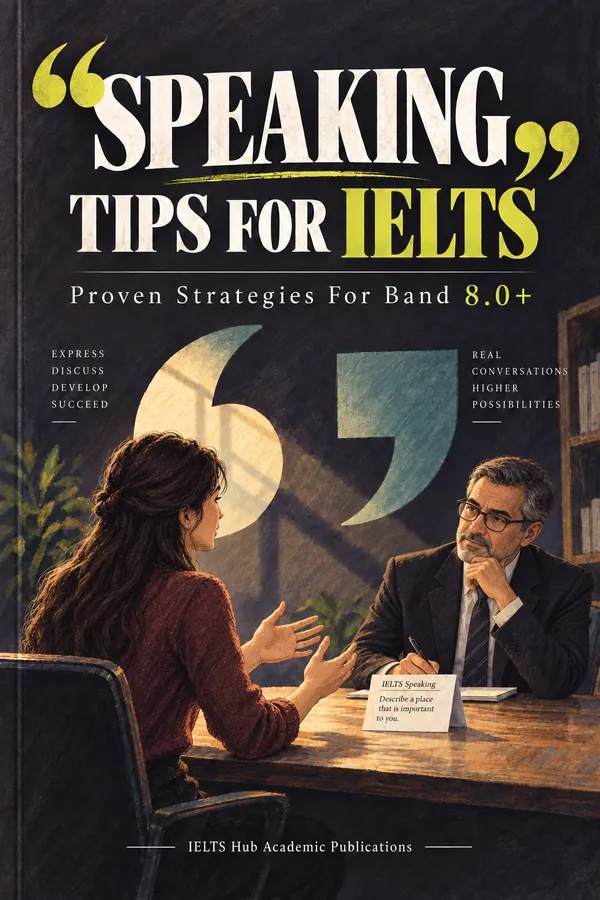
Speaking
Speaking Tips for IELTS
Proven Strategies for Band 8.0+
₹299$9.99CAD 13.99AUD 14.99£7.99NZD 16.99€8.99AED 39SGD 12.99