Speaking test #601
Part 1 · Interview
4 to 5 minutes. The examiner asks about you and familiar topics.
Can you tell me your full name?
Where are you from?
Do you work or are you a student?
How much money is enough?
It is difficult to quantify how much money is "enough" as it varies from person to person and their individual needs and wants. For some, having a comfortable lifestyle with basic necessities met may be considered enough, while for others, having a large amount of wealth and luxury items may be considered enough. Ultimately, it is a matter of perspective and personal satisfaction.
Why do people care too much about money?
I believe that people care too much about money because it is a means to achieve certain goals and aspirations in life, such as providing for oneself and one's family, achieving financial stability, and having the ability to pursue one's interests and passions. Additionally, society often places a great deal of emphasis on wealth and material success, which can lead to an obsession with accumulating more money.
Is money important to you?
Money is certainly important to me as it allows me to meet my basic needs and provides a sense of security and stability in my life. However, I also believe that money is not the only thing that defines one's worth or happiness, and that there are many other things in life that are just as important, such as relationships, personal growth, and fulfillment.
What do people in your country save money for?
In my country, people save money for a variety of reasons. Many people save for their future, such as retirement or their children's education. Others may save for a specific goal or purchase, such as buying a house or a car. Additionally, many people in my country also save for unexpected expenses or emergencies, such as medical bills or job loss. Overall, saving for financial security and stability is a common goal for many people in my country.
Do you like to get up early in the morning?
I am definitely an early riser. I find that there is something very refreshing and energizing about starting the day before the sun comes up. The quiet of the morning and the sense of accomplishment that comes with getting a head start on the day is something that I find very appealing.
What is your morning routine?
My morning routine starts with me getting up at around 6am. After that, I make myself a cup of coffee and sit down with my journal to do some morning writing. This is a great way for me to clear my head and get my thoughts in order before the day begins. After that, I spend some time stretching and doing yoga to get my body moving and energized. After that, I take a shower and get dressed for the day.
What did you do in the morning when you were little?
When I was little, my mornings were pretty low key. I would usually wake up around 7am and spend some time watching cartoons or playing with my toys. After that, I would have breakfast and then spend some time getting ready for school. I always loved the mornings when I was a kid because it was a time to be carefree and to just enjoy the day ahead.
Is there any difference between what you do in the morning now and what you did in the past?
There is definitely a difference between what I do in the morning now and what I did in the past. As a child, my mornings were all about play and fun. Now, as an adult, my mornings are focused on getting myself prepared for the day ahead. I spend more time on self-care and self-improvement activities like yoga and journaling, and less time on leisure activities. But overall, I still enjoy waking up early and starting my day before the sun comes up.
You will have to talk about the topic for one to two minutes. You have one minute to think about what you are going to say. You can make some notes to help you if you wish.
A historical period you want to know more about
You should say:
- What specific historical period it is
- Why you are interested in learning more about it
- What aspects of the period intrigue you
- How you plan to further explore and study this historical period
The historical period that I am keen on delving deeper into is the Mughal era in India, which spanned from the early 16th to the mid-19th century. I have always been fascinated by the grandeur and opulence of this time, where art, architecture, and culture flourished under the rule of the Mughal emperors. The rich tapestry of history woven during this period intrigues me, prompting a desire to understand the dynamics of power, politics, and society that shaped this era.
What captivates me the most about the Mughal period is the synthesis of diverse cultural influences that resulted in the creation of exquisite masterpieces like the Taj Mahal and Red Fort. The intricate artwork, the fusion of Persian and Indian architectural styles, and the patronage of the arts by emperors such as Akbar and Shah Jahan are aspects that I find truly captivating. Exploring the interplay of religion, art, and politics during this time offers a window into understanding the complexities of India's history and heritage.
To further explore and study the Mughal era, I plan to immerse myself in historical texts, visit museums and historical sites, and engage with experts in the field. I aim to deepen my knowledge by reading scholarly works, attending lectures, and perhaps even participating in archaeological digs to uncover more insights into this fascinating period. By actively seeking out opportunities to learn and engage with the Mughal history, I hope to gain a comprehensive understanding of the socio-cultural dynamics that defined this significant era in India's past.
- Words
- 253
- Sentences
- 9
- Words per sentence
- 28.1
- Speaking time
- about 1.9 min
Counted at 130 words a minute. The exam gives you one to two minutes.
Part 3 · Discussion
4 to 5 minutes. The examiner asks broader questions linked to the cue card topic.
How do different cultures view the importance of historical times?
The significance of historical periods can vary dramatically across cultures, shaped by unique experiences and values. For instance, in Western societies, the Enlightenment is often celebrated as a time of intellectual awakening, whereas in many Asian cultures, periods of dynastic rule might be regarded as the pinnacle of societal achievement. These differing perspectives can influence everything from education to national identity. Moreover, events like colonialism or revolutions can hold different meanings; one culture might see them as periods of oppression, while another might celebrate them as moments of liberation and progress. Ultimately, it’s fascinating how the lens through which we view history can create rich tapestries of meaning that resonate differently across the globe.
Some people believe that knowing history is important for personal growth. What do you think about this idea?
I completely agree that understanding history is essential for personal development. History provides us with invaluable lessons about human behavior, societal progress, and the consequences of our actions. By studying past events, we can gain a deeper appreciation for our cultural heritage and recognize patterns that still resonate in today’s world. Moreover, it fosters critical thinking and encourages us to question the status quo, which is crucial for personal growth. Ultimately, history serves as a guide, helping us navigate the complexities of modern life and informing our decisions for a better future.
How does learning about past times influence our values and rules in society today?
Studying historical periods is absolutely crucial in shaping our current societal values and norms. By delving into the past, we can gain invaluable insights into the mistakes and triumphs of previous generations, which helps us understand the evolution of our cultural identity. For instance, examining movements like the civil rights struggle illuminates the importance of equality and justice, principles that are still at the forefront of social discourse today. Moreover, history often provides us with cautionary tales that encourage us to reflect on our current choices, ensuring that we don’t repeat past errors. Overall, the lessons drawn from history serve as a moral compass that guides contemporary society, fostering a more informed and empathetic community.
Why do you think some people like certain historical times better than others?
I think people are often drawn to specific historical periods because they resonate with certain values or experiences that feel relevant to them. For instance, the cultural richness of the Renaissance might captivate individuals who appreciate artistic expression and innovation. Alternatively, some might be fascinated by the tumultuous events of the 20th century, as it reflects significant social change and progress. Additionally, personal connections, such as family history or education, can also play a crucial role in shaping one’s interests. Ultimately, it’s a combination of curiosity and personal relevance that makes certain eras more appealing than others.
How might people's interest in history change as society moves forward?
Interest in historical periods can evolve significantly as society progresses due to various factors such as technological advancements and cultural shifts. For instance, as we gain access to more sophisticated digital archives and virtual reality experiences, people can engage with history in a more immersive way. This accessibility could spark a renewed interest in lesser-known eras that were previously overshadowed by more prominent historical narratives. Additionally, as societal values change, certain periods may resonate more with contemporary issues, prompting us to re-evaluate and appreciate them in a new light. Overall, the dynamic relationship between history and modern society can lead to a rich tapestry of interest that continually evolves.
What steps can we take to get more people interested in and learning about history?
To encourage more people to engage with and learn about history, I believe a multifaceted approach is essential. Firstly, integrating interactive exhibits in museums could make history feel more tangible and exciting for visitors. Virtual reality experiences, for example, can transport individuals back in time, allowing them to witness significant events firsthand. Additionally, community events such as historical reenactments or themed festivals can spark interest and create a sense of connection to the past. Finally, incorporating history into popular media, like films and podcasts, can make it more accessible and relatable to a broader audience, ultimately fostering a deeper appreciation for our shared heritage.
Go further with the books
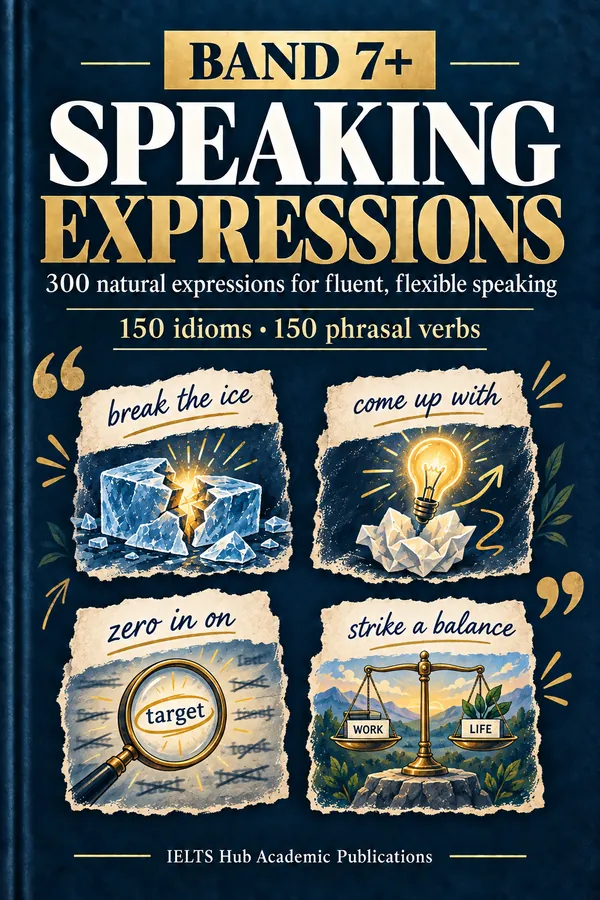
Speaking
Band 7+ Speaking Expressions
300 natural expressions for fluent, flexible speaking
₹199$6.99CAD 8.99AUD 9.99£4.99NZD 10.99€5.99AED 24SGD 8.99

Speaking
Speaking Tips for IELTS
Proven Strategies for Band 8.0+
₹299$9.99CAD 13.99AUD 14.99£7.99NZD 16.99€8.99AED 39SGD 12.99
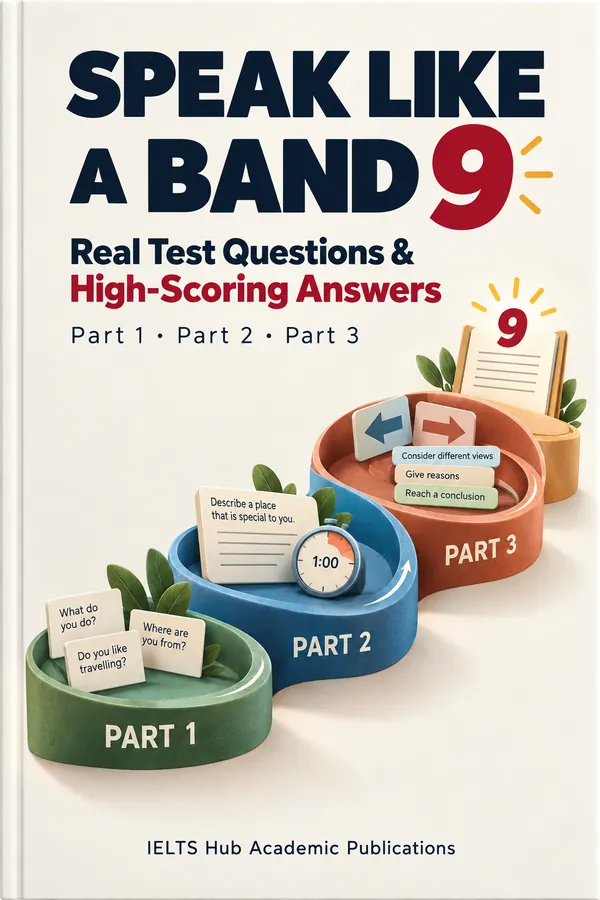
Speaking
Speak Like a Band 9
Real Test Questions & High-Scoring Answers
₹299$9.99CAD 13.99AUD 14.99£7.99NZD 16.99€8.99AED 39SGD 12.99