Speaking test #612
Part 1 · Interview
4 to 5 minutes. The examiner asks about you and familiar topics.
Can you tell me your full name?
Where are you from?
Do you work or are you a student?
You will have to talk about the topic for one to two minutes. You have one minute to think about what you are going to say. You can make some notes to help you if you wish.
A subject you did not like but now you find interesting
You should say:
- What subject it was
- Why you did not like it initially
- How your perception changed
- What aspects of the subject you find interesting now
What subject it was
Initially, the subject I did not like but now find intriguing is History. I used to dislike History mainly due to its emphasis on memorizing dates, events, and names of historical figures. The rote learning aspect of the subject made it tedious and uninteresting to me. Moreover, I found it challenging to connect with the past and see its relevance to the present.
Why you did not like it initially
However, my perception of History changed when I started delving deeper into the reasons behind historical events and their impacts on societies. I realized that History is not just about memorization but about understanding the complexities of human behavior, societal dynamics, and the consequences of past actions. This shift in perspective helped me appreciate the subject in a new light.
How your perception changed
What I find fascinating about History now is its ability to provide insights into the origins of current global issues and trends. By studying historical events and patterns, I can make connections between the past and the present, gaining a deeper understanding of the world we live in. Additionally, learning about different civilizations and cultures through History has broadened my worldview and enriched my knowledge.
What aspects of the subject you find interesting now
In conclusion, my journey from disliking History to finding it interesting has been transformative. I now see History as a narrative of human experiences, struggles, and triumphs that shape our present and future. The subject has become a source of learning and reflection for me, allowing me to appreciate the complexities and interconnectedness of our world in a profound way.
- Words
- 248
- Sentences
- 13
- Words per sentence
- 19.1
- Speaking time
- about 1.9 min
Counted at 130 words a minute. The exam gives you one to two minutes.
Part 3 · Discussion
4 to 5 minutes. The examiner asks broader questions linked to the cue card topic.
How can a person's view of a topic change over time, and what things might cause this change?
One's perception of a subject can definitely evolve over time, often influenced by a variety of experiences and insights. For instance, a student might initially view mathematics as a daunting and abstract subject, but after engaging with a passionate teacher or discovering its real-world applications, their perspective can shift dramatically. Life experiences, such as personal challenges or successes, can also play a significant role in reshaping how we feel about certain topics. Additionally, exposure to different cultures or ideas can broaden our understanding and appreciation, leading to a more nuanced view. Ultimately, it’s fascinating how our mindsets can transform with new knowledge and experiences, often turning what once seemed uninteresting into something truly captivating!
How much can personal experiences affect a person's interest in a certain topic?
Personal experiences can profoundly shape an individual's interest in a particular subject, often acting as a catalyst for curiosity and engagement. For instance, someone who has had a transformative experience while traveling might develop a passion for geography or cultural studies. Similarly, a negative encounter, such as struggling with a subject in school, can sometimes ignite a desire to understand it better, leading to a fierce interest in that field. Furthermore, personal experiences often provide a context that makes theoretical knowledge more relatable and meaningful, which can be incredibly motivating. Ultimately, the impact of personal experiences can vary greatly from person to person, but their influence is undeniably significant.
How do teachers influence students' feelings about subjects they don't like at first?
Teachers play a crucial role in shaping students' attitudes towards subjects that may not initially pique their interest. Their enthusiasm and passion can be infectious, often turning a dull subject into something engaging and fun. By employing innovative teaching methods and making the material relevant to students' lives, teachers can spark curiosity and encourage a deeper understanding. Moreover, by fostering a supportive classroom environment, they help students feel more confident in tackling challenging topics. Ultimately, a teacher's ability to connect with their students and adapt their approach can significantly influence how students perceive and engage with less appealing subjects.
Why do you think some topics attract more interest as people grow up or have more life experiences?
That's a fascinating question! I believe that as people mature and accumulate life experiences, their perspectives broaden significantly. This often leads to a deeper appreciation for subjects that resonate more profoundly with their own journeys. For instance, topics like psychology or philosophy tend to become increasingly appealing because they help individuals navigate their own emotional landscapes and understand the complexities of human behavior. Additionally, the context in which we learn can change dramatically; when we encounter challenges or milestones in life, we might find ourselves drawn to subjects that offer insight or solutions to those experiences. Ultimately, I think this evolution in interest reflects our natural curiosity and desire for personal growth.
How could more online resources change how people feel about topics they used to dislike?
The increasing availability of online resources has the potential to completely transform how people engage with subjects they previously found unappealing. With platforms offering a wealth of information, from engaging videos to interactive courses, learners can explore topics at their own pace and in a way that suits their learning style. This accessibility can spark a newfound interest in subjects that once felt daunting or boring, as individuals can discover fascinating aspects that resonate with them personally. Moreover, the ability to connect with communities online allows people to share their experiences and insights, which can further enrich their understanding and appreciation of these topics. Ultimately, this shift could lead to a more open-minded approach to learning, fostering a culture where curiosity thrives and previously disliked subjects are viewed through a fresh lens.
What steps can schools take to make subjects that students usually find boring more interesting?
Educational institutions can adopt a variety of innovative approaches to spark interest in subjects that students often find unengaging. One effective measure is to incorporate hands-on learning experiences, such as interactive projects or real-world applications, which can make the material come alive and feel relevant. Additionally, bringing in guest speakers or industry professionals can provide students with a fresh perspective, helping them see the practical implications of what they’re studying. Furthermore, integrating technology, like gamification or virtual reality, can transform traditional lessons into engaging, immersive experiences that captivate students’ attention. Overall, by creating a more dynamic and student-centered learning environment, schools can significantly enhance motivation and interest in less popular subjects.
Go further with the books
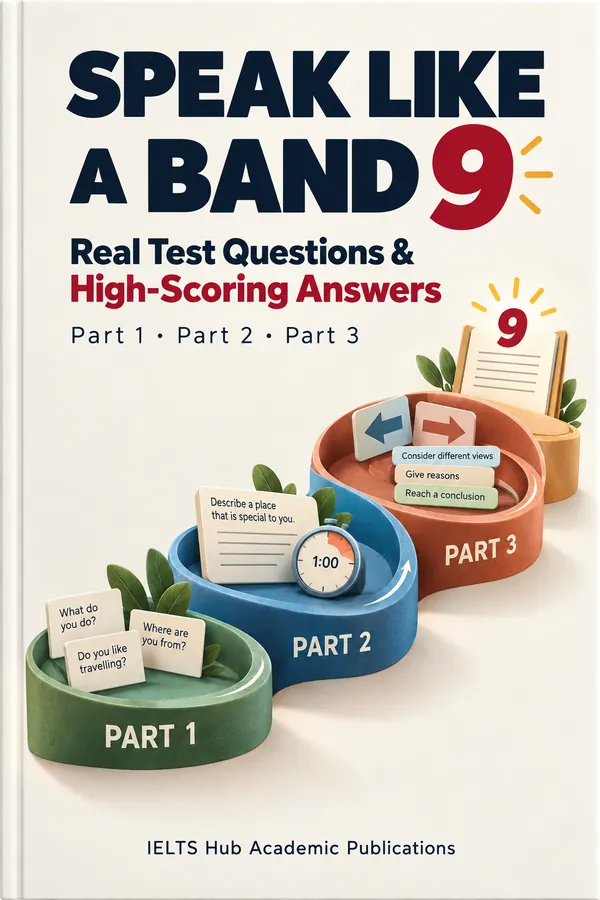
Speaking
Speak Like a Band 9
Real Test Questions & High-Scoring Answers
₹299$9.99CAD 13.99AUD 14.99£7.99NZD 16.99€8.99AED 39SGD 12.99

Speaking
Band 7+ Speaking Expressions
300 natural expressions for fluent, flexible speaking
₹199$6.99CAD 8.99AUD 9.99£4.99NZD 10.99€5.99AED 24SGD 8.99

Speaking
Speaking Tips for IELTS
Proven Strategies for Band 8.0+
₹299$9.99CAD 13.99AUD 14.99£7.99NZD 16.99€8.99AED 39SGD 12.99