Speaking test #620
Part 1 · Interview
4 to 5 minutes. The examiner asks about you and familiar topics.
Can you tell me your full name?
Where are you from?
Do you work or are you a student?
Do you like running?
Oh, absolutely! I absolutely love running. It's such a great way to clear my head and get some exercise in. Plus, there's nothing quite like the feeling of crossing the finish line after a long run.
How often do you go for a run?
I try to go for a run at least three times a week. Sometimes it's a little difficult to fit it into my schedule, but I always make sure to make time for it.
Where do you usually go running?
I usually go running in the park near my house. It's a beautiful area with lots of trees and a nice path to run on. I also like to mix it up and run on the beach or on a trail in the mountains.
Would you continue running in the future?
Definitely! Running is such an important part of my life and I can't imagine ever giving it up. It's not only good for my physical health but also for my mental well-being. I plan on continuing to run for as long as I can.
How do you feel about birds? [Why?
?] I absolutely adore birds! Their vibrant colors and unique songs always bring a smile to my face. Plus, it's amazing to see the different adaptations and behaviors they exhibit in their natural habitats.
Have you seen many kinds of birds?
Yes, I've been fortunate enough to observe a wide variety of birds in my travels. From the majestic bald eagle in the United States to the colorful parrots of South America, it's always a treat to spot a new species.
How do people in your country feel about birds?
In India, birds hold a special place in our culture and traditions. Many people keep bird feeders in their gardens to attract a variety of species, and it's not uncommon to see people taking early morning walks to watch and photograph the birds.
Do any birds have any particular significance in your country?
Absolutely! The peacock is the national bird of India and is revered for its beauty and grace. In Hindu mythology, the god Krishna is often depicted with a peacock feather in his headband, symbolizing his vanity and pride.
You will have to talk about the topic for one to two minutes. You have one minute to think about what you are going to say. You can make some notes to help you if you wish.
Describe a piece of art you like
You should say:
- What the art piece is
- Where you first saw it
- What you like about it
- How it makes you feel
What the art piece is
I would like to talk about a stunning piece of art that has captivated me ever since I first laid eyes on it - the Taj Mahal. The Taj Mahal is an iconic white marble mausoleum located in Agra, India, and is considered one of the most beautiful architectural masterpieces in the world. I first saw this magnificent structure during a family trip to Agra when I was a child, and its grandeur left me in awe.
Where you first saw it
What I particularly like about the Taj Mahal is its exquisite symmetry and intricate details. The way the sunlight plays on the white marble, changing its hues throughout the day, is truly mesmerizing. The intricate carvings and delicate inlay work on the walls and domes showcase the craftsmanship and dedication of the artisans who built this marvel centuries ago. The reflection of the Taj Mahal in the pool of water in front of it creates a surreal and magical ambiance that is hard to describe in words.
What you like about it
Every time I think about the Taj Mahal, it fills me with a sense of wonder and admiration. The sheer beauty and elegance of this architectural wonder make me feel grateful to be able to witness such a masterpiece in person. Standing in front of the Taj Mahal, I am reminded of the power of love and the enduring legacy of the Mughal emperor Shah Jahan, who built it as a symbol of his love for his late wife Mumtaz Mahal. The peacefulness and serenity that envelops the surroundings of the Taj Mahal make me feel a sense of tranquility and awe at the same time.
How it makes you feel
In conclusion, the Taj Mahal holds a special place in my heart as a piece of art that symbolizes love, beauty, and craftsmanship. Its majestic presence and intricate details continue to fascinate me, and every time I see it, I am reminded of the timeless beauty that art can create. The Taj Mahal is not just a monument but a testament to the enduring power of love and artistry, making it a truly remarkable piece of art that I will always cherish.
- Words
- 352
- Sentences
- 14
- Words per sentence
- 25.1
- Speaking time
- about 2.7 min
Counted at 130 words a minute. The exam gives you one to two minutes.
Part 3 · Discussion
4 to 5 minutes. The examiner asks broader questions linked to the cue card topic.
How do you think modern art is different from traditional art?
Modern art differs from traditional art forms in several fascinating ways. Firstly, while traditional art often adheres to established techniques and conventions, modern art embraces experimentation and innovation, encouraging artists to push the boundaries of creativity. This shift has led to a plethora of styles and mediums, from abstract expressions to digital installations, which are often more reflective of contemporary society and its complexities. Moreover, modern art tends to emphasize the subjective experience of the viewer, inviting personal interpretation rather than dictating a specific message. For instance, while traditional art might depict historical events or religious themes with a clear narrative, modern pieces can evoke emotions or provoke thoughts through abstraction or unconventional methods. Overall, this evolution highlights how art continuously adapts to reflect the ever-changing landscape of human experience.
Some people think art should be available to everyone, while others think it should be limited to a few. What do you think about this?
I firmly believe that art should be accessible to everyone. Art has an incredible power to inspire and transform lives, and when it is kept exclusive, we risk losing the rich diversity of perspectives that can emerge from different communities. Making art accessible allows people from various backgrounds to engage with and appreciate creative expressions, fostering a sense of belonging and shared experience. Moreover, when art is available to all, it encourages budding artists to explore their talents without the constraints of elitism. Ultimately, democratizing art enriches our culture and promotes a more inclusive society, which I think is essential for our collective growth.
How important do you think art is in forming cultural identity?
Art plays a profoundly significant role in shaping cultural identity. It serves as a mirror, reflecting the values, beliefs, and traditions of a community. Through various forms—like painting, music, and dance—art encapsulates the essence of a culture, allowing people to connect with their heritage in a deeply emotional way. Moreover, it fosters a sense of belonging and unity among individuals, helping them to appreciate their shared history. In a world that is constantly changing, art becomes a vital tool for preserving cultural narratives and ensuring that future generations remain connected to their roots. Ultimately, it’s fascinating how art not only expresses cultural identity but also actively shapes and evolves it over time.
What makes some artworks more appealing to people than others?
People are often drawn to certain pieces of art due to a combination of personal experiences, emotional resonance, and aesthetic appeal. For instance, a painting that reminds someone of their childhood or evokes a strong memory can create a deep connection, making it more significant than others. Additionally, cultural influences play a crucial role; different backgrounds can shape our perception and appreciation of art. Furthermore, the intricate details and vibrant colors in a piece can captivate viewers, drawing them in and sparking their imagination. Ultimately, art is a deeply personal experience, and what resonates with one person may not necessarily have the same effect on another.
How could the role of art in society change in the coming decades?
The role of art in society is likely to undergo significant transformation in the coming decades. As technology continues to evolve rapidly, we may see art becoming increasingly intertwined with digital mediums, leading to innovative forms like virtual reality art exhibitions or interactive installations. Moreover, art could play a crucial role in addressing pressing social issues, acting as a catalyst for change and raising awareness about topics such as climate change and inequality. Additionally, I believe that as globalization continues to blur cultural boundaries, we will witness a fusion of artistic styles that reflects a more interconnected world. Ultimately, art will not only serve as a means of expression but also as a powerful tool for fostering community and dialogue in our rapidly changing society.
What steps can be taken to get more people involved with art in their neighborhoods?
To encourage more people to engage with art in their communities, a multifaceted approach could be incredibly effective. First and foremost, organizing community art events like festivals or exhibitions can create a buzz and draw in diverse crowds. Additionally, providing free or low-cost workshops led by local artists would not only foster interest but also help individuals develop their own creative skills. It’s also essential to collaborate with schools to integrate art into the curriculum, as early exposure can cultivate a lifelong appreciation. Finally, leveraging social media platforms to showcase local artists and their work can inspire others to get involved and support their community’s artistic endeavors. Overall, a combination of accessibility, education, and promotion can significantly enhance community engagement with the arts.
Go further with the books
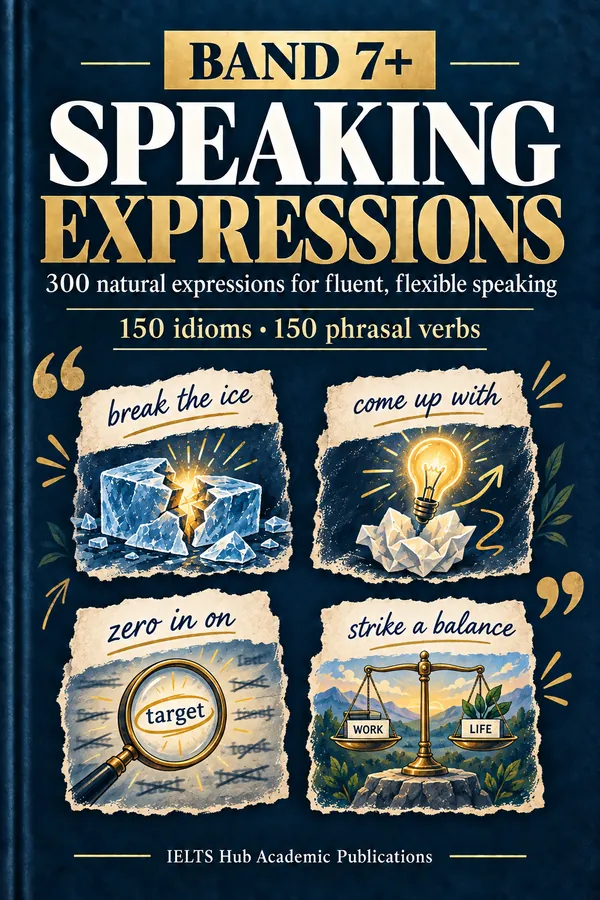
Speaking
Band 7+ Speaking Expressions
300 natural expressions for fluent, flexible speaking
₹199$6.99CAD 8.99AUD 9.99£4.99NZD 10.99€5.99AED 24SGD 8.99
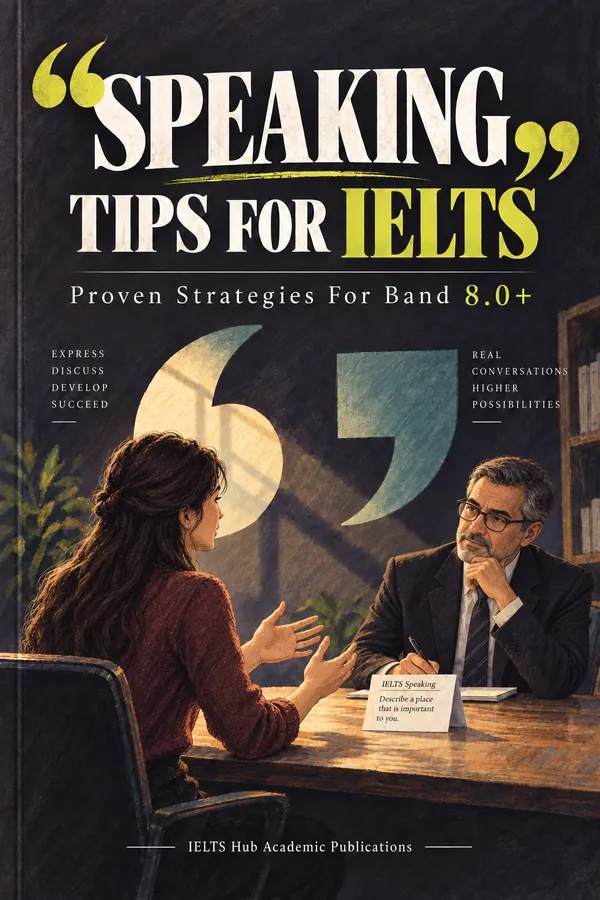
Speaking
Speaking Tips for IELTS
Proven Strategies for Band 8.0+
₹299$9.99CAD 13.99AUD 14.99£7.99NZD 16.99€8.99AED 39SGD 12.99
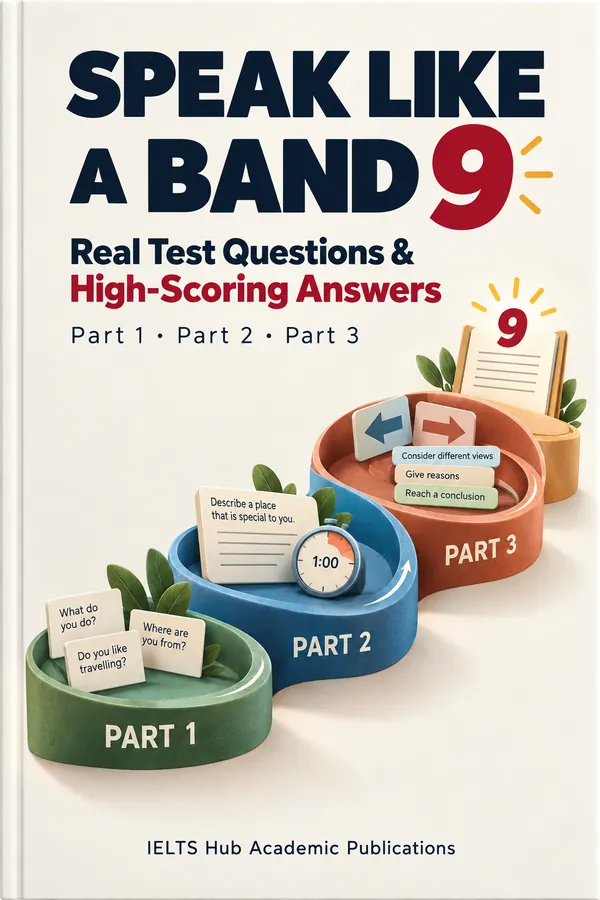
Speaking
Speak Like a Band 9
Real Test Questions & High-Scoring Answers
₹299$9.99CAD 13.99AUD 14.99£7.99NZD 16.99€8.99AED 39SGD 12.99