Speaking test #622
Part 1 · Interview
4 to 5 minutes. The examiner asks about you and familiar topics.
Can you tell me your full name?
Where are you from?
Do you work or are you a student?
Are you still in contact with your friends from high school?
Yes, I am still in contact with a few of my friends from high school. We keep in touch through social media and occasionally meet up for reunions.
What was your high school like?
My high school was a large public school with a diverse student population. The teachers were dedicated and the facilities were modern and well-equipped. The school offered a variety of extracurricular activities and clubs, which allowed me to explore my interests and passions.
What happened on the first day of high school?
On the first day of high school, I remember feeling a mix of emotions. I was excited to start a new chapter in my education, but also a bit nervous to meet new people and navigate a new school environment. My parents walked me to school and helped me find my classes. I met some of my classmates and we bonded over the shared experience of starting high school.
Did your parents choose your secondary school (= high school) for you?
No, my parents did not choose my high school for me. They gave me options of schools to choose from and supported my decision in the end. I researched and visited different schools before making my final choice. I believe that it is important for students to have a say in their education and make decisions that align with their goals and aspirations.
At what age did you start studying science at school?
I started studying science at the age of 11, when I entered secondary school.
Do you find science a difficult or an easy subject?
I find science to be a challenging but highly rewarding subject. It requires a lot of critical thinking and problem-solving skills, but the concepts and principles taught in science are also fascinating and enlightening.
What was the most interesting science topic for you at school?
The most interesting science topic for me at school was definitely physics. I found the laws of motion and the study of energy and matter to be incredibly intriguing and thought-provoking.
How useful is your knowledge of science in your daily life?
My knowledge of science is extremely useful in my daily life. It helps me to understand the world around me and make informed decisions. For example, my understanding of physics and chemistry helps me to appreciate the technology and appliances I use every day, and my knowledge of biology and health sciences enables me to make informed choices about my own well-being.
You will have to talk about the topic for one to two minutes. You have one minute to think about what you are going to say. You can make some notes to help you if you wish.
You showed or taught a young person how to do something
You should say:
- Who the young person was
- What you taught them
- How you taught them
- The outcome of your teaching
Who the young person was
I vividly remember the time when I taught my younger cousin, Riya, how to bake chocolate chip cookies. Riya, a bright and energetic 10-year-old at the time, had always shown interest in baking but had never tried it herself. Excited for the opportunity to share my passion for baking with her, I decided to teach her how to make her favorite treat.
What you taught them
I began by explaining the recipe to Riya in simple terms, breaking down each step and ingredient to ensure she understood the process. I encouraged her to ask questions and actively participate in the preparation, making sure she felt confident and engaged throughout the lesson. We measured the ingredients together, mixed the dough, and shaped the cookies before placing them in the oven.
How you taught them
As Riya eagerly waited for the cookies to bake, I explained the science behind the ingredients and how they interact to create the perfect cookie texture. Seeing her eyes light up with curiosity and excitement was truly rewarding. When the timer went off, we took out the freshly baked cookies and let them cool before indulging in our delicious creation.
The outcome of your teaching
The outcome of our baking session was beyond my expectations. Riya not only learned how to bake chocolate chip cookies but also developed a newfound interest in baking. She proudly shared her cookies with her family and friends, receiving rave reviews for her first attempt. Teaching Riya how to bake was a memorable experience that strengthened our bond and inspired her to explore new culinary adventures.
- Words
- 251
- Sentences
- 13
- Words per sentence
- 19.3
- Speaking time
- about 1.9 min
Counted at 130 words a minute. The exam gives you one to two minutes.
Part 3 · Discussion
4 to 5 minutes. The examiner asks broader questions linked to the cue card topic.
How do the ways of teaching kids differ from those used for adults?
That's a fascinating question! The methods of teaching young people often focus on interactive and engaging techniques, such as games and hands-on activities, to keep their attention and facilitate learning. In contrast, adult education tends to emphasize self-directed learning and critical thinking, allowing learners to draw from their own experiences and apply knowledge practically. Additionally, young learners usually benefit from structured environments, while adults might prefer a more flexible approach that accommodates their busy lives. Overall, understanding these differences is crucial for educators to effectively cater to the needs of both demographics!
Some people think that teaching kids practical skills is better than academic knowledge. What do you think about this?
I absolutely believe that teaching children practical skills can be incredibly beneficial, often even more so than traditional academic knowledge. While a solid foundation in subjects like math and science is important, practical skills equip children to navigate real-life challenges effectively. For instance, learning to cook, manage finances, or even perform basic repairs fosters a sense of independence and responsibility. Additionally, these skills can enhance critical thinking and problem-solving abilities, which are essential in today’s fast-paced world. Ultimately, a balance between practical skills and academic knowledge can create well-rounded individuals ready to tackle various aspects of life.
How important is it for young people to learn life skills like cooking or budgeting in today's world?
In today’s fast-paced world, it's absolutely crucial for young people to learn essential life skills like cooking and budgeting. These skills not only foster independence but also empower them to make informed decisions. For instance, knowing how to prepare nutritious meals can significantly impact their health and well-being, while mastering budgeting can lead to better financial stability in the future. Moreover, these skills can instill a sense of responsibility and confidence, which is vital as they transition into adulthood. Ultimately, equipping young individuals with these capabilities prepares them to navigate the complexities of modern life with greater ease and resilience.
Why do you think some people learn better from friends than from teachers or leaders?
That's a fascinating question! I believe the ease of learning from peers often stems from a few key factors. First and foremost, peer interactions tend to create a more relaxed and informal atmosphere, which can significantly lower anxiety levels. When students engage with their peers, they often feel more comfortable asking questions and expressing their thoughts without the fear of judgment that might come from an authority figure. Additionally, peers can relate to each other's experiences and challenges on a more personal level, making the learning process feel much more relevant and approachable. This shared understanding can foster a sense of camaraderie and collaboration, which can be incredibly motivating. Overall, it’s this combination of comfort and relatability that makes peer learning such a powerful tool for many individuals.
How could the ways we teach young people change in the next few decades?
The methods of teaching young people are likely to undergo significant transformations in the coming decades, driven largely by advancements in technology and a deeper understanding of how we learn. For instance, we might see a shift towards more personalized learning experiences, where educators utilize data analytics to tailor lessons to individual students' needs and preferences. Additionally, the integration of virtual and augmented reality could make learning much more immersive and engaging, allowing students to explore complex concepts in a hands-on manner. Moreover, there will likely be an increased emphasis on collaborative learning, facilitated by online platforms that connect students from around the globe. This not only fosters a sense of community but also helps develop essential skills such as teamwork and communication. Overall, the future of education seems incredibly promising, blending traditional methods with innovative approaches to create a more dynamic learning environment.
How can we improve the learning experience for young people in different places?
To enhance the learning experience for young individuals, a multifaceted approach is essential. Firstly, integrating interactive learning methods can significantly engage students, making the process more enjoyable and effective. For instance, using technology like educational apps or gamified platforms can spark their interest and cater to different learning styles. Additionally, fostering a collaborative atmosphere in classrooms encourages peer-to-peer interaction, which can deepen understanding and retention of concepts. Lastly, incorporating real-world applications through field trips or project-based learning helps students connect theoretical knowledge with practical experiences, making education not just informative but also relevant.
Go further with the books
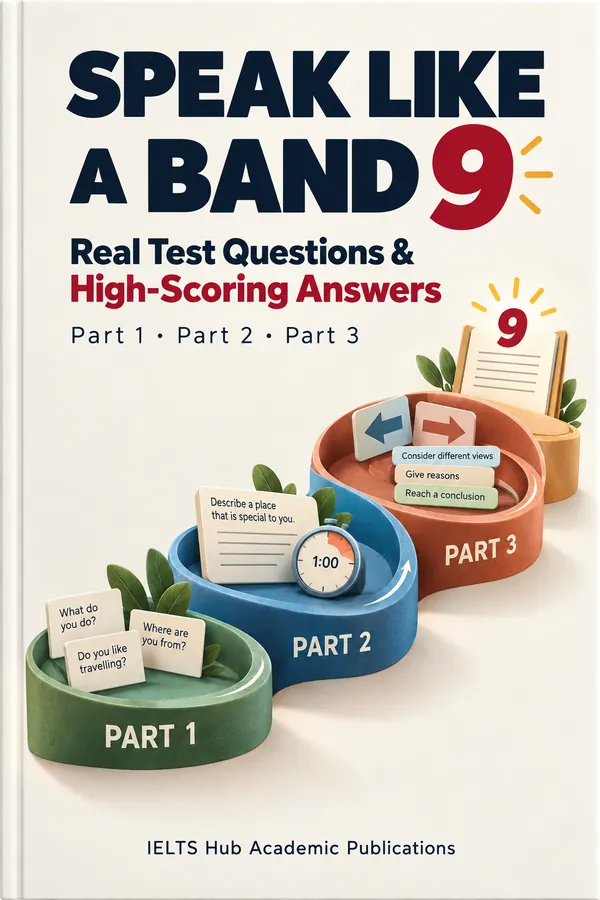
Speaking
Speak Like a Band 9
Real Test Questions & High-Scoring Answers
₹299$9.99CAD 13.99AUD 14.99£7.99NZD 16.99€8.99AED 39SGD 12.99
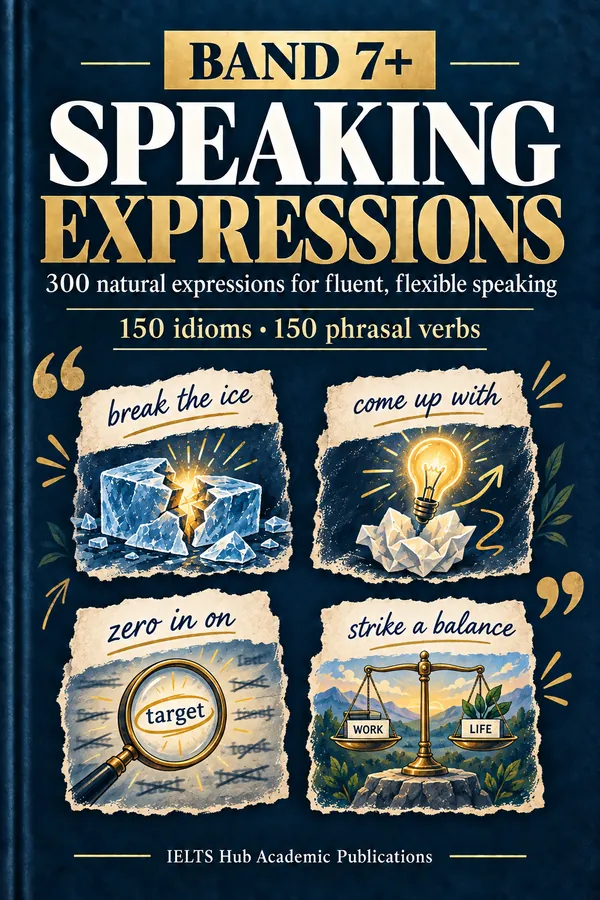
Speaking
Band 7+ Speaking Expressions
300 natural expressions for fluent, flexible speaking
₹199$6.99CAD 8.99AUD 9.99£4.99NZD 10.99€5.99AED 24SGD 8.99
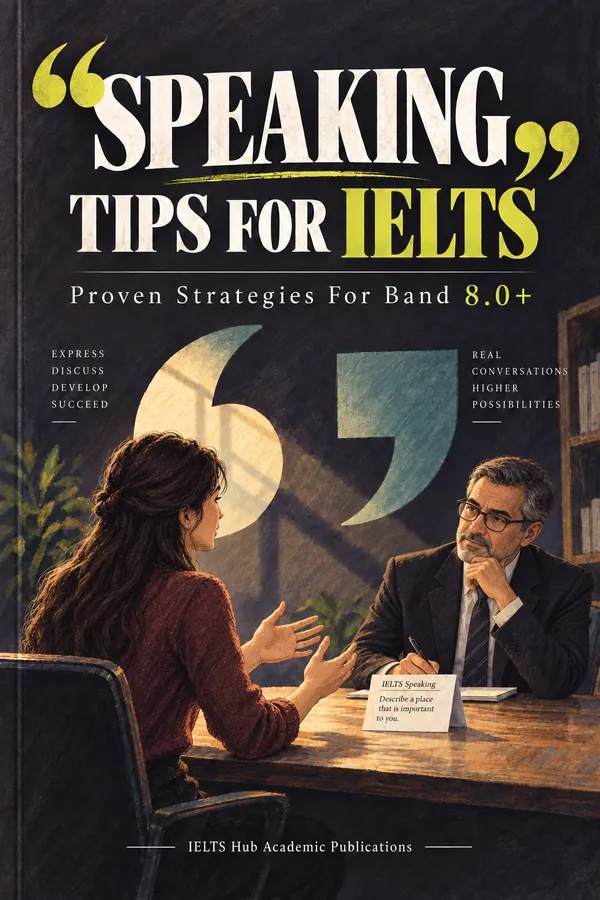
Speaking
Speaking Tips for IELTS
Proven Strategies for Band 8.0+
₹299$9.99CAD 13.99AUD 14.99£7.99NZD 16.99€8.99AED 39SGD 12.99