Speaking test #662
Part 1 · Interview
4 to 5 minutes. The examiner asks about you and familiar topics.
Can you tell me your full name?
Where are you from?
Do you work or are you a student?
Which part of your country (India) do you want to live in?
Well, I've always been drawn to the cultural vibrancy of the southern part of India, so I think I would love to live in a city like Chennai or Bangalore. The food, music, and art scene there just seem so rich and diverse, and I feel like there's always something new to discover. Plus, the weather is usually quite pleasant, which is always a plus!
What makes you feel proud of your country (India)?
Oh, there are so many things that make me proud of India. For one, our country has a rich and complex history that spans thousands of years, and I think it's really amazing to be able to be a part of that legacy. Additionally, India is home to a wide variety of cultural traditions and practices, and I think it's really special that we have such a diverse and multi-faceted society. Finally, I'm also proud of the fact that India has made great strides in recent years in terms of economic development and progress, and I think our country has a lot of potential for the future.
Do you know the history of your country (India) well?
Yes, I would say that I have a pretty good understanding of the history of India. I've always been fascinated by the country's past, and I've spent a lot of time reading about and learning about the various events and figures that have shaped our nation over the years. From the ancient civilizations that flourished in the Indus Valley, to the Mughal Empire, to the independence movement and beyond, there's just so much to explore and discover.
Will you stay in your country (India) in the future?
Well, that's a tough question to answer definitively, as it really depends on what opportunities come my way and what my personal and professional goals are at that point in time. However, I do love living in India and I feel a strong connection to the country, so it's definitely a possibility that I will stay here in the future. Ultimately, I think it's important to be open to new experiences and opportunities, and to be willing to take risks and explore new horizons. **So who knows what the future holds**?
You will have to talk about the topic for one to two minutes. You have one minute to think about what you are going to say. You can make some notes to help you if you wish.
Your experience of teaching a friend or family member
You should say:
- Who you taught
- What subject or skill you taught
- How you taught them
- The impact of the teaching on the person
Who you taught
Teaching a friend or family member can be a rewarding experience, and I had the opportunity to teach my younger cousin, Riya, a skill that has always been close to my heart. Riya, a curious and enthusiastic teenager, expressed interest in learning how to play the guitar, and I gladly took on the role of her mentor.
What subject or skill you taught
The subject I taught Riya was guitar playing. I have been playing the guitar for several years and have always found joy in sharing my knowledge with others. Teaching Riya not only allowed me to pass on my passion for music but also strengthened the bond between us as cousins.
How you taught them
I adopted a patient and personalized approach while teaching Riya. I started by teaching her the basics of guitar chords and strumming techniques, ensuring that she understood each step before moving on to more advanced lessons. I also encouraged her to practice regularly and provided constructive feedback to help her improve.
The impact of the teaching on the person
The impact of the teaching was profound on Riya. Over time, I witnessed her progress from clumsily strumming chords to playing her favorite songs with confidence. Not only did she develop a new skill, but she also gained a sense of accomplishment and self-confidence. Our shared moments of music and learning strengthened our relationship and created lasting memories that we both cherish.
- Words
- 220
- Sentences
- 12
- Words per sentence
- 18.3
- Speaking time
- about 1.7 min
Counted at 130 words a minute. The exam gives you one to two minutes.
Part 3 · Discussion
4 to 5 minutes. The examiner asks broader questions linked to the cue card topic.
How can teaching a friend be different from teaching someone you don't know?
Teaching a friend can be a vastly different experience compared to teaching a stranger, primarily because of the existing relationship and familiarity. With a friend, there's often a sense of trust and comfort that allows for more open communication and feedback. You might feel more at ease to explore different teaching methods or to experiment with creative approaches, knowing that your friend is likely to be more forgiving of mistakes or misunderstandings. In contrast, teaching a stranger can require a more structured approach, as you often need to establish rapport and gauge their learning style from the outset. This could lead to a more formal atmosphere, where both parties may feel a bit more reserved, at least initially. Overall, the dynamics of the relationship can significantly shape the effectiveness and enjoyment of the teaching experience.
Some people think it's harder to teach family than to teach other people. What do you think about this?
I can definitely see why some people feel that teaching family members might be more challenging. When you’re working with loved ones, emotions can run high, and there’s often a familiarity that can lead to misunderstandings. For instance, family dynamics can sometimes create a sense of entitlement, where they might expect you to adjust your teaching style to their preferences. On the flip side, there’s also a unique opportunity for deeper connections and trust, which can enhance the learning experience. Overall, while it may come with its own set of challenges, the rewards of teaching family can be incredibly fulfilling too!
How important do you think it is to have a good relationship between a teacher and a student, especially when teaching someone you know well?
Having a good teacher-student relationship is absolutely crucial to effective learning, especially when the student is someone close to you. When there’s a strong bond of trust and respect, it creates a safe environment where the student feels comfortable asking questions and making mistakes. This kind of relationship not only enhances motivation but also fosters a greater sense of engagement with the material. Moreover, being close to the student can sometimes complicate things, as personal feelings might blur the lines between teaching and friendship. However, if navigated well, it can lead to a more enriching and fulfilling learning experience for both parties.
Why do you think some people are better at teaching their friends or family than others?
That's a fascinating question! I believe several factors contribute to why some individuals excel at teaching their friends or family. Firstly, personal relationships play a crucial role; those who share a strong bond often communicate more openly, making it easier to convey complex ideas. Additionally, effective teachers usually possess a deep understanding of their subject matter, which allows them to explain concepts clearly and relate them to the learner's interests. Moreover, emotional intelligence is key—being able to gauge the learner’s receptiveness and adapt their teaching style accordingly can significantly enhance the effectiveness of the learning experience. Ultimately, it’s the combination of these elements that helps certain individuals shine in informal teaching settings.
How could technology in education change in the next few years, especially in personal tutoring?
The role of technology in education is bound to evolve dramatically in the coming years, especially in personal tutoring. We’re already seeing a shift towards more personalized learning experiences through platforms that adapt to individual students' needs. For instance, AI-driven applications can analyze a student's strengths and weaknesses, providing tailored resources that make learning more effective. Moreover, with the advent of virtual reality, tutoring could become an immersive experience, allowing students to explore complex subjects in a way that traditional methods simply can’t match. Overall, I believe that these advancements will not only enhance the learning process but also make education more accessible to a wider audience, breaking down geographical barriers.
What methods can be used to improve the learning experience for someone who has difficulty understanding the material?
To enhance the learning experience for someone who struggles with understanding the material, it's essential to adopt a variety of tailored strategies. One effective approach is to break down complex concepts into more manageable pieces, using visual aids or practical examples that relate to the learner's interests. Additionally, fostering a supportive environment where the individual feels comfortable asking questions can significantly boost their confidence and engagement. Incorporating interactive activities or group discussions can also facilitate deeper understanding, as it encourages collaboration and peer learning. Ultimately, the key is to remain patient and adaptable, ensuring that the learning experience is both enjoyable and effective.
Go further with the books
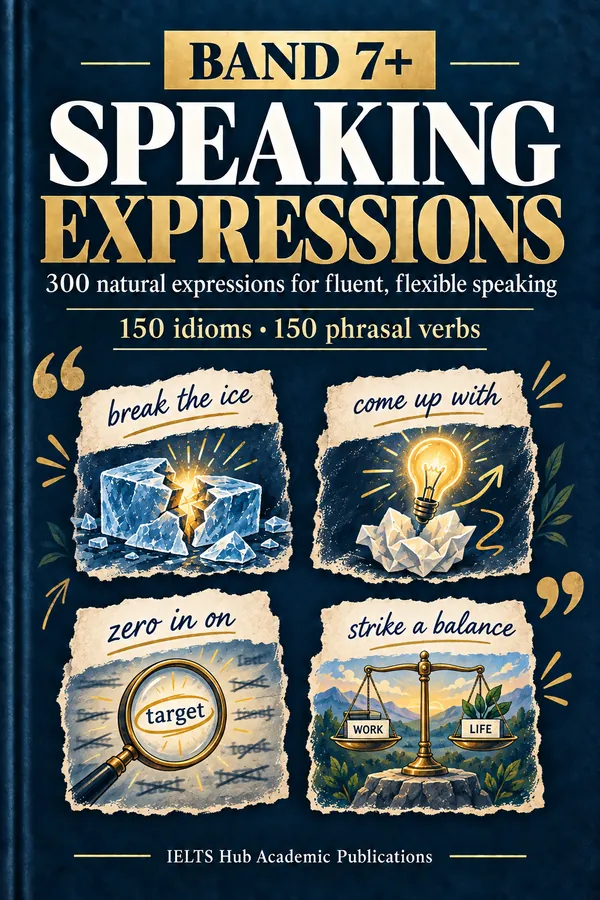
Speaking
Band 7+ Speaking Expressions
300 natural expressions for fluent, flexible speaking
₹199$6.99CAD 8.99AUD 9.99£4.99NZD 10.99€5.99AED 24SGD 8.99
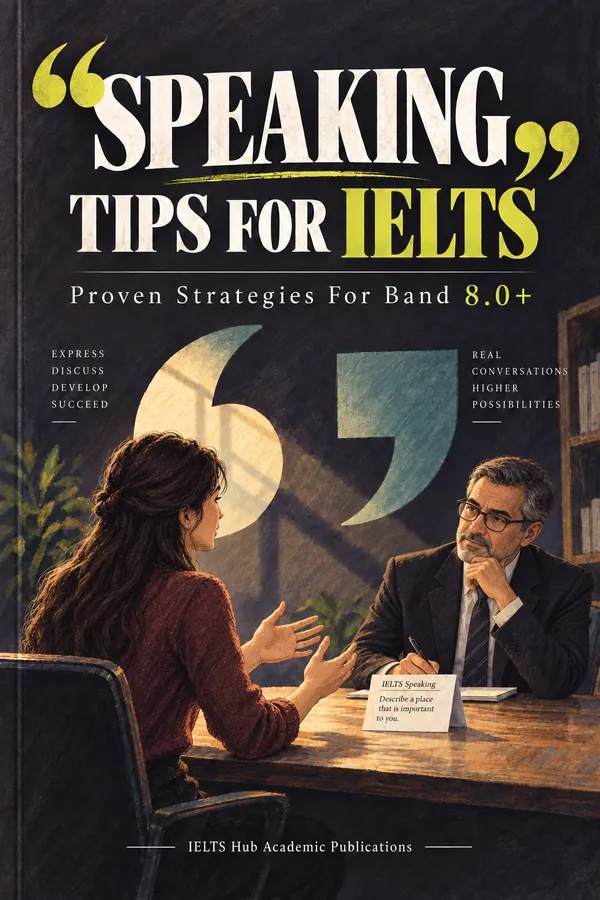
Speaking
Speaking Tips for IELTS
Proven Strategies for Band 8.0+
₹299$9.99CAD 13.99AUD 14.99£7.99NZD 16.99€8.99AED 39SGD 12.99
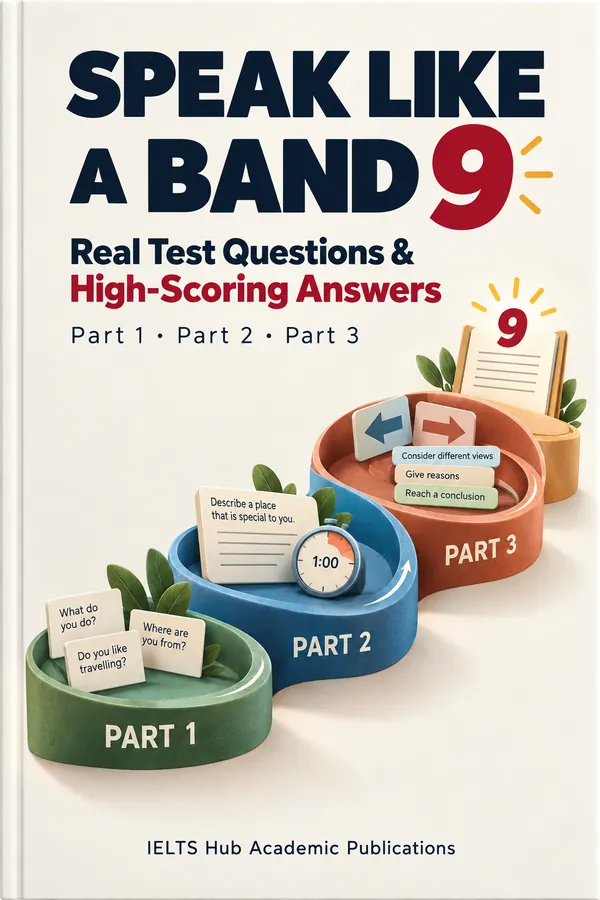
Speaking
Speak Like a Band 9
Real Test Questions & High-Scoring Answers
₹299$9.99CAD 13.99AUD 14.99£7.99NZD 16.99€8.99AED 39SGD 12.99