Speaking test #667
Part 1 · Interview
4 to 5 minutes. The examiner asks about you and familiar topics.
Can you tell me your full name?
Where are you from?
Do you work or are you a student?
What was the dream job for you when you were young?
When I was younger, I always dreamed of becoming a doctor. I loved the idea of being able to help people and make a difference in their lives. However, as I got older and learned more about the field, I realized that it wasn't the right fit for me.
Have you changed your mind about your dream job?
Yes, I have. I used to think that becoming a doctor was my ultimate career goal, but as I explored other options and learned more about myself, I realized that there were other paths that were a better fit for my interests and skills.
What do you plan to do in the future?
In the future, I hope to work in a career that allows me to use my creativity and problem-solving skills. I'm still exploring different options, but I'm considering careers in design or marketing.
What kind of jobs are popular in India?
In India, there are a wide range of popular careers. Some of the most in-demand jobs include engineering, IT, and finance. However, there are also many opportunities in fields such as healthcare, education, and government.
Can you remember the dreams you had?
Oh, definitely. I tend to have quite vivid and memorable dreams, so I can usually recall them pretty easily. Sometimes they're just random and nonsensical, but other times they feel really meaningful and significant.
Do you share your dreams with others? (or are you interested in others' dreams?
?) I'll definitely share some of my more interesting or notable dreams with friends and family, but I don't go around telling everyone about every little dream I have. As for other people's dreams, I'm definitely intrigued by them and love hearing about people's subconscious thoughts and experiences. It's always fascinating to me how different and unique everyone's dreams can be.
Do you think dreams have special meanings?
I definitely think that dreams can be a way for our minds to process and work through things that are going on in our lives. Sometimes I'll have a dream that feels really symbolic or tied to something I'm struggling with, and it can be really helpful in helping me understand my own thoughts and feelings. That being said, I don't think that every single dream needs to be analyzed and dissected. Sometimes they're just dreams and nothing more.
Do you want to make your dreams come true?
Absolutely. I think everyone has dreams and goals that they want to accomplish, and I'm no different. I have a lot of things that I want to do and experience in my life, and I'm always working towards making those dreams a reality. It takes hard work and dedication, but it's definitely worth it in the end.
You will have to talk about the topic for one to two minutes. You have one minute to think about what you are going to say. You can make some notes to help you if you wish.
A situation when someone suggested a clever solution
You should say:
- What was the situation
- Who suggested the clever solution
- What the solution was
- How the solution helped resolve the situation
What was the situation
In a recent family gathering, we faced an unexpected dilemma when our planned outdoor picnic was at risk of being ruined due to sudden heavy rain. As we were all disappointed and unsure of what to do next, my cousin Sarah, who is known for her quick thinking and creativity, suggested a clever solution to salvage the day.
Who suggested the clever solution
Sarah, being an avid camper and outdoor enthusiast, proposed that we turn the situation around by transforming our indoor living room into a makeshift picnic spot. Her idea was to bring out the picnic blankets, set up a small barbecue grill, and create a cozy atmosphere with fairy lights and candles. Initially, some of us were skeptical about the feasibility of her plan, but Sarah's enthusiasm and confidence convinced us to give it a try.
What the solution was
The solution not only saved our picnic from being a complete washout but also turned out to be a memorable and fun experience for everyone involved. We ended up enjoying delicious grilled food, playing games, and sharing stories while listening to the soothing sound of rain outside. Sarah's clever suggestion not only brought us closer together as a family but also taught us the valuable lesson of adapting to unexpected circumstances with creativity and positivity.
How the solution helped resolve the situation
In conclusion, Sarah's quick thinking and innovative approach not only rescued our picnic from disaster but also turned it into a unique and enjoyable indoor gathering. Her clever solution not only showcased her problem-solving skills but also inspired all of us to look at challenges from a different perspective and find creative ways to overcome them.
- Words
- 264
- Sentences
- 10
- Words per sentence
- 26.4
- Speaking time
- about 2.0 min
Counted at 130 words a minute. The exam gives you one to two minutes.
Part 3 · Discussion
4 to 5 minutes. The examiner asks broader questions linked to the cue card topic.
How can one person's smart ideas be different from another's in the same situation?
That's a fascinating question! The clever suggestions of one individual can vary significantly from another's due to a variety of factors, such as their personal experiences, education, and even their cultural background. For instance, someone who has faced similar challenges before may offer more practical and experience-based solutions, while another person might approach the situation from a more theoretical standpoint, drawing on their academic knowledge. Additionally, individual personalities play a crucial role; a creative thinker might propose innovative and out-of-the-box ideas, whereas a more analytical person might focus on logical, systematic approaches. Ultimately, the diversity in thought processes can lead to a rich tapestry of suggestions, each with its own unique merits!
How much can creativity help in finding good ideas for tough problems?
Creativity is absolutely pivotal when it comes to tackling challenging problems. It allows individuals to think outside the box and come up with innovative solutions that might not be immediately obvious. For instance, in fields like technology and medicine, creative thinking has led to groundbreaking advancements that have transformed lives. Moreover, creativity fosters collaboration, as diverse perspectives often lead to a synergy of ideas that can yield more effective strategies. In essence, when we embrace creativity, we can navigate complexities with a more adaptable and open-minded approach, ultimately leading to more successful outcomes.
How important is it for companies to promote creative thinking in their workers?
Encouraging innovative thinking among employees is absolutely crucial for organizations, especially in today’s fast-paced world. When companies foster a culture of creativity, they not only enhance problem-solving capabilities but also boost employee morale and engagement. It allows individuals to feel valued and empowered, which can lead to groundbreaking ideas that keep the organization competitive. Moreover, in an era where change is constant, organizations that prioritize innovation are better equipped to adapt and thrive. Ultimately, the ability to think outside the box can be a significant driver of success and sustainability in any business.
Why do some people easily think of smart ideas while others find it hard?
That's a fascinating question! I believe a lot of it boils down to creative thinking and how individuals approach problems. Some people have a natural inclination to think outside the box, which allows them to generate innovative ideas effortlessly. On the other hand, those who might struggle could be more accustomed to conventional methods and may find it challenging to step outside of their comfort zones. Additionally, experience and exposure to diverse perspectives can play a significant role; the more we engage with different ideas, the more resourceful we become in our thinking. Ultimately, it’s about fostering an environment that encourages creativity, whether through collaboration or simply allowing time for reflection.
How could the way we solve problems change in the future as new challenges come up?
As we look to the future, I believe the approach to problem-solving will become increasingly multidisciplinary and collaborative. With the rapid advancement of technology and the interconnectedness of global issues, teams will need to draw on diverse expertise to tackle challenges effectively. For instance, we might see scientists, engineers, and social scientists working side by side to address complex problems like climate change or public health crises. Additionally, the integration of artificial intelligence will likely play a pivotal role, offering innovative solutions and enhancing our ability to analyze data on a massive scale. Overall, I think the future of problem-solving will be characterized by a more holistic and adaptive mindset, allowing us to respond to challenges in ways we can't even fully imagine yet!
What can we do to create an environment that supports new ideas in communities?
To foster a culture that encourages innovative suggestions in communities, several actions can be implemented. Firstly, creating an environment where open communication is prioritized is essential. This means encouraging individuals to share their ideas without the fear of criticism, which can be achieved through regular community forums or brainstorming sessions. Additionally, providing resources and platforms for collaboration, such as workshops or innovation hubs, can significantly enhance creativity. Lastly, recognizing and rewarding innovative contributions can motivate more people to participate actively in the creative process, thus cultivating a vibrant community that thrives on fresh perspectives.
Go further with the books
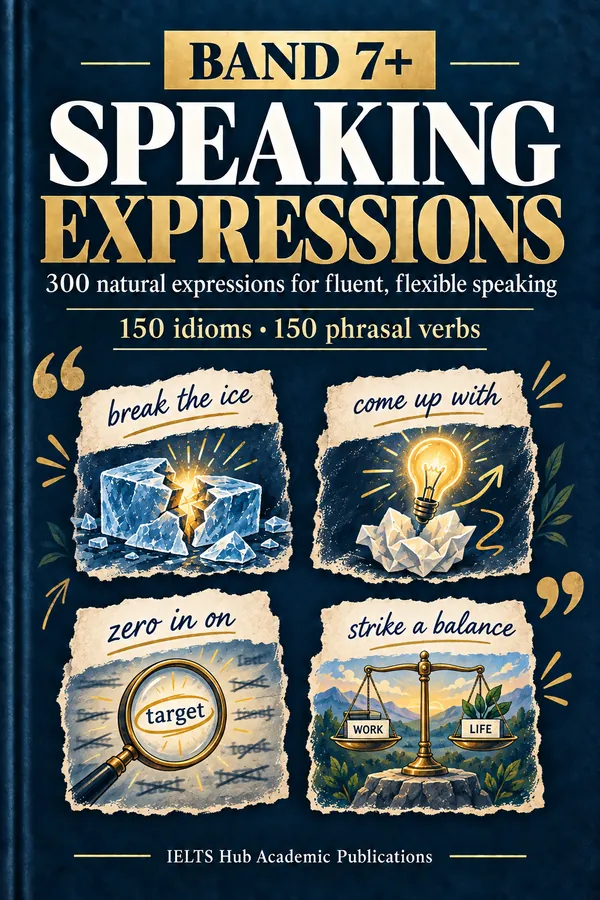
Speaking
Band 7+ Speaking Expressions
300 natural expressions for fluent, flexible speaking
₹199$6.99CAD 8.99AUD 9.99£4.99NZD 10.99€5.99AED 24SGD 8.99

Speaking
Speaking Tips for IELTS
Proven Strategies for Band 8.0+
₹299$9.99CAD 13.99AUD 14.99£7.99NZD 16.99€8.99AED 39SGD 12.99
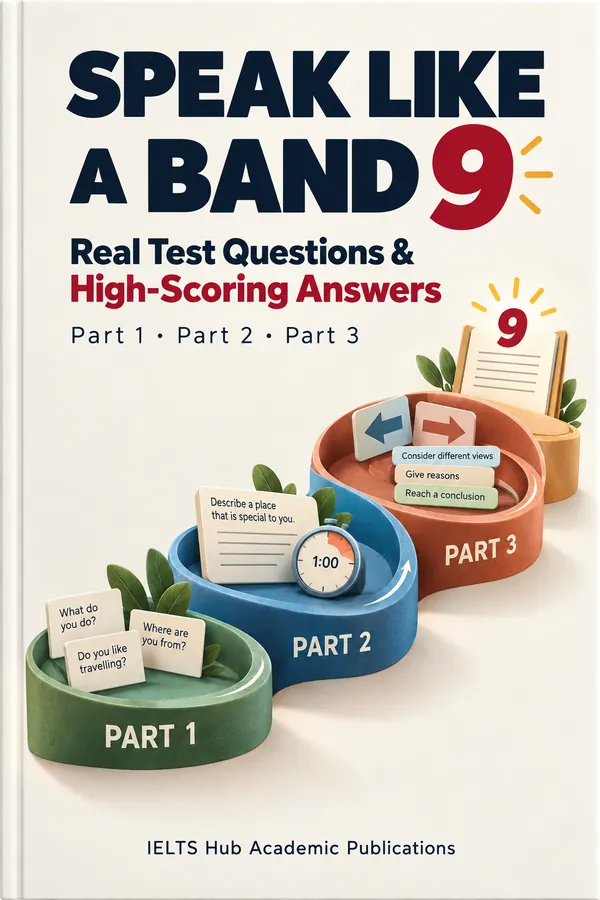
Speaking
Speak Like a Band 9
Real Test Questions & High-Scoring Answers
₹299$9.99CAD 13.99AUD 14.99£7.99NZD 16.99€8.99AED 39SGD 12.99