Speaking test #673
Part 1 · Interview
4 to 5 minutes. The examiner asks about you and familiar topics.
Can you tell me your full name?
Where are you from?
Do you work or are you a student?
What are the main festivals celebrated in your country (India)?
India is a land of diverse cultures and religions, so we have a plethora of festivals celebrated throughout the year. Some of the major ones include Diwali, Holi, Dussehra, Eid, Christmas, and Pongal.
What do you like about these festivals?
What I love about these festivals is the sense of community and togetherness that they bring. People come together to celebrate, share traditional foods and customs, and enjoy the vibrant colors and music. It's also a time for family and friends to come together and make lasting memories.
Have these festivals changed much over recent years?
To some extent, yes. With the advent of technology and globalization, festivals have become more commercialized, with an increase in the use of social media and the internet to promote them. However, the core essence and traditions of the festivals remain unchanged.
Do you think they will change much in the future?
It's hard to say for sure, but I believe that as long as the roots and traditions of these festivals are upheld, they will continue to be celebrated in much the same way as they have been for generations. Of course, there will likely be some changes and evolution, but the spirit of the festivals will always remain the same.
Did you usually go to the cinema when you were a kid?
I used to be quite the movie buff as a kid, so I was definitely a frequent visitor to the cinema.
Do you usually go to the cinema with your friends?
I tend to alternate between going to the cinema with friends and going alone, depending on my mood and the movie I'm seeing.
Do you still enjoy watching the movies you loved as a child?
I definitely have a nostalgia for the movies I loved as a child, but whether I still enjoy them depends on how well they hold up on re-watch. Some movies that I loved as a child I still enjoy as an adult, but others haven't aged as well.
Do you prefer watching movies at home or at the cinema?
I really enjoy both options, but if I had to choose one, I would probably say that I prefer watching movies at home. The comfort of my own couch and being able to pause and take a break is a huge plus. But, there's also something special about the shared experience of watching a movie in a cinema with a crowd.
You will have to talk about the topic for one to two minutes. You have one minute to think about what you are going to say. You can make some notes to help you if you wish.
Describe a time when you needed to use imagination
You should say:
- What situation required you to use imagination
- How you used your imagination
- What were the results of using your imagination
- How did this experience impact you
What situation required you to use imagination
Imagination plays a vital role in our lives, particularly when faced with challenges or situations that demand creative thinking. One such instance where I had to rely on my imagination occurred during my college days when I participated in a national-level business competition. The task at hand was to devise a unique marketing campaign for a fictional product within a limited budget and time frame.
How you used your imagination
To tackle this challenge, I tapped into my imaginative skills to come up with an innovative concept that would set our campaign apart from the rest. I brainstormed with my team members, considering various unconventional ideas and perspectives. We decided to incorporate elements of interactive storytelling and user-generated content to engage our target audience effectively.
What were the results of using your imagination
The results of implementing our imaginative marketing strategy were remarkable. Not only did our campaign receive widespread attention and positive feedback from the judges and audience, but it also led to a significant increase in brand awareness and customer engagement for the fictional product. Our team was thrilled to see our hard work and creative approach paying off in such a tangible manner.
How did this experience impact you
This experience had a profound impact on me, solidifying my belief in the power of imagination and creative thinking. It taught me the importance of thinking outside the box, taking calculated risks, and embracing innovation in problem-solving. I gained confidence in my ability to harness my imagination to overcome challenges and achieve success in various aspects of my life.
- Words
- 242
- Sentences
- 12
- Words per sentence
- 20.2
- Speaking time
- about 1.9 min
Counted at 130 words a minute. The exam gives you one to two minutes.
Part 3 · Discussion
4 to 5 minutes. The examiner asks broader questions linked to the cue card topic.
How might using imagination be different in art compared to science?
That's a fascinating question! Imagination plays a crucial role in both artistic and scientific fields, but it manifests in different ways. In artistic pursuits, imagination often serves as a vehicle for self-expression and creativity, allowing artists to explore emotions and perspectives that might not be easily articulated. For instance, a painter might envision a scene that captures a fleeting moment in time, using vivid imagery to evoke feelings in the viewer. On the other hand, in scientific endeavors, imagination is more about problem-solving and innovation. Scientists often need to think outside the box to devise new experiments or theories. For example, when developing a new technology, a scientist might imagine how a particular concept could address a real-world issue, leading to groundbreaking solutions. So, while both realms rely on imagination, the end goals are quite distinct—art seeks to inspire and provoke thought, whereas science aims to understand and improve the world around us.
How important do you think imagination is in solving everyday problems?
Imagination undoubtedly plays a crucial role in everyday problem-solving. It allows us to think outside the box and explore various possibilities that may not be immediately obvious. For instance, when faced with a challenge, whether at work or in our personal lives, our ability to envision different scenarios can lead to innovative solutions. Moreover, imagination not only helps in generating ideas but also in anticipating potential obstacles, which is essential for effective planning. Ultimately, embracing our imaginative faculties can transform the way we tackle problems, making us more adaptable and resourceful in the face of adversity.
How important is imagination for growing creative industries?
Imagination is absolutely paramount in the development of creative industries! It serves as the lifeblood that fuels innovation and artistic expression. Without a vivid imagination, we wouldn't have groundbreaking films, mesmerizing art, or even revolutionary technology. Take the film industry, for instance; directors and writers rely on their imaginative capabilities to construct narratives that captivate audiences and provoke thought. Moreover, in sectors like fashion or advertising, imagination allows for the creation of unique concepts that not only stand out but also resonate with people's emotions. Ultimately, it's this imaginative spark that drives the creative industries forward, pushing boundaries and inspiring new ideas.
Why do you think some people can use their imagination more easily than others?
I believe the ability to harness one's imagination can vary significantly among individuals due to a combination of factors. Firstly, exposure to diverse experiences plays a crucial role; those who have traveled, read widely, or engaged in creative activities often develop a richer mental landscape to draw from. Additionally, personality traits such as being more
How could imagination change for future generations?
That's a fascinating question! I believe the role of imagination will become even more critical in future generations, especially as technology continues to advance at such a rapid pace. With the rise of artificial intelligence and virtual reality, young people will likely have access to tools that can enhance their creative thinking and allow them to explore ideas in ways we can only dream of today. This could lead to a greater fusion of art and technology, where imaginative concepts are seamlessly integrated into our daily lives. Moreover, as the world becomes more interconnected, I think imagination will play a pivotal role in fostering cross-cultural understanding, allowing future generations to collaborate on global challenges with innovative solutions.
What ways can we improve creative thinking in schools?
To enhance imaginative thinking in educational settings, one effective approach is to incorporate project-based learning into the curriculum. This method encourages students to explore real-world problems and develop innovative solutions, igniting their creativity in the process. Additionally, fostering a collaborative environment can significantly boost imaginative thinking; when students work together, they can share diverse perspectives and ideas, which often leads to more creative outcomes. Furthermore, integrating art and creativity into traditional subjects can stimulate students’ minds and encourage them to think outside the box. Ultimately, by cultivating a culture that values creativity and experimentation, we can inspire students to become innovative thinkers who are not afraid to explore new ideas.
Go further with the books
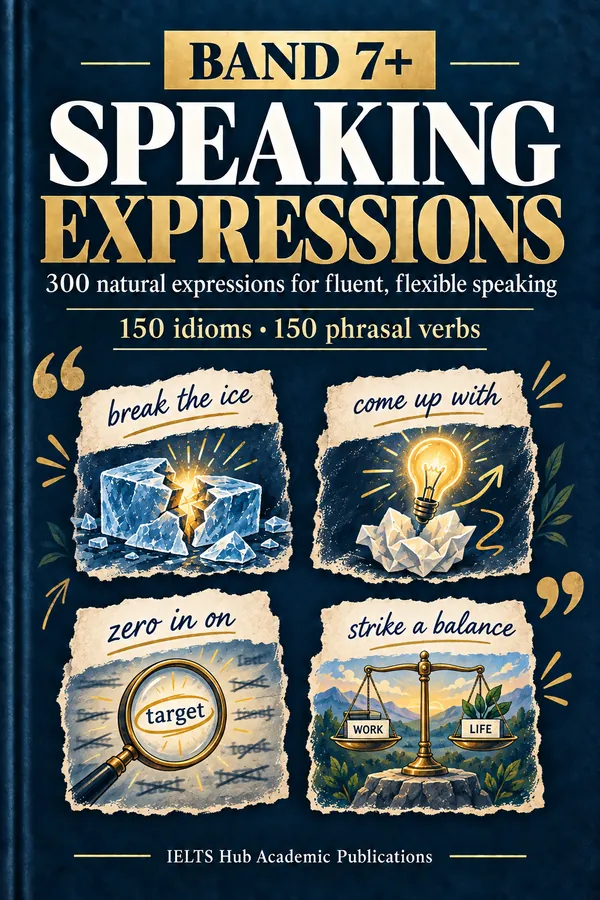
Speaking
Band 7+ Speaking Expressions
300 natural expressions for fluent, flexible speaking
₹199$6.99CAD 8.99AUD 9.99£4.99NZD 10.99€5.99AED 24SGD 8.99
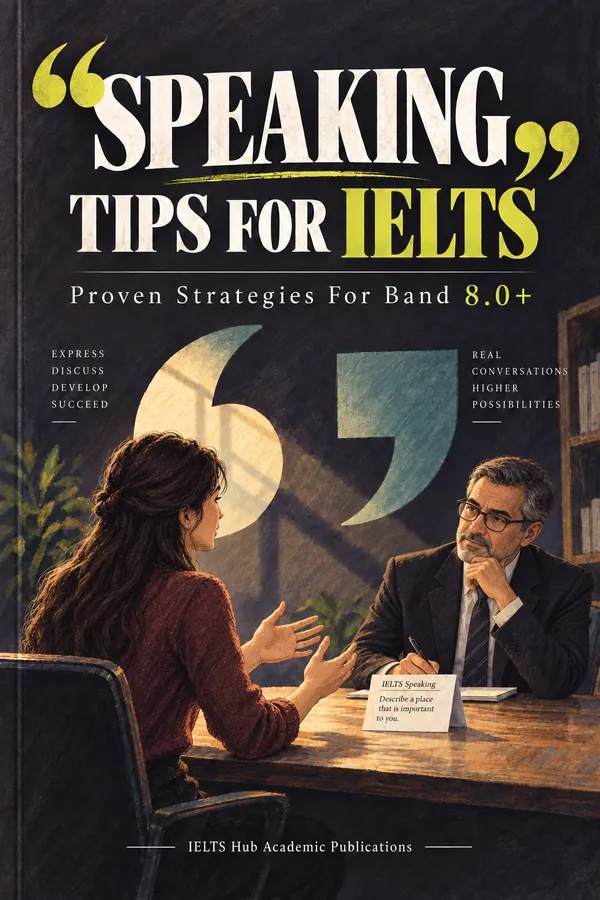
Speaking
Speaking Tips for IELTS
Proven Strategies for Band 8.0+
₹299$9.99CAD 13.99AUD 14.99£7.99NZD 16.99€8.99AED 39SGD 12.99
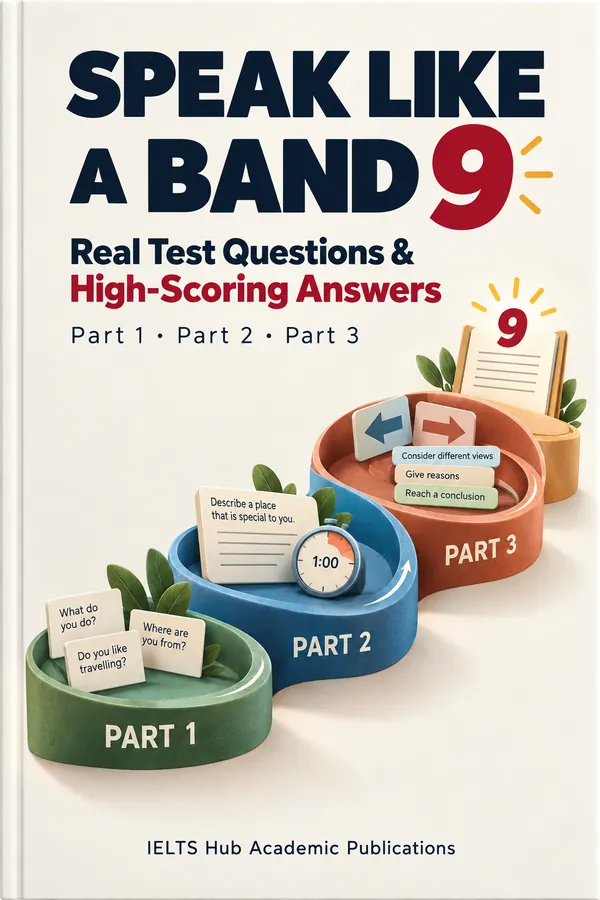
Speaking
Speak Like a Band 9
Real Test Questions & High-Scoring Answers
₹299$9.99CAD 13.99AUD 14.99£7.99NZD 16.99€8.99AED 39SGD 12.99