Speaking test #679
Part 1 · Interview
4 to 5 minutes. The examiner asks about you and familiar topics.
Can you tell me your full name?
Where are you from?
Do you work or are you a student?
Why do some people throw litter/garbage on the street?
I believe that some people may throw litter or garbage on the street because they have a lack of understanding or concern for the impact it has on the environment and their community. They may also have a lack of education or resources for proper disposal, or simply a lack of personal responsibility for their actions.
How do you feel when you see people throw litter/garbage?
Seeing people throw litter or garbage on the street makes me feel frustrated and disheartened. It shows a lack of respect for the community and the environment, and also contributes to a negative image of the city.
Do you think your city is clean or not?
I think that my city has its moments of cleanliness and moments of litter, but it could definitely use improvement. There are certain areas that are always well-maintained, but there are also areas where litter and garbage can be found often.
What do you do if you see garbage on the street?
If I see garbage on the street, I would do my best to dispose of it properly by either throwing it in a trash can or bringing it home to dispose of it there. I also believe in leading by example and encouraging others to do the same, instead of simply ignoring the problem. Additionally, I would consider supporting community clean-up initiatives or contacting my local government to address the issue.
Do you like geography?
I absolutely adore geography. I find it fascinating to study the Earth's physical features, climate, and human interactions with the environment. Understanding how our planet functions as a whole is crucial for us as a society, and I find it endlessly intriguing.
Have you ever studied geography at school?
Yes, I have studied geography at school. I found it to be a very engaging and informative subject. My teachers taught us about various topics such as plate tectonics, the water cycle, and landforms, which I found very interesting. It helped me understand the world around me better.
Are you good at reading maps?
I would say I am quite skilled at reading maps. I have always had an interest in cartography and have spent a lot of time studying maps in my spare time. I am quite familiar with using different types of maps such as topographic, road, and satellite maps. I find it easy to orient myself and navigate using maps.
Would you visit a country because of its geographical location?
Yes, I would definitely consider visiting a country because of its geographical location. I think that the location of a country can play a big role in its culture, climate, and overall atmosphere. For example, if I were to find a country that is located in a tropical area and surrounded by mountains, I would be very intrigued to visit. The unique combination of a tropical climate and mountainous terrain would make for an exciting and unique trip.
You will have to talk about the topic for one to two minutes. You have one minute to think about what you are going to say. You can make some notes to help you if you wish.
Describe a language you would like to learn
You should say:
- Which language it is
- Why you want to learn it
- How you plan to learn it
- What benefits you think learning this language would bring
Which language it is
I would like to learn Spanish, a language that has always intrigued me with its melodious sounds and rich cultural heritage. The reason behind my interest in learning Spanish is primarily fueled by my passion for exploring diverse cultures and broadening my global perspective. Spanish is the second most spoken language in the world and is widely used in many countries, making it a valuable asset for travel, career opportunities, and personal growth.
Why you want to learn it
To embark on my journey of learning Spanish, I plan to immerse myself in the language through a combination of self-study using online resources, language exchange programs, and enrolling in formal classes. By dedicating a specific amount of time each day to practice listening, speaking, reading, and writing in Spanish, I aim to gradually enhance my proficiency and understanding of the language.
How you plan to learn it
Learning Spanish not only opens doors to communication with over 400 million native speakers worldwide but also provides me with a deeper appreciation of Hispanic cultures, literature, and art. Mastering Spanish would enable me to connect with people from diverse backgrounds, enhance my intercultural communication skills, and enrich my personal and professional experiences.
What benefits you think learning this language would bring
In conclusion, by learning Spanish, I aspire to break down language barriers, foster meaningful connections, and gain a deeper insight into the vibrant and diverse Spanish-speaking world. The benefits of acquiring proficiency in Spanish extend beyond linguistic skills to encompass cultural understanding, global networking, and personal development, making it a worthwhile endeavor that aligns with my aspirations for continuous learning and cross-cultural engagement.
- Words
- 251
- Sentences
- 9
- Words per sentence
- 27.9
- Speaking time
- about 1.9 min
Counted at 130 words a minute. The exam gives you one to two minutes.
Part 3 · Discussion
4 to 5 minutes. The examiner asks broader questions linked to the cue card topic.
How is learning a new language different from learning to play a musical instrument?
Learning a new language and a musical instrument certainly have their unique challenges and rewards! For starters, when you learn a language, it often involves mastering complex grammatical structures and vocabulary, which can be quite abstract. In contrast, playing an instrument relies more on physical dexterity and muscle memory, making it a more tactile experience. Additionally, language learning typically emphasizes communication and social interaction, whereas music can be a more solitary pursuit or a form of expression that transcends words. Ultimately, both endeavors enrich our lives, but they engage different parts of our brains and require different approaches to practice and mastery.
Some people think that knowing many languages is better than just being good at one. What do you think about this?
I absolutely agree that learning multiple languages can be incredibly beneficial. For one, it opens up a whole world of cultural understanding, allowing individuals to connect with people from diverse backgrounds. Not only does it enhance cognitive abilities, such as problem-solving and multitasking, but it also boosts career prospects in today’s globalized job market. Plus, being multilingual can lead to rich travel experiences, as you can engage more deeply with locals and their cultures. Overall, the advantages of being able to communicate in multiple languages far outweigh the benefits of just mastering one.
How important do you believe it is for people to learn a second language in today's connected world?
In today's globalized world, learning a second language is incredibly significant for individuals. It opens up a wealth of opportunities, both personally and professionally. For instance, being bilingual can enhance your employability, as many companies value employees who can communicate with diverse clients and partners. Moreover, it enriches one’s understanding of different cultures, fostering empathy and cross-cultural communication. In addition, with the rise of remote work, being proficient in another language can truly set you apart in a competitive job market. Overall, the ability to speak a second language equips individuals with essential skills to navigate our increasingly interconnected world.
Why do you think some people learn languages more easily than others?
That's a fascinating question! I believe that several factors contribute to why some people excel at learning languages more easily than others. For one, individuals who have a natural aptitude for languages often possess a keen awareness of sounds and rhythms, allowing them to pick up pronunciation and intonation quite effortlessly. Additionally, exposure plays a crucial role; those who grow up in multilingual environments or have the opportunity to travel frequently tend to develop a better grasp of different languages. Moreover, motivation is key—people who are genuinely interested in a culture or who have a strong desire to communicate with others are usually more dedicated and willing to practice consistently. Finally, learning strategies also vary among individuals; some may find that they thrive using immersive techniques, while others might prefer structured approaches. All these elements combined create a diverse landscape in language acquisition!
How could the way people learn languages change in the next ten years?
The trend of learning languages is likely to undergo a significant transformation in the next decade, primarily driven by advancements in technology and globalization. With the rise of immersive learning experiences through virtual reality, learners will be able to engage in more authentic conversations and cultural exchanges without leaving their homes. Additionally, the increasing demand for multilingual professionals in the job market will motivate more people to pick up new languages, enhancing their employability prospects. Moreover, the integration of artificial intelligence in language learning apps will personalize the learning experience, making it more effective and accessible to a broader audience. Overall, I believe that as our world becomes more interconnected, the ability to communicate in multiple languages will not just be a skill, but rather an essential part of our global culture.
What steps can be taken to get more people to learn other languages?
To encourage more people to learn foreign languages, we could implement a variety of engaging strategies. First and foremost, introducing immersive language programs in schools could spark interest from a young age. Additionally, creating community events where native speakers interact with learners would foster a more practical and enjoyable learning environment. Offering incentives, such as scholarships or discounts on travel, could also motivate individuals to pursue language studies more seriously. Finally, leveraging technology, like language-learning apps and online platforms, can make the process more accessible and user-friendly, attracting a wider audience.
Go further with the books
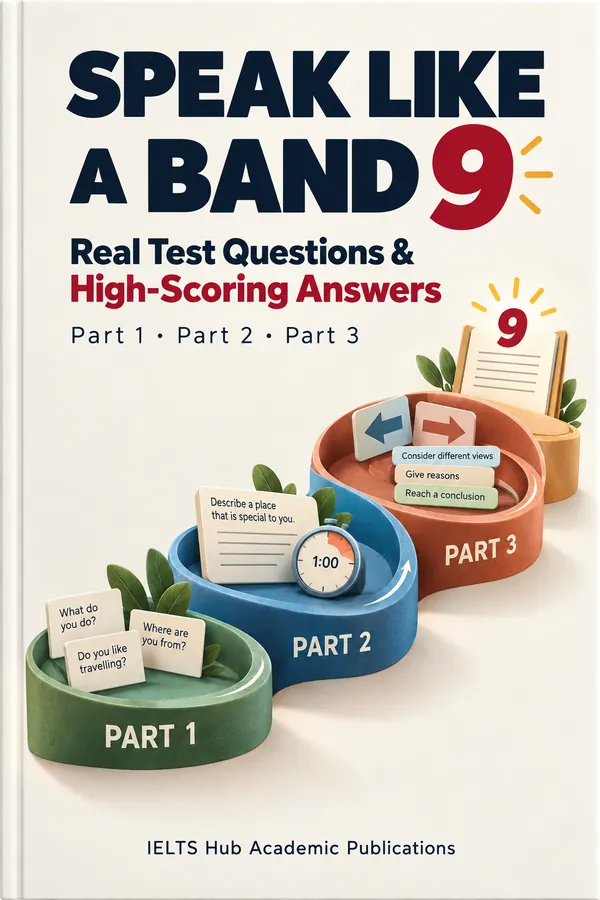
Speaking
Speak Like a Band 9
Real Test Questions & High-Scoring Answers
₹299$9.99CAD 13.99AUD 14.99£7.99NZD 16.99€8.99AED 39SGD 12.99

Speaking
Band 7+ Speaking Expressions
300 natural expressions for fluent, flexible speaking
₹199$6.99CAD 8.99AUD 9.99£4.99NZD 10.99€5.99AED 24SGD 8.99
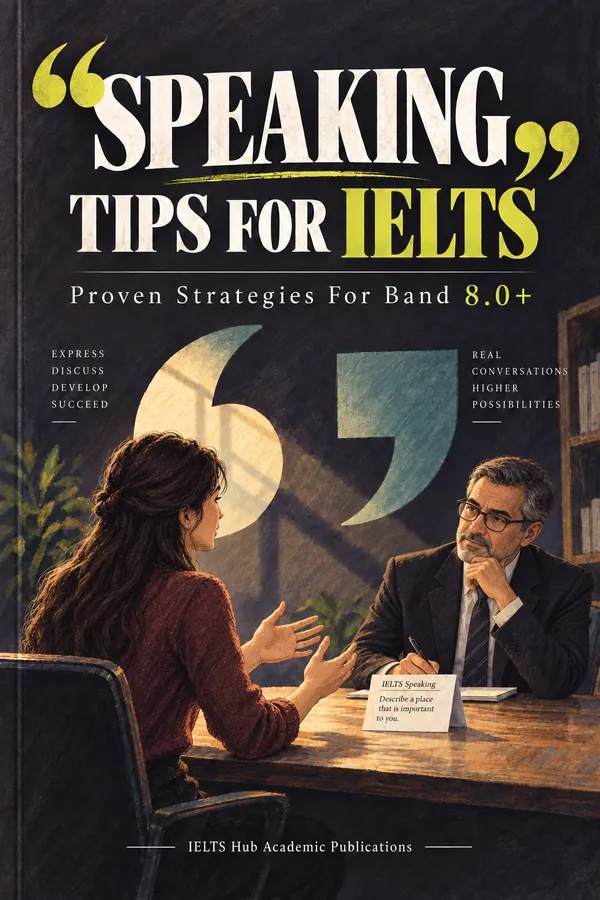
Speaking
Speaking Tips for IELTS
Proven Strategies for Band 8.0+
₹299$9.99CAD 13.99AUD 14.99£7.99NZD 16.99€8.99AED 39SGD 12.99