Speaking test #689
Part 1 · Interview
4 to 5 minutes. The examiner asks about you and familiar topics.
Can you tell me your full name?
Where are you from?
Do you work or are you a student?
Do you like insects?
Personally, I have a bit of a mixed opinion when it comes to insects. Some of them, like butterflies and ladybugs, are quite beautiful and fascinating to observe, but others, like cockroaches and mosquitoes, can be quite unpleasant and even dangerous. So, I suppose you could say that it depends on the specific type of insect in question.
Do you think insects are useful?
Definitely! Insects play an incredibly important role in many ecosystems and are vital for pollination, pest control, and even as a food source for other animals. For example, bees are responsible for pollinating a large percentage of the fruits, vegetables, and nuts that we eat. Without insects, our world would be a very different and less diverse place.
What kinds of insects make some people scared?
I think it's safe to say that most people have a bit of a phobia when it comes to certain types of insects, like spiders, for example. Other insects that can make people feel uneasy include cockroaches, beetles, and even some species of ants. These insects are often seen as dirty or creepy and can evoke feelings of disgust or fear in some people.
Are there many different insects in the place where you live?
Yes, there are quite a few different types of insects where I live. We have everything from the common house fly to various types of butterflies and moths. There are also quite a few types of beetles and ants, as well as some interesting types of praying mantises and other types of bugs. It's quite fascinating to see the diversity of insects that can be found in even just one small area.
How often do you go online?
I go online almost every day, usually for several hours at a time. I find it to be an essential tool for staying connected with my friends and family, as well as for work and research.
What do you use the internet for?
I use the internet for a variety of purposes. I use it for communication, such as sending emails and chatting with friends and family. I also use it for work, researching and collaborating with colleagues on projects. Additionally, I use it for entertainment, such as streaming movies and music, and browsing social media.
What's your favourite website?
My favourite website would have to be YouTube. I love the variety of content it offers, from educational videos to music and comedy. It's a great way to discover new things and I always find myself spending hours on it.
Do you think children should be allowed unsupervised access to the internet?
I believe that children should have some level of supervision when using the internet. While the internet can be a valuable tool for learning and communication, it can also be a dangerous place if children are not properly educated on how to stay safe online. Parents should set guidelines and monitor their children's internet usage to ensure they are not exposed to inappropriate content or online predators.
You will have to talk about the topic for one to two minutes. You have one minute to think about what you are going to say. You can make some notes to help you if you wish.
Describe a noisy place you have been to
You should say:
- Where was the place located?
- What was causing the noise?
- How did you feel being in that noisy environment?
- How did you cope with the noise?
Where was the place located?
I would like to talk about a noisy place I visited in India, which was a bustling street market located in the heart of Mumbai. This market was filled with vibrant colors, aromatic spices, and a sea of people, creating a cacophony of sounds that filled the air. The noise mainly stemmed from the constant chatter of vendors trying to attract customers, vehicles honking impatiently, and street performers adding to the lively atmosphere.
What was causing the noise?
Being in that noisy environment was both overwhelming and exhilarating. The sheer volume of sounds bombarding my senses initially made me feel disoriented, but as I immersed myself in the hustle and bustle, I found myself energized by the vibrant chaos surrounding me. Despite the chaos, there was a sense of excitement in the air that was contagious, making me feel alive and part of something much larger than myself.
How did you feel being in that noisy environment?
To cope with the noise, I focused on embracing the experience rather than trying to block out the sounds. I took deep breaths, allowing myself to be fully present in the moment and appreciating the unique tapestry of sights and sounds around me. I also engaged with the vendors, trying to understand their stories and the cultural significance behind their products, which helped me appreciate the noise as an integral part of the market's charm.
How did you cope with the noise?
In conclusion, visiting the noisy street market in Mumbai was a sensory overload that left a lasting impression on me. The vibrant energy and constant buzz of activity made it a memorable experience that I cherish. Despite initially feeling overwhelmed, I learned to embrace the noise and chaos, allowing myself to be fully immersed in the vibrant tapestry of sights and sounds that defined this bustling Indian market.
- Words
- 286
- Sentences
- 12
- Words per sentence
- 23.8
- Speaking time
- about 2.2 min
Counted at 130 words a minute. The exam gives you one to two minutes.
Part 3 · Discussion
4 to 5 minutes. The examiner asks broader questions linked to the cue card topic.
How do the noise levels in cities compare to those in the countryside?
Noise levels in urban areas can be significantly higher than in rural settings due to a variety of factors. For instance, cities are often bustling with activity, featuring a constant stream of traffic congestion, construction work, and social events, all of which contribute to a cacophony of sounds. In contrast, rural areas typically offer a more serene environment, where the predominant sounds might be the gentle rustle of leaves or the chirping of birds. Moreover, urban noise is often more persistent and intrusive, which can impact residents' quality of life and even lead to health issues such as stress or sleep disturbances. On the other hand, the tranquil atmosphere of the countryside not only provides peace but also allows people to engage more deeply with nature. Ultimately, the stark contrast in noise levels reflects the differences in lifestyle and environment between urban and rural living.
Some people feel energized in noisy places, while others feel stressed. What do you think about this?
I think it really depends on the individual and their personality. For some people, loud environments can be incredibly energizing, almost like a shot of adrenaline. They thrive in bustling cafes or busy streets, where the noise adds a vibrant energy to their day. On the other hand, there are those who feel quite the opposite; for them, such environments can be overwhelming and distracting, making it difficult to concentrate or relax. Personally, I appreciate a bit of noise when I’m working or socializing, but I also cherish quiet moments to recharge. Balance seems to be the key here!
How important do you think noise pollution is for people's health and happiness?
Noise pollution is incredibly significant when it comes to people's health and well-being. Prolonged exposure to excessive noise can lead to a range of health issues, such as stress, anxiety, and even cardiovascular problems. It's fascinating how something as simple as the sound of traffic or loud music can disrupt our quality of life and lead to sleep disturbances. Moreover, the psychological effects can’t be underestimated; constant noise can create a sense of unease and fatigue, making it harder for individuals to concentrate or maintain their productivity. In urban environments, where noise pollution is rampant, it’s crucial to raise awareness and implement measures to mitigate its impact on our daily lives.
"Why do people or groups often accept loud noise in some areas?"?
Individuals and communities often tolerate high noise levels in certain places for a variety of reasons. For one, some environments, like vibrant urban areas, are associated with a sense of energy and excitement, making the noise almost a part of the atmosphere. Additionally, people often adapt to their surroundings; over time, they may become desensitized to the sounds around them, viewing them as a normal aspect of life. In many cases, the benefits of living in a bustling area, such as access to amenities and social opportunities, far outweigh the annoyance of noise. Ultimately, it’s a trade-off, where the hustle and bustle of life is embraced as part of the community's identity.
What do you think will happen to noise levels in public places in the future?
I believe we’ll see some fascinating changes in noise levels in public spaces in the future. As urban areas continue to grow, there’s likely to be a greater emphasis on creating sound-friendly environments. This could mean more green spaces, where the natural sounds of nature can help to drown out the hustle and bustle of city life. Additionally, advancements in technology may lead to the development of noise-cancelling materials and designs in public infrastructure, making areas like parks and plazas feel more tranquil. Ultimately, I think society will recognize the importance of balancing noise levels to enhance our overall well-being and mental health, leading to a more harmonious coexistence in our shared spaces.
How can local governments deal with too much noise in crowded places?
Local governments can tackle the issue of excessive noise in busy areas through a combination of regulation and community engagement. Firstly, they could implement stricter noise control regulations that set limits on sound levels during certain hours, especially in residential neighborhoods. Additionally, introducing noise barriers in high-traffic zones could help mitigate the impact of sound pollution. Moreover, local authorities might consider promoting awareness campaigns to educate the public about the effects of noise on health and well-being. Encouraging the use of soundproof materials in construction can also be a long-term solution. Ultimately, a collaborative approach involving residents, businesses, and local officials can create a more harmonious environment for everyone.
Go further with the books
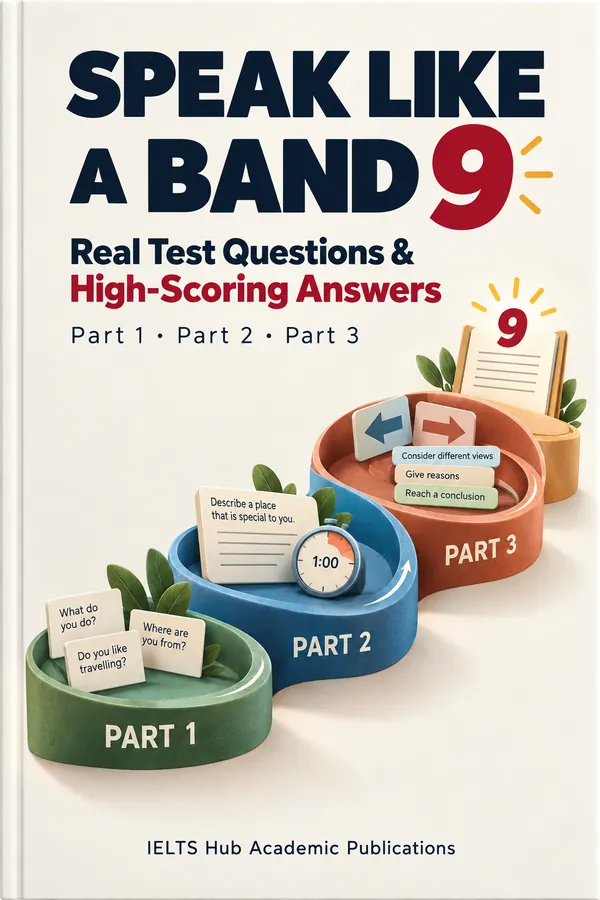
Speaking
Speak Like a Band 9
Real Test Questions & High-Scoring Answers
₹299$9.99CAD 13.99AUD 14.99£7.99NZD 16.99€8.99AED 39SGD 12.99

Speaking
Band 7+ Speaking Expressions
300 natural expressions for fluent, flexible speaking
₹199$6.99CAD 8.99AUD 9.99£4.99NZD 10.99€5.99AED 24SGD 8.99
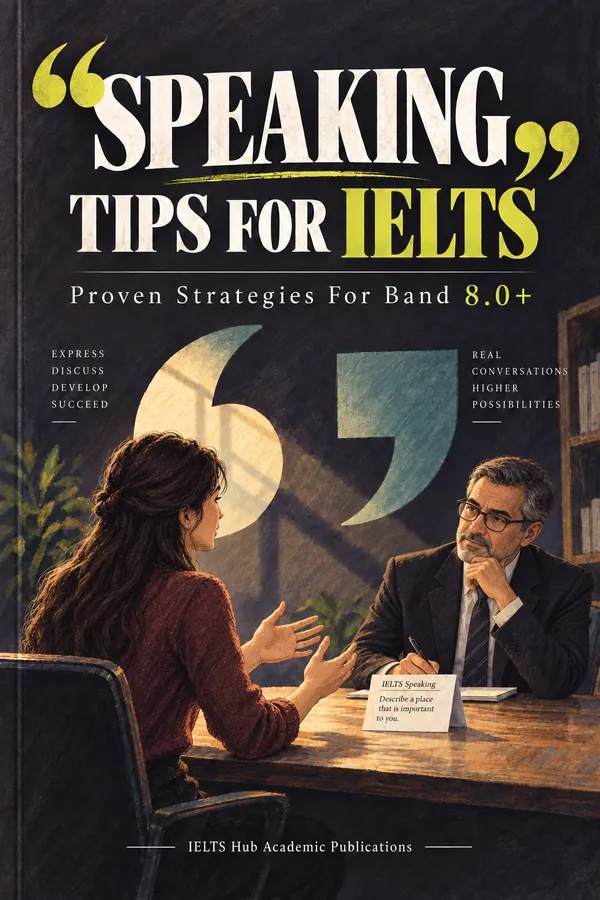
Speaking
Speaking Tips for IELTS
Proven Strategies for Band 8.0+
₹299$9.99CAD 13.99AUD 14.99£7.99NZD 16.99€8.99AED 39SGD 12.99