Speaking test #700
Part 1 · Interview
4 to 5 minutes. The examiner asks about you and familiar topics.
Can you tell me your full name?
Where are you from?
Do you work or are you a student?
What was your first mobile phone?
My first mobile phone was a Nokia 3310. I remember it being a very basic model with no internet or camera, but it was still a game-changer for me at the time. It was a gift from my parents when I was in high school, and I felt so grown up having my own phone.
Do you often use your mobile phone for texting or calls?
Yes, I use my mobile phone for both texting and calls quite frequently. I find it to be a convenient way to communicate with friends and family, and I also use it for work-related communication. I also use my phone to send and receive emails, which is very helpful.
Will you buy a new one in the future?
Yes, I plan to buy a new phone in the near future. I like to stay up to date with the latest technology and features, so I like to upgrade my phone every couple of years.
How has your mobile phone changed your life?
My mobile phone has changed my life in many ways. It has made communication so much more convenient and easy. I can stay connected with friends and family no matter where I am in the world. It also allows me to access information and stay connected with work and the news. Additionally, it has also made my life easier by having all my contacts, appointments, and notes in one place. Overall, my mobile phone has made my life more productive, organized and efficient.
How much money is enough?
It is difficult to quantify how much money is "enough" as it varies from person to person and their individual needs and wants. For some, having a comfortable lifestyle with basic necessities met may be considered enough, while for others, having a large amount of wealth and luxury items may be considered enough. Ultimately, it is a matter of perspective and personal satisfaction.
Why do people care too much about money?
I believe that people care too much about money because it is a means to achieve certain goals and aspirations in life, such as providing for oneself and one's family, achieving financial stability, and having the ability to pursue one's interests and passions. Additionally, society often places a great deal of emphasis on wealth and material success, which can lead to an obsession with accumulating more money.
Is money important to you?
Money is certainly important to me as it allows me to meet my basic needs and provides a sense of security and stability in my life. However, I also believe that money is not the only thing that defines one's worth or happiness, and that there are many other things in life that are just as important, such as relationships, personal growth, and fulfillment.
What do people in your country save money for?
In my country, people save money for a variety of reasons. Many people save for their future, such as retirement or their children's education. Others may save for a specific goal or purchase, such as buying a house or a car. Additionally, many people in my country also save for unexpected expenses or emergencies, such as medical bills or job loss. Overall, saving for financial security and stability is a common goal for many people in my country.
You will have to talk about the topic for one to two minutes. You have one minute to think about what you are going to say. You can make some notes to help you if you wish.
Describe a story about space
You should say:
- Setting of the story (e.g., planet, spaceship, galaxy)
- Main characters involved
- Conflict or challenge in the story
- Resolution or outcome of the story
Setting of the story (e.g., planet, spaceship, galaxy)
I'd like to tell you about an intriguing story that takes place on a distant planet in a galaxy far beyond our own. The setting is a lush, vibrant world called Zyron, where advanced alien civilization thrives amidst stunning landscapes and sparkling skies. This planet is home to a diverse range of species, each with unique abilities and attributes that contribute to the rich tapestry of life on Zyron.
Main characters involved
The main characters in this story are two unlikely allies – Zara, a courageous human astronaut who crash-landed on Zyron, and Xelar, a wise and benevolent alien elder who takes her under his wing. Despite their differences in appearance and backgrounds, Zara and Xelar form a deep bond as they work together to unravel the mysteries of Zyron and find a way for Zara to return home.
Conflict or challenge in the story
As the story unfolds, Zara and Xelar face a formidable challenge in the form of a rogue faction of aliens who seek to exploit Zyron's resources for their own gain, putting the planet and its inhabitants in grave danger. The conflict escalates as Zara and Xelar must race against time to prevent a catastrophic outcome and protect the fragile balance of life on Zyron.
Resolution or outcome of the story
In the end, through their courage, compassion, and teamwork, Zara and Xelar succeed in thwarting the plans of the rogue aliens and restoring peace to Zyron. Zara learns valuable lessons about friendship, resilience, and the interconnectedness of all beings in the vast expanse of space. As she bids farewell to Zyron and her newfound friends, she carries with her memories of an extraordinary adventure that will forever shape her view of the universe.
- Words
- 272
- Sentences
- 10
- Words per sentence
- 27.2
- Speaking time
- about 2.1 min
Counted at 130 words a minute. The exam gives you one to two minutes.
Part 3 · Discussion
4 to 5 minutes. The examiner asks broader questions linked to the cue card topic.
How could people's views on space stories change depending on their cultural backgrounds?
People's perceptions of space stories can vary dramatically depending on their cultural backgrounds, largely because these narratives often resonate with deeply held beliefs and values. For instance, in cultures that emphasize exploration and adventure, like many Western societies, space stories might be seen as a thrilling journey into the unknown. On the other hand, in cultures with a strong focus on harmony and balance, such as some Eastern philosophies, these tales might be interpreted more as reflections on humanity's place in the universe. Additionally, historical context plays a significant role; countries with a rich tradition in astronomy, like China, may perceive these stories through a lens of ancient wisdom and scientific achievement. Ultimately, the way individuals relate to space narratives can reveal a lot about their values and worldviews, making these stories not just about the cosmos, but also about us as a society.
How much do you believe stories about space have a bigger impact than those set on Earth?
I believe storytelling about space can be incredibly impactful, often even more so than stories set on Earth, because it taps into our innate curiosity about the unknown. The vastness of space encourages us to think beyond our immediate surroundings and allows for a sense of wonder that can ignite our imaginations. In many cases, these cosmic narratives can also serve as powerful metaphors for human experiences, such as loneliness, exploration, and the quest for meaning. Additionally, stories set in space often push the boundaries of technology and science, which can inspire real-world innovation and creative thinking. However, I think it's essential to also recognize the profound emotional depth that can be found in stories grounded in our shared human experience on Earth, making both settings uniquely impactful in their own right.
How do you think exploring space helps improve science and technology?
Space exploration plays a crucial role in advancing scientific knowledge and technology, as it pushes the boundaries of what we understand about the universe. It not only fuels curiosity but also fosters groundbreaking discoveries that can have profound implications for life on Earth. For instance, innovations developed for space missions often find applications in various sectors, including medicine and environmental science. Moreover, the challenges of space travel drive technological advancements that can improve our everyday lives, from satellite communications to renewable energy technologies. Ultimately, space exploration serves as a catalyst for both scientific progress and technological innovation, inspiring future generations to pursue careers in STEM fields.
Why do you think stories about space connect with people of all ages?
I think stories about space resonate with audiences of all ages because they tap into our innate curiosity and sense of wonder. Space represents the great unknown, and it stirs up our imagination about what lies beyond our planet. For children, it's often about adventure and exploration, while adults might connect with the philosophical implications of existence and our place in the universe. Additionally, these narratives frequently blend cutting-edge science with timeless themes like bravery, love, and sacrifice, making them universally appealing. Ultimately, the allure of space stories lies in their ability to spark deep contemplation and inspire dreams, no matter the age of the audience.
What new ideas could come up in space stories in the next few decades?
I believe we’re on the brink of some truly groundbreaking narrative innovations in space storytelling over the next few decades. Firstly, with advancements in technology, we might see more immersive experiences through virtual reality, allowing audiences to feel as if they are actually traveling through space. This could transform the way stories are told, making them more participatory rather than just observational. Moreover, I think we’ll witness a shift towards more multifaceted characters who grapple with ethical dilemmas surrounding space exploration, such as colonization and resource exploitation. As humanity’s understanding of the universe expands, stories will likely reflect these complexities, blending science with emotional depth. Overall, the fusion of technology and storytelling could really elevate how we perceive our place in the cosmos!
What steps can we take to encourage more young people to go into careers in space exploration?
To inspire more young people to pursue careers in space exploration, we could start by enhancing educational programs that focus on STEM subjects, integrating exciting topics like astronomy and robotics into the curriculum. Additionally, collaboration with space agencies to create immersive hands-on experiences, such as internships or workshops, would allow students to engage directly with the field. Moreover, leveraging social media and popular culture can play a pivotal role; think of campaigns featuring astronauts or scientists that resonate with young audiences. Finally, we should celebrate achievements in space exploration through public events and competitions, igniting curiosity and enthusiasm for what lies beyond our planet!
Go further with the books
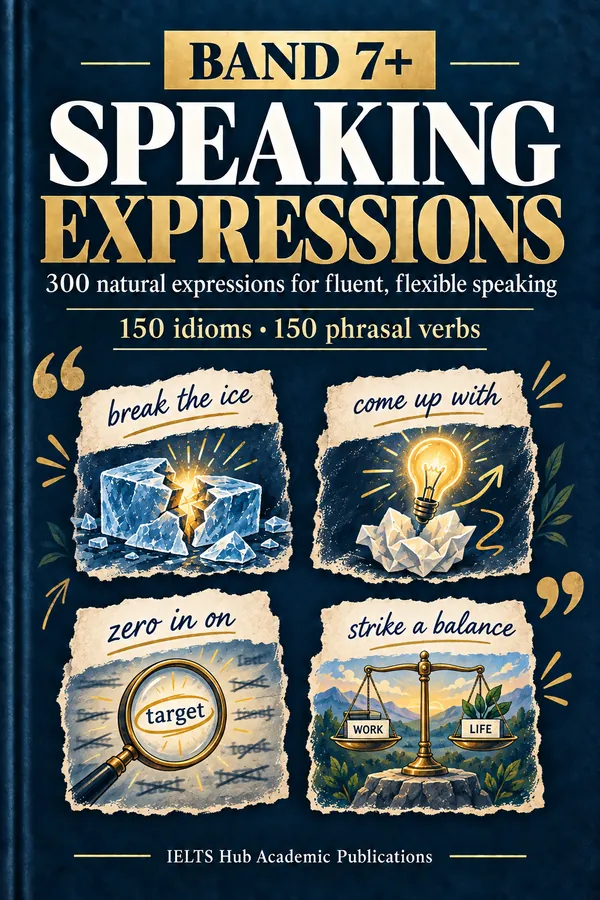
Speaking
Band 7+ Speaking Expressions
300 natural expressions for fluent, flexible speaking
₹199$6.99CAD 8.99AUD 9.99£4.99NZD 10.99€5.99AED 24SGD 8.99
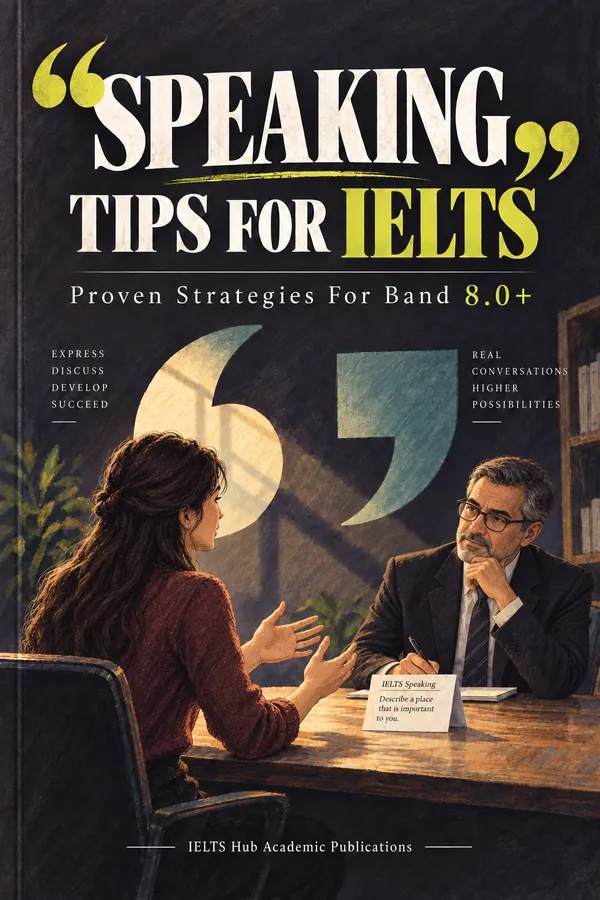
Speaking
Speaking Tips for IELTS
Proven Strategies for Band 8.0+
₹299$9.99CAD 13.99AUD 14.99£7.99NZD 16.99€8.99AED 39SGD 12.99
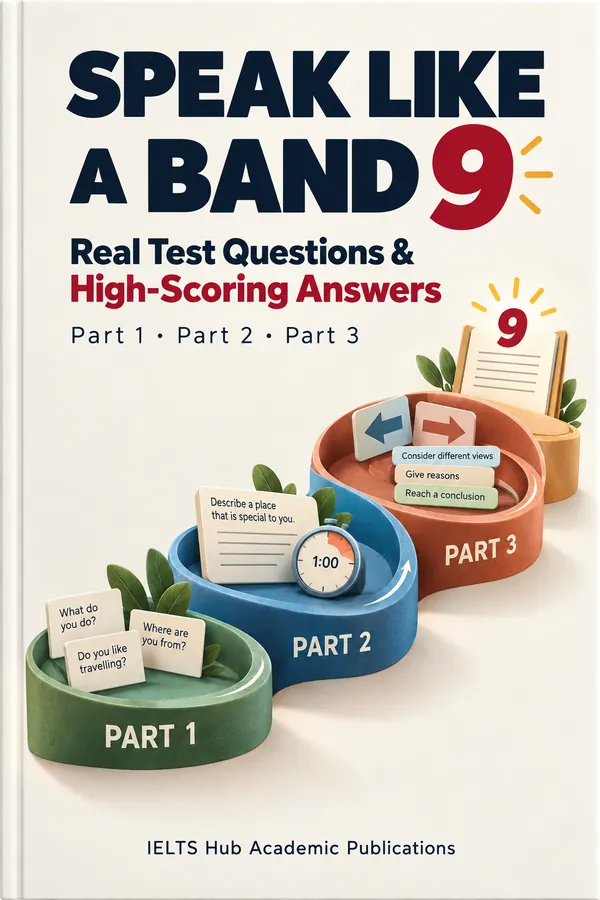
Speaking
Speak Like a Band 9
Real Test Questions & High-Scoring Answers
₹299$9.99CAD 13.99AUD 14.99£7.99NZD 16.99€8.99AED 39SGD 12.99