Speaking test #712
Part 1 · Interview
4 to 5 minutes. The examiner asks about you and familiar topics.
Can you tell me your full name?
Where are you from?
Do you work or are you a student?
Do you make plans every day?
Yes, I make plans every day. I find that having a plan helps me to stay organized and focused throughout the day.
Are you good at managing your time?
I would say that I am quite good at managing my time. I have developed strategies and techniques that help me to stay on task and avoid procrastination.
What is the latest plan you made?
The latest plan I made was to study for an upcoming exam. I have set aside specific times each day to focus on different topics and have also planned out my study schedule for the next week.
What is the hardest part of making plans?
The hardest part of making plans for me is sticking to them. It can be easy to get sidetracked or lose motivation, but I try to remind myself of the end goal and stay focused on my plan.
You will have to talk about the topic for one to two minutes. You have one minute to think about what you are going to say. You can make some notes to help you if you wish.
Elderly person in your family who you enjoy talking to
You should say:
- Who is this person and how are they related to you?
- How often do you talk to this person?
- What topics do you usually discuss with this person?
- Explain why you enjoy talking to this elderly family member
Who is this person and how are they related to you?
In my family, my paternal grandmother, whom we fondly call "Nani," holds a special place in my heart. She is my father's mother and has been a pillar of strength and wisdom for our entire family. Despite her age, Nani is remarkably active and always has a warm smile and kind words for everyone.
How often do you talk to this person?
I make it a point to talk to Nani at least a few times a week, either in person or over the phone. These conversations are a source of great joy for me as they provide me with insights into life that only someone with her depth of experience can offer. Nani's stories from her youth often transport me to a bygone era, and I cherish every moment spent listening to her.
What topics do you usually discuss with this person?
Our discussions usually revolve around family history, traditions, and life lessons. Nani has a treasure trove of anecdotes that never fail to entertain and enlighten me. Whether she is sharing recipes passed down through generations or recounting tales of resilience during challenging times, I am always engrossed in our conversations.
Explain why you enjoy talking to this elderly family member
I enjoy talking to Nani not only because of the wealth of knowledge she imparts but also because of the love and warmth she exudes. Her calming presence and unwavering support make me feel cherished and valued. Moreover, our conversations serve as a bridge between the past and the present, connecting me to my roots and instilling in me a sense of gratitude for the sacrifices made by previous generations. Nani is not just an elderly family member; she is a living repository of wisdom and love, and I am truly blessed to have her in my life.
- Words
- 274
- Sentences
- 13
- Words per sentence
- 21.1
- Speaking time
- about 2.1 min
Counted at 130 words a minute. The exam gives you one to two minutes.
Part 3 · Discussion
4 to 5 minutes. The examiner asks broader questions linked to the cue card topic.
What is different about talking to older family members compared to talking to younger people?
Talking to elderly family members is often a profoundly enriching experience, filled with wisdom and insight that only comes with age. They tend to share stories that are steeped in history, offering a unique perspective on life that younger individuals may not yet have. In contrast, conversations with younger people tend to be more dynamic and energetic, often reflecting contemporary issues and trends. While younger individuals might speak in a more fast-paced and informal manner, the discussions with older family members usually have a sense of depth and gravitas that can be both enlightening and comforting. I find that balancing these conversations can really broaden my understanding of the world!
How meaningful do you think talks with older family members are compared to chats with friends?
I believe conversations with elderly family members are profoundly meaningful, often surpassing those we have with peers in depth and insight. There's a wealth of experience and wisdom that older generations bring to the table, shaped by decades of life lessons and challenges. They often provide a unique perspective on life that can help us navigate our own struggles, offering advice that is both practical and heartfelt. While conversations with peers can be incredibly valuable for sharing contemporary experiences, they sometimes lack the broader context that comes from a lifetime of experiences. Ultimately, blending these conversations can enrich our understanding of the world, creating a more holistic view of life.
How important do you think talking to older family members is for keeping family connections strong?
Communication with elderly individuals plays a pivotal role in maintaining family bonds, as it fosters a sense of connection and shared history. Engaging with older family members allows younger generations to gain invaluable insights into their heritage and family traditions, which can significantly enrich their understanding of who they are. Additionally, these interactions often create a nurturing environment where wisdom and life lessons can be passed down, nurturing a sense of respect and appreciation for the experiences of the elderly. Ultimately, this communication not only strengthens familial ties but also promotes intergenerational understanding, which is essential for a cohesive family unit. It's truly heartwarming to see how these conversations can bridge the gap between generations and create lasting memories.
Why is it important to talk with older generations in today's world?
Engaging in conversations with older generations is incredibly important in today’s society for several reasons. Firstly, older individuals often possess a wealth of knowledge and life experiences that can offer valuable insights into various aspects of life, from history to personal development. This intergenerational exchange fosters a sense of community and helps bridge the gap between different age groups, promoting mutual understanding. Additionally, by listening to their stories and perspectives, younger individuals can gain a greater appreciation for the struggles and triumphs that have shaped our current society. Ultimately, these conversations not only enrich our own lives but also help preserve cultural heritage, ensuring that wisdom is passed down through the ages.
How could family talks change as younger people get better with technology?
That's a fascinating question! As the younger generation becomes increasingly tech-savvy, the dynamics of family conversations are likely to shift significantly. For one, technology facilitates instant communication, which means family members can share their thoughts and experiences more readily, even if they're physically apart. This immediacy can lead to more open dialogues and a greater exchange of ideas, as younger individuals often bring new perspectives shaped by their online interactions. However, it could also mean that traditional face-to-face conversations might take a backseat, with family members preferring to communicate through texts or social media. This shift could create a bit of a divide, where older generations may feel left out of certain discussions that revolve around tech or online trends. Overall, while technology can enrich family conversations, it also poses challenges that families will need to navigate together.
What steps can be taken to get younger family members to spend more time with their older relatives?
To foster greater interaction between younger family members and their elderly relatives, a multifaceted approach could be adopted. Firstly, family gatherings should be organized more frequently, where activities are tailored to bridge the generational gap, such as storytelling sessions or cooking traditional recipes together. This not only allows for the sharing of cultural heritage but also creates a warm environment for bonding. Additionally, technology can play a pivotal role; teaching older relatives how to use video calling platforms can enable them to stay connected with their grandchildren, even from a distance. Lastly, encouraging volunteer opportunities where younger members can assist elderly individuals in the community can instill a sense of responsibility and empathy, further enhancing these invaluable relationships. Overall, these initiatives can create a rich tapestry of shared experiences that benefit both age groups immensely.
Go further with the books
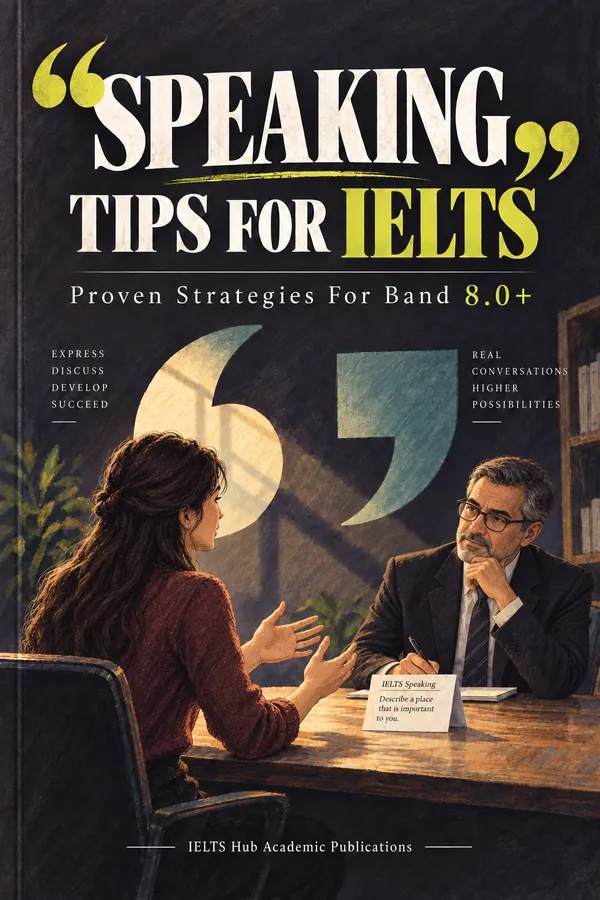
Speaking
Speaking Tips for IELTS
Proven Strategies for Band 8.0+
₹299$9.99CAD 13.99AUD 14.99£7.99NZD 16.99€8.99AED 39SGD 12.99
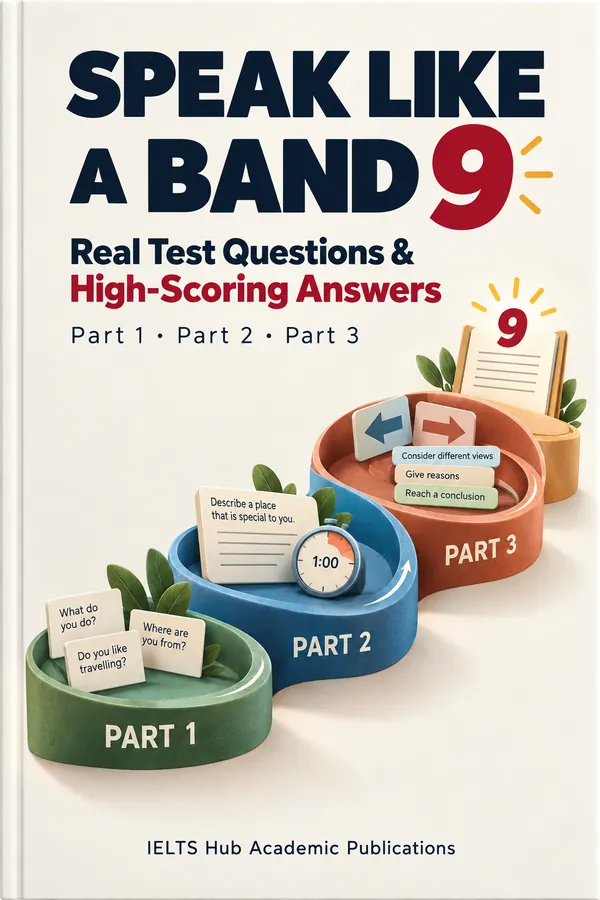
Speaking
Speak Like a Band 9
Real Test Questions & High-Scoring Answers
₹299$9.99CAD 13.99AUD 14.99£7.99NZD 16.99€8.99AED 39SGD 12.99
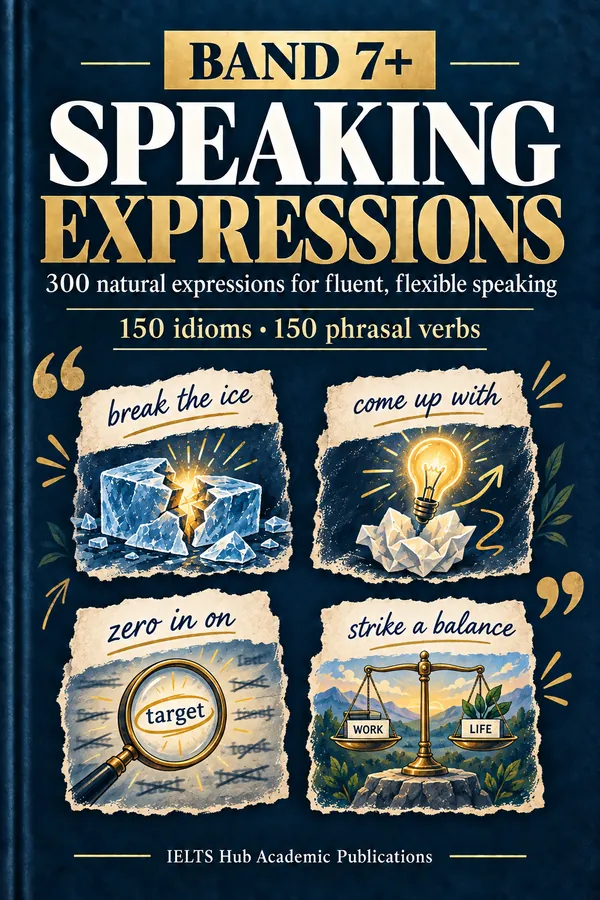
Speaking
Band 7+ Speaking Expressions
300 natural expressions for fluent, flexible speaking
₹199$6.99CAD 8.99AUD 9.99£4.99NZD 10.99€5.99AED 24SGD 8.99