Speaking test #714
Part 1 · Interview
4 to 5 minutes. The examiner asks about you and familiar topics.
Can you tell me your full name?
Where are you from?
Do you work or are you a student?
What did you like to do the most when you were in primary school?
When I was in primary school, I loved playing sports. I was particularly passionate about soccer and would spend most of my free time practicing and playing with my friends. I also enjoyed participating in school sports teams and competitions, it was always a great feeling to represent my school and compete against other teams.
How did you go to your primary school?
I used to go to my primary school by bus. My parents would drop me off at the bus stop near our house, and I would take the bus to school. It was a convenient and efficient way to travel, and I enjoyed the short journey to school each day.
How do you like your primary school?
I have fond memories of my primary school. The teachers were very supportive and dedicated, and the curriculum was challenging but engaging. I also made many lasting friendships during my time there, and I have very fond memories of the school community. Overall, I had a positive experience at my primary school.
What did you do in your leisure time in your primary school?
In my leisure time in primary school, I enjoyed playing sports with my friends. We would often organize impromptu soccer matches in the playground during lunch breaks and after school. I also enjoyed reading and would often spend my free time in the school library. I also loved playing with my classmates in the school yard, and it was always a great time.
How popular are bicycles in your hometown? [Why?
?] Bicycles are actually quite popular in my hometown. I think a lot of people opt for them as a more environmentally-friendly mode of transportation, especially since our city has a pretty good network of bike lanes and paths. Plus, with the rise of bike-sharing programs, it's become easier for people to access them when they need them.
How often do you ride a bicycle? [Why/Why not?
?] I try to ride my bike as often as possible, both for the exercise and because it's a more sustainable option for getting around. However, I do live in a city with unpredictable weather, so sometimes it's not practical to ride if it's pouring rain or there's a snowstorm.
Do you think that bicycles are suitable for all ages? [Why/Why not?
?] I think that bicycles can definitely be suitable for all ages, as long as the person is comfortable and able to ride safely. Of course, there are some limitations for younger children or elderly individuals, but with the right equipment and precautions, I don't see any reason why anyone of any age couldn't enjoy the benefits of cycling.
What are the advantages of a bicycle compared to a car? [Why?
?] There are so many advantages of a bicycle compared to a car. For one, they're much more eco-friendly, as they don't emit any harmful emissions. They're also much cheaper to maintain and operate, since you don't have to pay for gas or insurance. Additionally, cycling is a great form of exercise, and it can be a really enjoyable way to get around. Plus, with more and more cities investing in bike lanes and infrastructure, it's becoming easier and safer to ride a bike as a mode of transportation.
You will have to talk about the topic for one to two minutes. You have one minute to think about what you are going to say. You can make some notes to help you if you wish.
Describe a time when you moved to a new house or school
You should say:
- Reason for the move
- Challenges faced during the transition
- How you adapted to the new environment
- Impact of the move on your life
Reason for the move
Moving to a new house or school can be a significant event in one's life, and I vividly remember the time when my family relocated to a new city due to my father's job transfer. The primary reason for our move was to seek better career opportunities for my father, and as a result, we had to leave behind our familiar surroundings and friends.
Challenges faced during the transition
During the transition, I faced several challenges, such as adjusting to a new school, making new friends, and coping with the feelings of homesickness. The cultural differences and the initial sense of isolation were overwhelming at first, making me feel anxious and out of place in the new environment. However, I realized that overcoming these challenges was essential for my personal growth and development.
How you adapted to the new environment
To adapt to the new environment, I actively participated in school activities, volunteered for various events, and sought opportunities to connect with my classmates. Gradually, I started forming friendships, exploring the city, and embracing the local culture. I also sought support from my family and teachers, who played a crucial role in helping me navigate through the initial hurdles of the transition.
Impact of the move on your life
The move to a new city not only broadened my horizons but also taught me valuable life lessons. It made me more resilient, adaptable, and open-minded. I learned to embrace change, face challenges with courage, and appreciate the diversity around me. Overall, the experience of moving to a new house and school had a profound impact on my life, shaping me into a more confident and independent individual.
- Words
- 258
- Sentences
- 12
- Words per sentence
- 21.5
- Speaking time
- about 2.0 min
Counted at 130 words a minute. The exam gives you one to two minutes.
Part 3 · Discussion
4 to 5 minutes. The examiner asks broader questions linked to the cue card topic.
What are the differences between moving to a new house and moving to a new school?
Moving to a new house and moving to a new school can evoke quite different emotions and experiences. When you relocate to a new house, there’s often a sense of excitement about the new environment, perhaps even a chance to redecorate or create a fresh space. In contrast, changing schools can feel a bit more daunting; you’re not just adjusting to a new physical space but also navigating new social dynamics and academic challenges. In a new home, you might find comfort in familiar routines, while at a new school, you may feel a sense of uncertainty as you try to make new friends and adapt to different teaching styles. Ultimately, both experiences involve a period of adjustment, but the social pressures of a new school can make that transition feel more intense. It's fascinating how these two significant life changes can shape our perspectives and resilience in such distinct ways!
What are some opinions people might have about how moving affects emotions?
Relocating can evoke a wide range of emotions, and people's views on this experience can vary significantly. Some may see it as a fresh start, filled with exciting opportunities, which can lead to a sense of renewed enthusiasm for life. On the other hand, some individuals might feel a deep sense of loss, especially if they are leaving behind cherished memories and relationships. This emotional turmoil often stems from the fear of the unknown and the challenge of adapting to a new environment. Ultimately, how people perceive the emotional impact of relocating largely depends on their personal circumstances and individual resilience.
How can changing to a new place affect personal growth?
Moving to a new environment can profoundly affect personal development in numerous ways. Firstly, it often pushes individuals out of their comfort zone, fostering adaptability and resilience. When people are faced with unfamiliar situations, they are compelled to develop new skills and perspectives, which can greatly enhance their emotional intelligence. Additionally, immersing oneself in a different culture can broaden one’s worldview, encouraging open-mindedness and appreciation for diversity. This kind of exposure not only enriches personal growth but can also lead to meaningful relationships and connections, further enhancing one’s social skills. Overall, the experience of relocating can be a transformative journey that shapes a person’s identity and outlook on life.
Why do you think some people adjust to a new place more easily than others?
Some individuals find it easier to adapt to a new place due to a combination of personality traits and previous experiences. For instance, those who are inherently open-minded tend to embrace change and are more willing to explore unfamiliar environments. Additionally, individuals with a background of frequent relocation or travel often develop a certain level of resilience and adaptability, equipping them with the skills to navigate new cultures and social settings. Furthermore, having a supportive social network can significantly ease the transition, as it provides a sense of belonging and stability. Ultimately, it's a fascinating interplay of personal characteristics and external factors that shapes how we adjust to new surroundings.
How could moving often change things for future generations?
The trend of frequent relocations could have a profound impact on future generations, shaping not only their personal identities but also their social skills. For one, children who move often may become more adaptable and resilient, as they learn to navigate new environments and cultures from a young age. This exposure can foster a sense of global citizenship, making them more open-minded and appreciative of diversity. On the flip side, constant change might also lead to challenges in forming deep, lasting relationships. It can be difficult to cultivate a strong sense of community when you’re always on the move. Additionally, the pressure of adjusting to new educational systems and social dynamics could result in a certain level of anxiety. Overall, while frequent relocations can enrich experiences, they also present unique challenges that future generations will need to navigate.
What ways can people use to make moving to a new home or school easier?
Making the transition to a new home or school can certainly be a daunting experience, but there are several effective strategies individuals can employ to ease the process. First and foremost, establishing a routine can greatly help in creating a sense of stability amidst the changes. Additionally, reaching out to new classmates or neighbors can foster meaningful connections and help build a supportive network. Engaging in local activities or clubs is another fantastic way to immerse oneself in the community and make new friends. Lastly, maintaining a positive mindset and being open to new experiences can significantly enhance the overall transition, turning it into an exciting opportunity for personal growth.
Go further with the books
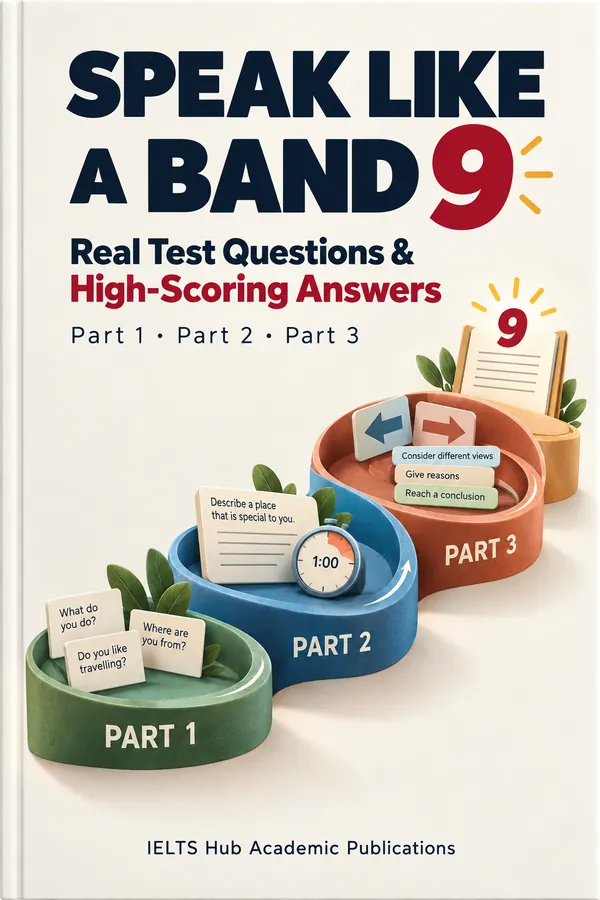
Speaking
Speak Like a Band 9
Real Test Questions & High-Scoring Answers
₹299$9.99CAD 13.99AUD 14.99£7.99NZD 16.99€8.99AED 39SGD 12.99

Speaking
Band 7+ Speaking Expressions
300 natural expressions for fluent, flexible speaking
₹199$6.99CAD 8.99AUD 9.99£4.99NZD 10.99€5.99AED 24SGD 8.99
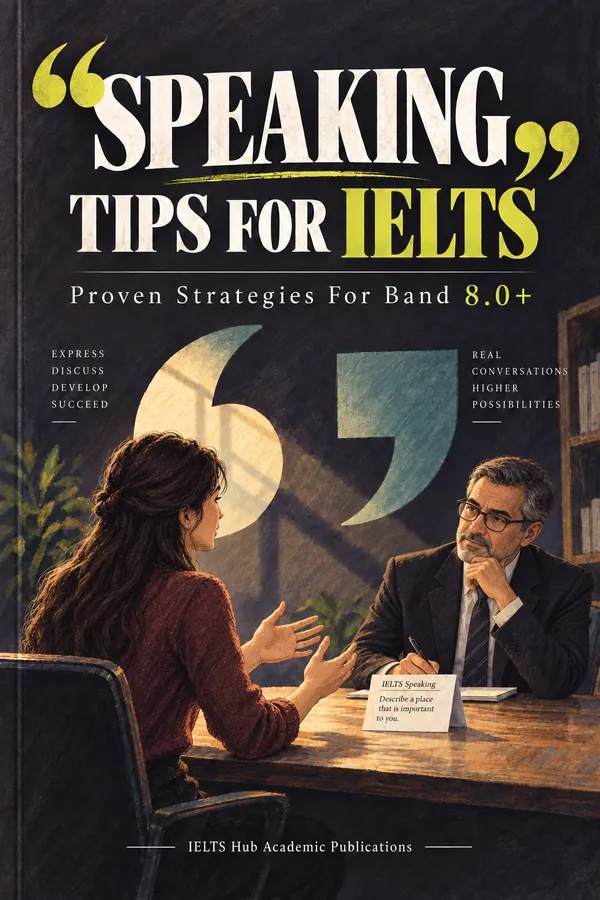
Speaking
Speaking Tips for IELTS
Proven Strategies for Band 8.0+
₹299$9.99CAD 13.99AUD 14.99£7.99NZD 16.99€8.99AED 39SGD 12.99