Speaking test #751
Part 1 · Interview
4 to 5 minutes. The examiner asks about you and familiar topics.
Can you tell me your full name?
Where are you from?
Do you work or are you a student?
How do you usually spend your weekends?
I typically spend my weekends engaging in a variety of leisure activities. On Saturdays, I like to go for a hike or bike ride in the morning to get some fresh air and exercise. In the afternoon, I might catch up with friends over lunch or spend time working on a hobby, such as photography or painting. On Sundays, I like to relax and unwind by reading a book or watching a movie. I also make sure to set aside some time for self-care, such as practicing yoga or meditation.
Which is your favourite part of the weekend?
My favourite part of the weekend is undoubtedly the sense of freedom and relaxation that comes with having two days off from work. I really enjoy having the time to pursue my interests and hobbies without feeling rushed or constrained by the demands of my job. Additionally, I treasure the opportunity to spend quality time with my loved ones, whether that be catching up over a meal or engaging in a fun activity together.
Do you think your weekends are long enough?
I believe that two days is a sufficient amount of time to recharge and rejuvenate after a busy week of work. However, I do think that having a longer weekend, such as a four-day weekend, would be even better. It would allow me to have more time to travel or pursue more ambitious projects.
How important do you think it is to have free time at the weekends?
I think it is extremely important to have free time at the weekends in order to maintain a healthy work-life balance. Having the time to pursue hobbies and interests, spend time with loved ones, and simply relax and unwind is essential for our well-being. Without this time to recharge, we may become burnt out or stressed, which can have negative effects on our mental and physical health. Furthermore, having free time can be a great opportunity to gain new experiences, explore new places, and try new things.
Are you interested in wild animals?
Oh absolutely, I have always had a deep fascination with wild animals and their unique behaviors and habitats. From the majestic elephants of Africa to the elusive snow leopards of the Himalayas, I find myself constantly drawn to learning more about these incredible creatures and the ways in which they interact with their environment.
Do you like to watch TV programs about wild animals?
Definitely, I find that watching documentaries and other TV programs about wild animals is a great way to deepen my understanding of these creatures and the challenges they face in the wild. Whether it's a National Geographic special on the great apes or a BBC series on the marine life of the Great Barrier Reef, I always find these programs to be both informative and entertaining.
Did you learn something about wild animals at school?
Yes, I was fortunate enough to have a number of classes in school that focused on wildlife biology and conservation. These classes covered a wide range of topics, from the different types of animals found in different regions of the world to the ways in which humans can impact the survival of these animals. Through these classes, I was able to gain a deeper understanding of the complex relationships between wild animals and the natural world, which has greatly enhanced my appreciation of these creatures.
Where can you see wild animals in your country (India)?
India is home to a wide variety of wild animals, many of which can be found in the country's numerous national parks and wildlife reserves. For example, the Kaziranga National Park in Assam is known for its large population of Indian rhinos, while the Gir Forest in Gujarat is home to the last remaining population of Asiatic lions. Additionally, the Indian Himalayas are home to a number of endangered species such as snow leopards and the blue sheep. Overall, India offers a wealth of opportunities for wildlife viewing, and I highly recommend visiting these areas for anyone interested in seeing wild animals in their natural habitat.
You will have to talk about the topic for one to two minutes. You have one minute to think about what you are going to say. You can make some notes to help you if you wish.
Weather condition forced you to change your plan
You should say:
- What was your original plan
- How did the weather condition affect your plan
- What changes did you make to your plan
- How did you feel about having to change your plan
What was your original plan
In India, the weather can be quite unpredictable, and I vividly remember a time when a sudden downpour forced me to change my plans. My original plan for that day was to go on a hiking trip with my friends to a nearby hill station. We had been looking forward to this trip for weeks, excited about exploring the picturesque trails and enjoying the cool mountain air.
How did the weather condition affect your plan
However, just as we were about to leave, dark clouds rolled in, and a heavy rainstorm hit the area. The sudden change in weather made it impossible for us to proceed with our hiking trip. The trails would have been slippery and dangerous, posing a risk to our safety. Disappointed but understanding the importance of safety, we decided to postpone our hike to a later date.
What changes did you make to your plan
Instead of hiking, we opted to spend the day indoors playing board games and watching movies. While it was not the outdoor adventure we had planned, we made the most of the situation and had a great time bonding indoors. The unexpected change in plans turned out to be a blessing in disguise as it allowed us to relax and enjoy each other's company in a cozy setting.
How did you feel about having to change your plan
Initially, I felt a bit frustrated about the weather ruining our plans, but as the day unfolded, I realized that sometimes unexpected changes can lead to new and enjoyable experiences. I learned to adapt to the situation and make the best of it, finding joy in the simple moments spent with friends. Overall, the weather-induced change of plans taught me the importance of flexibility and positivity in dealing with unforeseen circumstances.
- Words
- 272
- Sentences
- 13
- Words per sentence
- 20.9
- Speaking time
- about 2.1 min
Counted at 130 words a minute. The exam gives you one to two minutes.
Part 3 · Discussion
4 to 5 minutes. The examiner asks broader questions linked to the cue card topic.
How do the impacts of bad weather on travel plans compare to those of nice weather?
Severe weather can significantly disrupt travel plans in ways that mild weather simply cannot. For instance, heavy rain, snowstorms, or hurricanes can lead to flight cancellations and road closures, making it nearly impossible to reach a destination. On the other hand, mild weather typically enhances travel experiences, allowing for smooth journeys and enjoyable outdoor activities. While a sunny day might encourage spontaneous road trips or hiking adventures, severe weather can create anxiety and necessitate contingency planning to ensure safety. Overall, the stark contrast between the chaos of severe conditions and the ease of mild weather can profoundly influence how we approach our travel arrangements.
What are some views people might have about how weather affects what they do?
People have a variety of perspectives on how weather influences their daily activities, and these views can be quite nuanced. For instance, some individuals absolutely thrive during sunny days, seeing them as an opportunity to engage in outdoor pursuits like hiking or picnicking, which can significantly boost their mood and overall well-being. Conversely, others might view rainy or colder weather as a chance to enjoy indoor activities, such as reading or watching movies, which can be equally fulfilling. Additionally, there are those who may feel that extreme weather conditions, whether it be heatwaves or snowstorms, can disrupt their routines and lead to a sense of frustration. Ultimately, it’s fascinating how weather can shape our plans and even our emotions, highlighting its profound influence on our lives.
How can weather affect choices made for outdoor events?
Weather conditions can significantly influence the planning and execution of outdoor events in various ways. For instance, if the forecast predicts heavy rain, organizers might need to consider alternative venues or even postpone the event altogether to ensure the safety and comfort of attendees. Similarly, extreme temperatures can affect not just the enjoyment of the event but also the health of participants, leading to decisions about hydration stations or shaded areas. Additionally, favorable weather can enhance the overall experience, making it more likely for people to attend and participate enthusiastically. Ultimately, being aware of the weather can help ensure that everything runs smoothly and that everyone has a memorable time!
Why do you think people often struggle to change their plans because of sudden weather changes?
Individuals often find it challenging to adapt their plans due to unexpected weather changes because, quite frankly, weather can be unpredictable and can throw a wrench into even the best-laid plans. For instance, if someone has planned a lovely outdoor picnic, a sudden downpour can lead to feelings of frustration and disappointment. Additionally, many people tend to be set in their ways when it comes to scheduling; they might have meticulously planned their day around specific activities, and when those don’t go as intended, it creates a sense of chaos. Moreover, there’s often a psychological aspect at play; people may struggle with the cognitive load of constantly recalibrating their plans, which can be mentally exhausting. Ultimately, adapting requires not just flexibility but also a willingness to embrace change, which can be quite difficult for many.
How could climate change affect how often and how bad weather-related problems are in the future?
Climate change is poised to significantly affect both the frequency and severity of weather-related disruptions in the future. As global temperatures rise, we can expect more extreme weather events like hurricanes, droughts, and heavy rainfall. This means that communities, especially those in vulnerable areas, might face increased risks of flooding or crop failures, which can have devastating economic impacts. Moreover, the intensification of these events could lead to a cascading effect, where one disaster exacerbates another, creating a cycle of challenges for disaster response and recovery efforts. It's crucial for us to acknowledge these potential shifts and take proactive measures to mitigate their impacts.
What steps can people take to be more ready for weather impacting their plans?
To better prepare for the possibility of weather impacting their plans, individuals can take several practical measures. Firstly, staying informed by regularly checking weather forecasts can be incredibly beneficial; it allows people to anticipate any changes and adjust their plans accordingly. Additionally, having a flexible schedule is essential; if someone can shift their activities to a different day or time, they’ll feel less stressed when unexpected weather arises. Another effective strategy is to always have a back-up plan in place. For example, if you're planning a picnic and the forecast predicts rain, having an indoor alternative ready can save the day. Finally, investing in high-quality, weather-appropriate gear, like an all-weather jacket or a sturdy umbrella, can make outdoor activities much more enjoyable, even when the elements aren't cooperating. By taking these steps, individuals can navigate weather disruptions smoothly and still have a great time.
Go further with the books

Speaking
Speaking Tips for IELTS
Proven Strategies for Band 8.0+
₹299$9.99CAD 13.99AUD 14.99£7.99NZD 16.99€8.99AED 39SGD 12.99

Speaking
Speak Like a Band 9
Real Test Questions & High-Scoring Answers
₹299$9.99CAD 13.99AUD 14.99£7.99NZD 16.99€8.99AED 39SGD 12.99
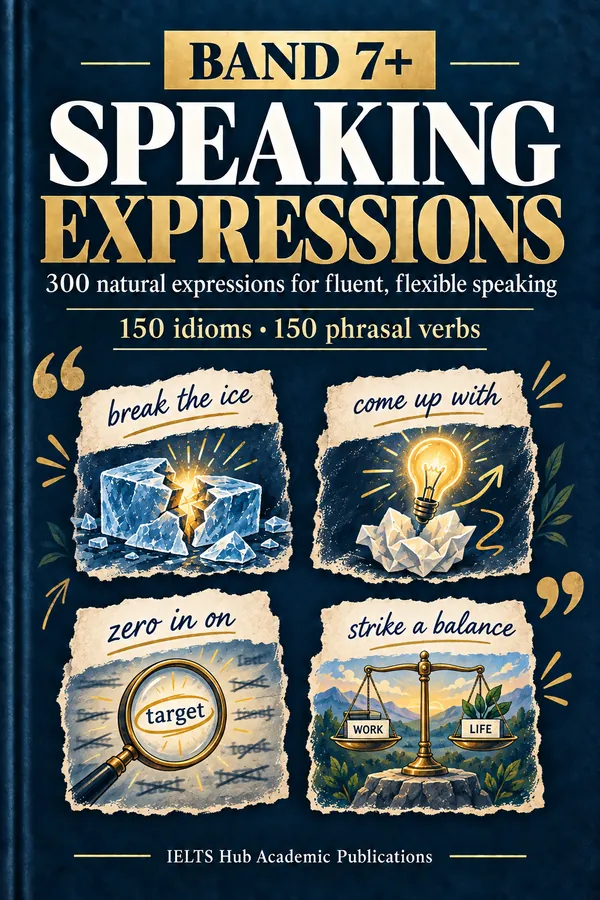
Speaking
Band 7+ Speaking Expressions
300 natural expressions for fluent, flexible speaking
₹199$6.99CAD 8.99AUD 9.99£4.99NZD 10.99€5.99AED 24SGD 8.99