Speaking test #755
Part 1 · Interview
4 to 5 minutes. The examiner asks about you and familiar topics.
Can you tell me your full name?
Where are you from?
Do you work or are you a student?
Did you enjoy travelling by car when you were a child? [Why/Why not?
?] I absolutely loved travelling by car when I was a child. There was something so exciting about being in a vehicle and going on a journey, whether it was a long road trip or just a quick trip to the grocery store. Plus, being in the car meant that I could listen to music, play games, or just stare out the window and daydream. Overall, it was a really enjoyable experience for me.
Would you generally prefer to be a driver or a passenger in a car? [Why/Why not?
?] I would generally prefer to be a driver in a car. While it can be nice to sit back and relax as a passenger, I find that I enjoy the feeling of control and responsibility that comes with driving. Plus, I like being able to choose the route and decide where we go, rather than being at the mercy of someone else's choices.
How important is the colour of a car to you? [Why/Why not?
?] To be honest, the colour of a car is not particularly important to me. As long as it functions properly and gets me from point A to point B, I'm happy. I'm more concerned with things like the car's fuel efficiency, safety features, and overall reliability.
What type of car would you most like to have in the future? [Why/Why not?
?] In the future, I would love to have a hybrid or electric car. I'm really interested in reducing my carbon footprint and being more environmentally friendly, and I feel like driving a hybrid or electric car would be a great way to do that. Plus, with all of the advances in technology, I imagine that they will only become more and more practical and convenient in the coming years.
Who is your favorite celebrity in India?
Oh, that's a tough one. I really admire Aamir Khan's acting abilities and the way he uses his platform to bring attention to social issues. He's definitely at the top of my list.
Do you like any foreign celebrities?
Absolutely! I'm a huge fan of Jennifer Lawrence and Emma Stone. They're both such talented actresses and have great personalities too.
Would you want to be a celebrity in the future?
Hmm, I'm not sure. While it would be fun to have a larger platform to share my talents and ideas, the lack of privacy and constant scrutiny would be a huge drawback for me.
Do you think we should respect famous people's privacy?
Definitely. No one deserves to have their private life constantly on display for the world to see. Famous people are still human and deserve to have their own space and time to themselves.
You will have to talk about the topic for one to two minutes. You have one minute to think about what you are going to say. You can make some notes to help you if you wish.
Describe a mistake you once made
You should say:
- What the mistake was
- How it happened
- What were the consequences
- What did you learn from it
I vividly remember a mistake I made in my final year of college when I unintentionally skipped an important deadline for a research paper submission. The mistake occurred due to poor time management on my part as I underestimated the amount of work required to complete the paper. Despite knowing the deadline well in advance, I procrastinated and left the majority of the work until the last minute.
The consequences of my mistake were severe as the missed deadline resulted in a significant deduction of marks for the assignment. This had a direct impact on my overall grade for the course, affecting my academic record negatively. Moreover, it also caused me a great deal of stress and anxiety as I had to explain the situation to my professor and face the disappointment of not meeting the expectations set for me.
From this experience, I learned the invaluable lesson of the importance of effective time management and planning. I realized that procrastination only leads to unnecessary pressure and compromises the quality of work produced. Since then, I have adopted a more organized approach to my tasks, setting realistic deadlines and breaking down projects into smaller, manageable tasks to avoid similar mistakes in the future. This experience taught me the significance of taking responsibility for my actions and the impact they can have on my academic and personal life.
- Words
- 227
- Sentences
- 10
- Words per sentence
- 22.7
- Speaking time
- about 1.7 min
Counted at 130 words a minute. The exam gives you one to two minutes.
Part 3 · Discussion
4 to 5 minutes. The examiner asks broader questions linked to the cue card topic.
How do mistakes help us grow and learn differently than successes?
Mistakes play a crucial role in personal growth and learning, often more so than successes. When we stumble, it forces us to reflect on our actions and decisions, leading to a deeper understanding of ourselves and our motivations. This process of introspection can reveal valuable insights that success might not necessarily provide. Moreover, overcoming challenges and learning from our errors can build resilience and enhance our problem-solving skills, making us better equipped for future endeavors. In contrast, while successes can boost our confidence and provide validation, they often lack the broad spectrum of lessons that mistakes inherently offer. Ultimately, it's this balance between triumphs and failures that shapes us into more well-rounded individuals.
Some people think that making mistakes is an important part of life, while others believe it should be avoided. What do you think about this?
I wholeheartedly believe that making mistakes is an essential part of life. After all, it's through our missteps that we often gain the most valuable insights and learn important lessons. Embracing mistakes fosters resilience and encourages personal growth, allowing us to become more adaptable in the face of challenges. While it’s natural to want to avoid errors, I think that a fear of making mistakes can actually hold us back from seizing opportunities and trying new things. Ultimately, I see mistakes as stepping stones on the path to success, rather than something to be ashamed of.
How important do you think it is for people to admit their mistakes at work?
Acknowledging mistakes in professional settings is incredibly significant, and I can't emphasize that enough! When individuals take responsibility for their errors, it not only demonstrates integrity but also fosters a culture of accountability within the workplace. This can lead to enhanced teamwork as colleagues feel more comfortable admitting their own mistakes, which ultimately promotes a learning environment. Moreover, recognizing one’s shortcomings allows for personal growth and development, enabling individuals to refine their skills and avoid repeating the same errors in the future. In the long run, this practice can greatly enhance one’s professional reputation and contribute to overall organizational success.
Why do you think people usually have a hard time learning from their mistakes?
That's a fascinating question! I believe one of the main reasons people struggle to learn from their mistakes is that many are often caught up in a cycle of self-doubt and blame-shifting. When a mistake occurs, instead of reflecting on what went wrong, they might focus on feeling embarrassed or frustrated, which can hinder their ability to analyze the situation. Additionally, some people have a tendency to avoid taking responsibility for their actions, leading them to repeat the same errors. Ultimately, it takes a certain level of emotional resilience to confront one’s shortcomings and use them as a stepping stone for growth.
How could views on making mistakes shift in the future with the growth of technology and artificial intelligence?
That's a fascinating question! As technology continues to evolve, I think our perspective on making mistakes will shift considerably. With the integration of artificial intelligence into our daily lives, we may start to view mistakes not as failures but as invaluable learning opportunities. AI systems can analyze vast amounts of data, providing insights that help us understand where we went wrong and how to improve. Moreover, as we become more accustomed to relying on technology, I believe there will be a greater acceptance of mistakes as part of the creative process. Instead of fearing errors, people might embrace them, fostering a culture of experimentation and innovation. In this way, technology could empower us to take more risks, knowing that we have the tools to learn and adapt more effectively than ever before.
What steps can people take to reduce the risk of making the same mistakes again?
To minimize the chances of repeating past mistakes, individuals can adopt a few key strategies. First and foremost, reflective practice is crucial; taking the time to analyze what went wrong and why can provide invaluable insights. Additionally, setting clear goals can help maintain focus and direction, ensuring that past missteps are not repeated. Another effective measure is seeking feedback from others, as their perspectives can shed light on blind spots that one might overlook. Ultimately, cultivating a mindset of continuous learning and resilience can empower individuals to grow from their experiences rather than be defined by them.
Go further with the books
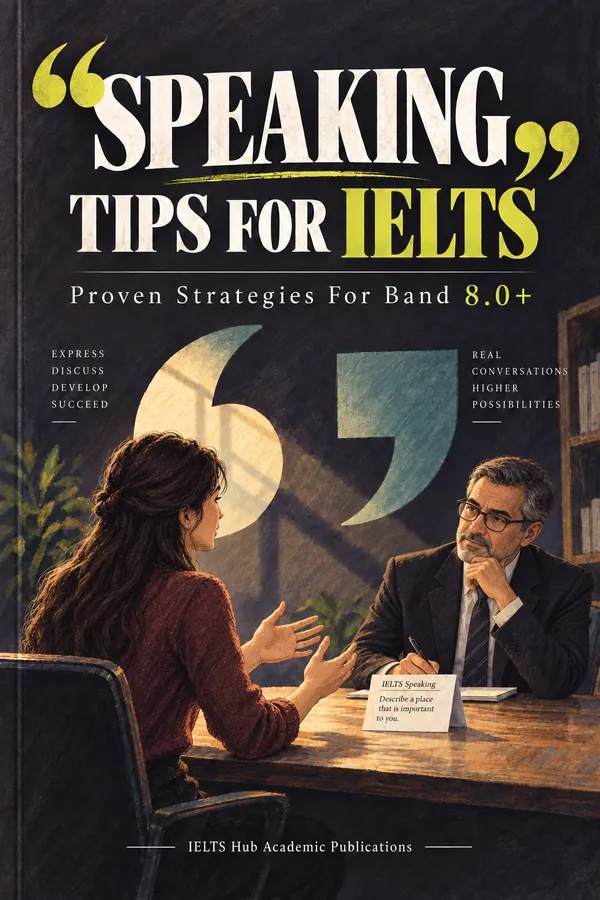
Speaking
Speaking Tips for IELTS
Proven Strategies for Band 8.0+
₹299$9.99CAD 13.99AUD 14.99£7.99NZD 16.99€8.99AED 39SGD 12.99
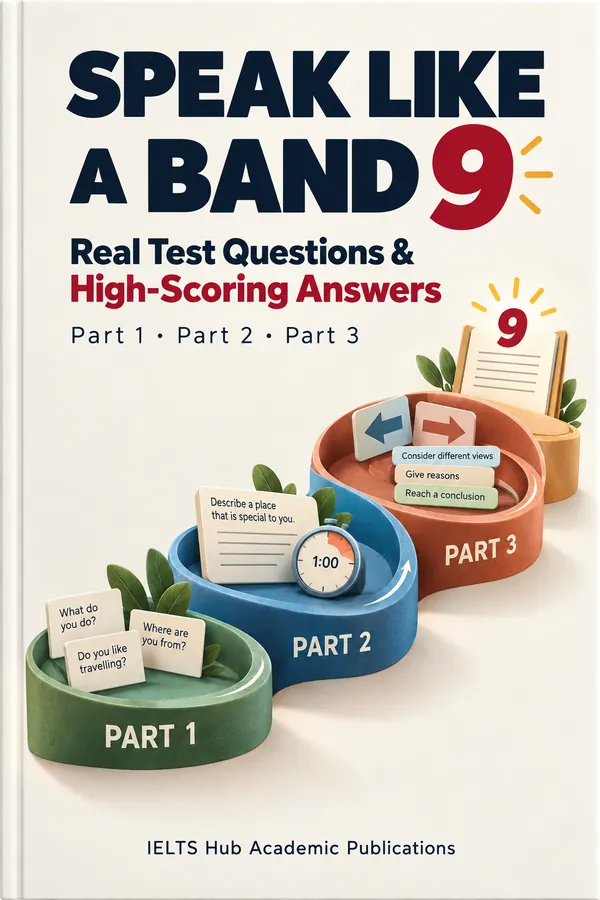
Speaking
Speak Like a Band 9
Real Test Questions & High-Scoring Answers
₹299$9.99CAD 13.99AUD 14.99£7.99NZD 16.99€8.99AED 39SGD 12.99

Speaking
Band 7+ Speaking Expressions
300 natural expressions for fluent, flexible speaking
₹199$6.99CAD 8.99AUD 9.99£4.99NZD 10.99€5.99AED 24SGD 8.99