Speaking test #759
Part 1 · Interview
4 to 5 minutes. The examiner asks about you and familiar topics.
Can you tell me your full name?
Where are you from?
Do you work or are you a student?
Do you collect anything?
Yeah, I'm definitely a bit of a collector. I've always loved picking up unique items and adding them to my collection. Right now, I'm really into vintage cameras and have a pretty impressive collection going on.
Is there anything that you keep from childhood?
Definitely. I have a lot of sentimental value attached to certain items from my childhood, so I try to hold onto them as much as possible. For example, I still have my favorite stuffed animal from when I was a kid, and I could never bring myself to get rid of it.
Would you keep old things for a long time? Why?
Absolutely. I think there's something really special about being able to hold onto old things and being able to look back on them and remember certain memories or moments in your life. Plus, I just think it's a really cool way to add character and history to your home.
Where do you usually keep things you need?
I'm pretty organized, so I like to have a designated spot for everything. For example, I keep my keys and wallet in a designated drawer in my bedroom, and I have a specific spot in my kitchen for all of my cooking supplies. It just makes it easier to find things when I need them.
What colors do you like best for? [Why/Why not?
?] I really love shades of blue and green. I find that they have a calming effect and are perfect for creating a relaxing atmosphere. Plus, they go well with a variety of other colors, so it's easy to incorporate them into any decorating scheme.
Do you like the same color when you were a child? [Why/Why not?
?] Actually, my favorite color has always been pink. I don't know why, but it's just a color that brings me joy and makes me feel happy. As I've grown older, I've come to appreciate other colors as well, but pink will always have a special place in my heart.
What colors would you not choose for decorating your room? [Why/Why not?
?] I'm not a huge fan of really bright, bold colors like neon orange or electric yellow. They can be a bit overwhelming and hard on the eyes, so I tend to avoid them in my home decor. That being said, I do love a pop of color here and there, so I might incorporate small accents of those shades in throw pillows or accessories.
What are the most popular colors with your friends at the moment? [Why/Why not?
?] I think one of the biggest trends right now is neutral tones like beige, white, and grey. They're really versatile and can be dressed up or down, depending on the occasion. My friends seem to be really into these shades because they're easy to match with any outfit and create a cohesive look. Plus, they're just really chic and stylish.
You will have to talk about the topic for one to two minutes. You have one minute to think about what you are going to say. You can make some notes to help you if you wish.
Describe an interesting animal you know about
You should say:
- What is the animal
- Where is it found
- What are its unique features
- Why do you find it interesting
What is the animal
I would like to talk about the majestic Bengal Tiger, which is one of the most fascinating animals in the world. Found predominantly in the forests of India, particularly in the Sundarbans mangrove forest and other national parks such as Ranthambore and Bandhavgarh, the Bengal Tiger is a symbol of strength and beauty. With its striking orange fur, black stripes, and powerful build, the Bengal Tiger is truly a sight to behold in the wild.
Where is it found
What sets the Bengal Tiger apart from other big cats is its impressive size and strength. Adult male Bengal Tigers can weigh up to 500 pounds and measure over 10 feet in length, making them the largest tiger species. Their unique coat patterns help them blend seamlessly into their natural habitat, making them efficient hunters. The roar of a Bengal Tiger can be heard from several miles away, adding to its aura of power and dominance in the jungle.
What are its unique features
I find the Bengal Tiger particularly interesting due to its role in Indian culture and folklore. Revered as the national animal of India, the Bengal Tiger holds a special place in the hearts of Indians. It symbolizes courage, strength, and resilience, traits that are highly valued in Indian society. Additionally, the conservation efforts to protect this endangered species highlight the importance of preserving the delicate balance of nature.
Why do you find it interesting
In conclusion, the Bengal Tiger is a captivating animal that continues to capture the imagination of people around the world. Its unique features, cultural significance, and conservation status make it a truly interesting subject of study. Witnessing a Bengal Tiger in its natural habitat is a once-in-a-lifetime experience that leaves a lasting impression on anyone lucky enough to encounter this magnificent creature.
- Words
- 284
- Sentences
- 14
- Words per sentence
- 20.3
- Speaking time
- about 2.2 min
Counted at 130 words a minute. The exam gives you one to two minutes.
Part 3 · Discussion
4 to 5 minutes. The examiner asks broader questions linked to the cue card topic.
What are the differences between the traits of the animal you described and those of other animals in its environment?
Well, let's take the example of the African elephant, which I described earlier. One of its most remarkable characteristics is its *incredible intelligence* and social structure. Unlike many other animals in its habitat, such as lions or zebras, elephants exhibit a profound level of empathy and complex communication skills. They often form close-knit family groups and display behaviors that suggest they understand the emotions of their companions, which is quite unique in the animal kingdom. This social cohesion not only helps them survive but also shapes their interactions with other species in their environment, making them stand out in the rich tapestry of the savanna ecosystem.
How much do you think culture affects how people view animals?
People's perceptions of animals are significantly influenced by cultural beliefs, and this can vary dramatically across different societies. For instance, in some cultures, certain animals are revered and considered sacred, such as cows in Hinduism, which leads to a profound respect and protection for them. Conversely, in other cultures, animals may be viewed as pests or sources of food, which shapes a more utilitarian approach towards their existence. This cultural lens not only affects how we treat animals but also influences our attitudes towards conservation and biodiversity. Ultimately, understanding these cultural nuances is essential for fostering a more empathetic approach to animal welfare globally.
How do animals help keep nature balanced, and how important is their help?
Animals play a crucial role in maintaining ecological balance, and their significance cannot be overstated. They contribute to various ecosystem services such as pollination, seed dispersal, and nutrient cycling. For instance, predators help control prey populations, preventing overgrazing and promoting biodiversity. Additionally, animals like bees and butterflies are vital for pollination, which is essential for the reproduction of many plants, including those that humans rely on for food. Ultimately, the health of our ecosystems is intertwined with the well-being of animal populations, making their role not just important, but absolutely fundamental to our planet’s sustainability.
Why do you think some animals are more interesting to people than others?
Certain animals tend to capture public interest more than others for a variety of reasons. For one, animals that are perceived as charismatic megafauna, like elephants and tigers, often evoke strong emotional responses due to their size and beauty. Additionally, animals that are rare or endangered, such as the giant panda, often become symbols of conservation efforts, drawing attention and support from the public. Moreover, the way animals are portrayed in media—think of beloved characters like Simba from "The Lion King"—can significantly influence public perception and interest. This combination of emotional connection, media representation, and the unique traits of certain species makes them stand out in the public eye.
How could the bond between people and animals change in the future?
The relationship between humans and animals is likely to evolve in fascinating ways as we progress into the future. With advances in technology, we may see a significant shift towards a more sustainable coexistence, where humans not only protect wildlife but also actively engage in conservation efforts. For instance, innovative technologies like AI and drones could help monitor endangered species, allowing us to better understand their needs and habitats. Moreover, as more people become aware of animal welfare issues, there could be a burgeoning movement towards adopting pets and supporting ethical treatment practices. Ultimately, I believe this evolving relationship will foster a deeper emotional connection between us and the animal kingdom, enriching our lives and promoting biodiversity.
What steps can be taken to help protect endangered animal species?
To protect endangered animal species, a multifaceted approach is essential. First and foremost, we need to enhance conservation efforts by establishing more protected areas and wildlife reserves. This would provide a safe haven for these animals and help maintain their natural habitats. Additionally, raising public awareness through educational campaigns can foster a greater appreciation for biodiversity, encouraging communities to get involved in conservation initiatives. Collaborating with local communities is also crucial, as their traditional knowledge and practices can play a significant role in protecting these species. Lastly, implementing stricter laws against poaching and illegal wildlife trade would be a game-changer in safeguarding endangered animals from extinction.
Go further with the books
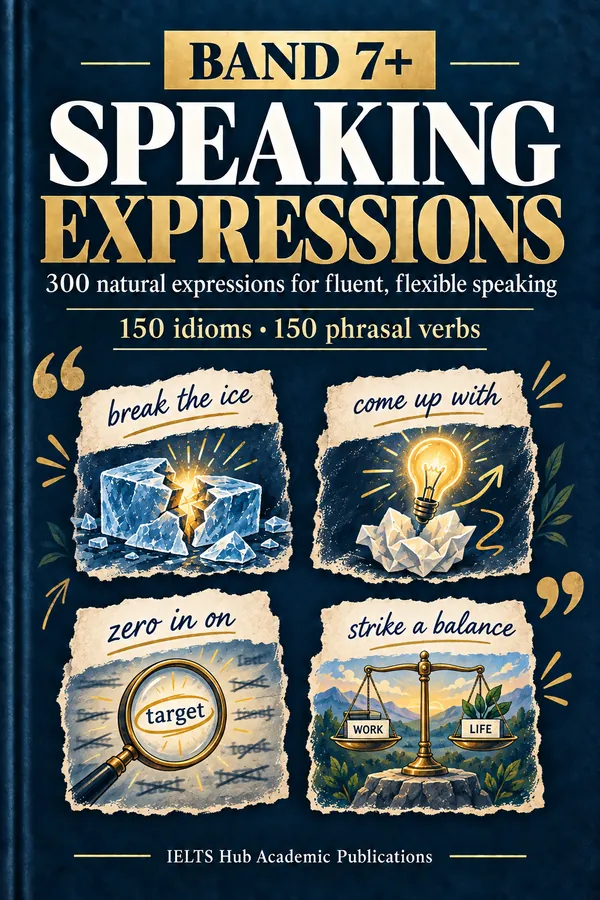
Speaking
Band 7+ Speaking Expressions
300 natural expressions for fluent, flexible speaking
₹199$6.99CAD 8.99AUD 9.99£4.99NZD 10.99€5.99AED 24SGD 8.99
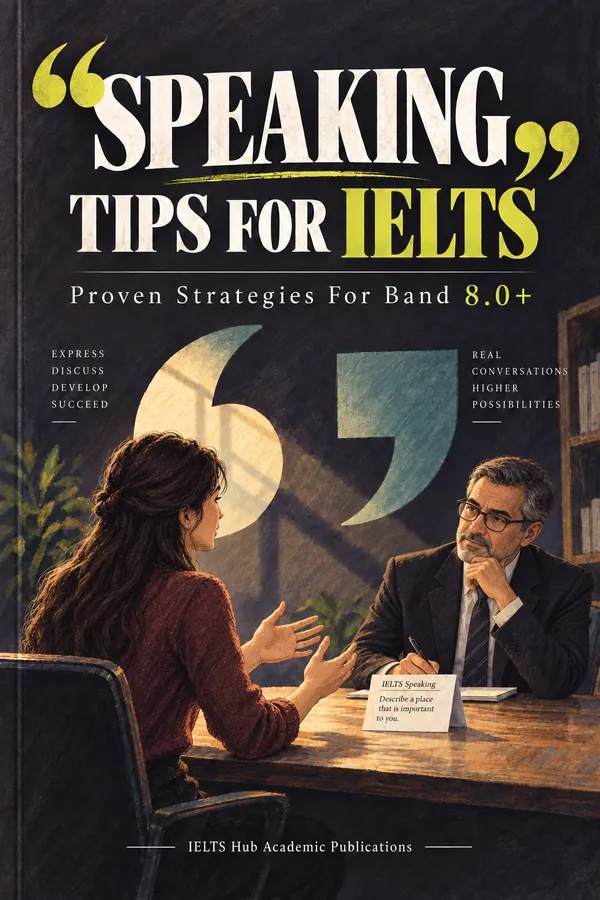
Speaking
Speaking Tips for IELTS
Proven Strategies for Band 8.0+
₹299$9.99CAD 13.99AUD 14.99£7.99NZD 16.99€8.99AED 39SGD 12.99

Speaking
Speak Like a Band 9
Real Test Questions & High-Scoring Answers
₹299$9.99CAD 13.99AUD 14.99£7.99NZD 16.99€8.99AED 39SGD 12.99