Speaking test #761
Part 1 · Interview
4 to 5 minutes. The examiner asks about you and familiar topics.
Can you tell me your full name?
Where are you from?
Do you work or are you a student?
Do you do some cooking or help your family cook at home now?
Yes, I do enjoy cooking and helping out in the kitchen at home. It's a great way to relax and try out new recipes.
Did you do some house cleaning when you were young?
Yes, I did. It's important to take care of your living space and keep it clean and organized. I learned this lesson at a young age and have tried to carry it with me throughout my life.
Do you have breakfast at home everyday?
I try to have breakfast at home every day. It's a great way to start the day off on the right foot and get some fuel in your system before tackling the day's tasks.
Do you want to learn how to cook well?
Absolutely! I'm always looking to improve my cooking skills and try out new techniques and recipes. There's something so satisfying about creating a delicious meal from scratch, and it's a great way to bond with others as well.
Which part of your country (India) do you want to live in?
Well, I've always been drawn to the cultural vibrancy of the southern part of India, so I think I would love to live in a city like Chennai or Bangalore. The food, music, and art scene there just seem so rich and diverse, and I feel like there's always something new to discover. Plus, the weather is usually quite pleasant, which is always a plus!
What makes you feel proud of your country (India)?
Oh, there are so many things that make me proud of India. For one, our country has a rich and complex history that spans thousands of years, and I think it's really amazing to be able to be a part of that legacy. Additionally, India is home to a wide variety of cultural traditions and practices, and I think it's really special that we have such a diverse and multi-faceted society. Finally, I'm also proud of the fact that India has made great strides in recent years in terms of economic development and progress, and I think our country has a lot of potential for the future.
Do you know the history of your country (India) well?
Yes, I would say that I have a pretty good understanding of the history of India. I've always been fascinated by the country's past, and I've spent a lot of time reading about and learning about the various events and figures that have shaped our nation over the years. From the ancient civilizations that flourished in the Indus Valley, to the Mughal Empire, to the independence movement and beyond, there's just so much to explore and discover.
Will you stay in your country (India) in the future?
Well, that's a tough question to answer definitively, as it really depends on what opportunities come my way and what my personal and professional goals are at that point in time. However, I do love living in India and I feel a strong connection to the country, so it's definitely a possibility that I will stay here in the future. Ultimately, I think it's important to be open to new experiences and opportunities, and to be willing to take risks and explore new horizons. **So who knows what the future holds**?
You will have to talk about the topic for one to two minutes. You have one minute to think about what you are going to say. You can make some notes to help you if you wish.
Describe your favourite bird
You should say:
- What bird is your favourite
- Where you first saw this bird
- Why you like this bird
- Describe its physical appearance and behavior
What bird is your favourite
My favorite bird is the Indian Peafowl, commonly known as the Peacock. I first saw this majestic bird during a family trip to a wildlife sanctuary in my hometown. Ever since that encounter, the Peacock has held a special place in my heart due to its stunning beauty and graceful demeanor.
Where you first saw this bird
What captivates me the most about the Peacock is its vibrant and eye-catching appearance. The male Peacock, with its iridescent blue and green plumage, is a sight to behold. Its long and elegant tail feathers, or the train, are adorned with striking patterns that are simply mesmerizing. Moreover, the way it fans out its feathers during courtship displays is a breathtaking sight to witness.
Why you like this bird
In addition to its physical beauty, I admire the behavior of the Peacock. It moves with such elegance and poise, exuding confidence and grace in every step. The distinctive call of the Peacock is another aspect that adds to its charm, echoing through the surroundings and creating a sense of serenity.
Describe its physical appearance and behavior
Overall, the Indian Peafowl is a bird that symbolizes beauty, grace, and elegance to me. Its stunning appearance and regal demeanor never fail to leave me in awe whenever I have the privilege of encountering this magnificent creature in the wild. The Peacock's presence always brings a sense of joy and wonder, making it my favorite bird without a doubt.
- Words
- 226
- Sentences
- 13
- Words per sentence
- 17.4
- Speaking time
- about 1.7 min
Counted at 130 words a minute. The exam gives you one to two minutes.
Part 3 · Discussion
4 to 5 minutes. The examiner asks broader questions linked to the cue card topic.
How do different types of birds show special traits that make them different from each other?
Birds are truly fascinating creatures, and the diversity among different species is astounding! For instance, some birds, like the peacock, are renowned for their vibrant plumage, which they display during courtship rituals, showcasing their health and genetic fitness. On the other hand, hummingbirds exhibit remarkable agility and speed, with the ability to hover in one spot while feeding on nectar, a characteristic that allows them to thrive in specific ecosystems. Additionally, certain species, such as the penguin, have adapted to a completely aquatic lifestyle, demonstrating unique swimming abilities that distinguish them from their more aerial counterparts. These unique traits not only highlight the incredible adaptability of birds but also underline the importance of biodiversity in our ecosystems.
How similar are people's feelings about birds, no matter what kind they are?
That's a fascinating question! I believe that while individual experiences and backgrounds shape our feelings towards birds, there is a remarkable level of shared sentiment across different species. For many people, birds evoke a sense of wonder and freedom, whether it’s the majestic flight of an eagle or the cheerful chirping of a sparrow. This universal appeal is often rooted in their beauty and the way they connect us to nature. However, it's also true that specific species can elicit unique reactions; for instance, some might find a particular species, like owls, to be mysterious or even a bit eerie. Overall, I think our connection to birds reflects a deep-seated appreciation for the natural world, transcending the boundaries of species.
How important do you think birds are for keeping nature balanced?
Birds play an incredibly crucial role in maintaining ecological balance, and their significance cannot be overstated. They are essential for pollination, seed dispersal, and controlling insect populations, which helps sustain diverse ecosystems. For instance, many plants rely on birds to spread their seeds, ensuring the continuity of certain species and the overall health of habitats. Additionally, birds serve as indicators of environmental health; their presence or absence can signal changes in the ecosystem that might need our attention. Ultimately, without birds, we would face a disruption in food chains and a decline in biodiversity, which would have profound impacts on our planet.
Why do you think many cultures respect certain birds or see them as symbols of particular traits?
I think the reverence for certain birds in various cultures really stems from the symbolic meanings that these creatures have developed over time. For instance, in many traditions, eagles are often seen as symbols of strength and freedom, which resonates deeply with human aspirations. Birds can also embody qualities like hope and peace; think of the dove, which is universally recognized as a symbol of harmony. Additionally, the way birds migrate or their ability to soar high can inspire people, making them natural icons of resilience and perseverance. So, it’s fascinating how these creatures not only enrich our natural world but also profoundly influence our cultural narratives and values.
How could the number of birds change in the next few years because of environmental factors?
The population of birds is likely to be significantly affected by various environmental factors in the coming years. Climate change, for instance, is altering habitats and migratory patterns, which could lead to a decline in certain species. As temperatures rise and weather patterns become more erratic, some birds may find it increasingly challenging to locate suitable nesting sites or food sources. Additionally, habitat destruction due to urbanization and agriculture could result in a loss of biodiversity, further impacting bird populations. However, on a positive note, increased conservation efforts and awareness might help mitigate some of these challenges, allowing certain species to adapt and thrive despite the changing conditions.
What steps can be taken to save endangered bird species from disappearing?
To protect endangered bird species from extinction, a multifaceted approach is essential. First and foremost, we could implement strict conservation policies that regulate hunting and habitat destruction. Additionally, creating protected areas, like wildlife reserves, would provide a safe haven for these birds to thrive. Public awareness campaigns are also crucial, as educating communities about the importance of biodiversity can foster a sense of responsibility towards our feathered friends. Finally, collaborating with international organizations can help in sharing resources and knowledge, ensuring that we tackle this issue on a global scale.
Go further with the books
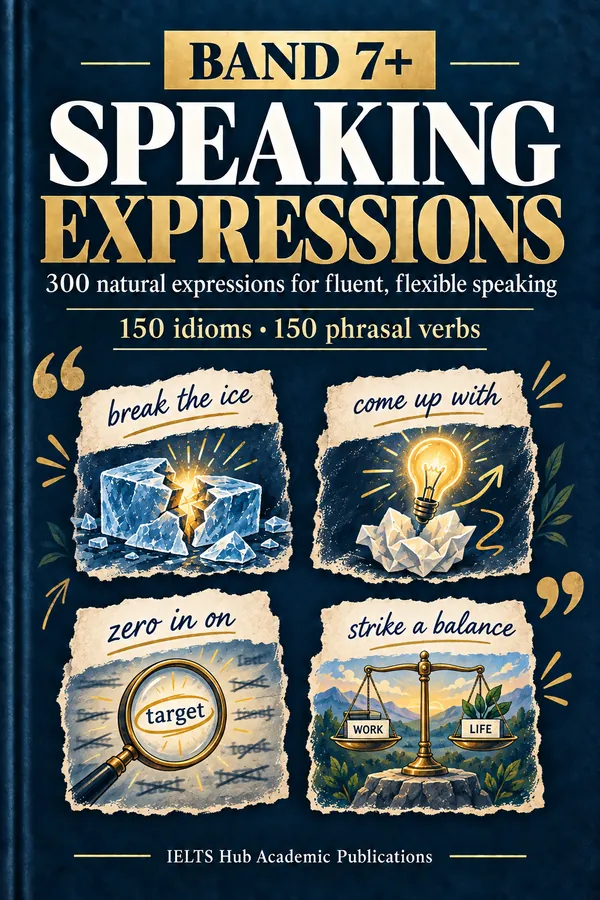
Speaking
Band 7+ Speaking Expressions
300 natural expressions for fluent, flexible speaking
₹199$6.99CAD 8.99AUD 9.99£4.99NZD 10.99€5.99AED 24SGD 8.99
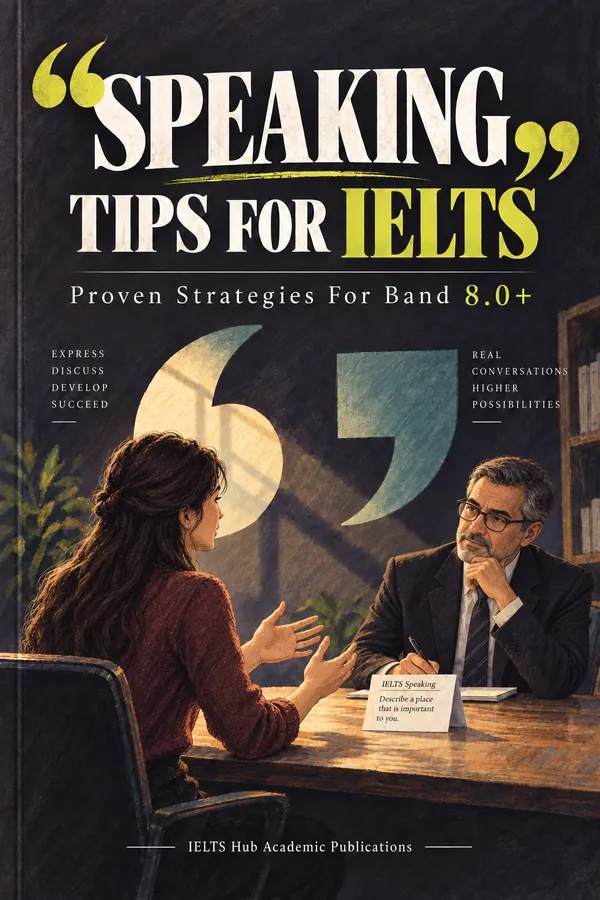
Speaking
Speaking Tips for IELTS
Proven Strategies for Band 8.0+
₹299$9.99CAD 13.99AUD 14.99£7.99NZD 16.99€8.99AED 39SGD 12.99
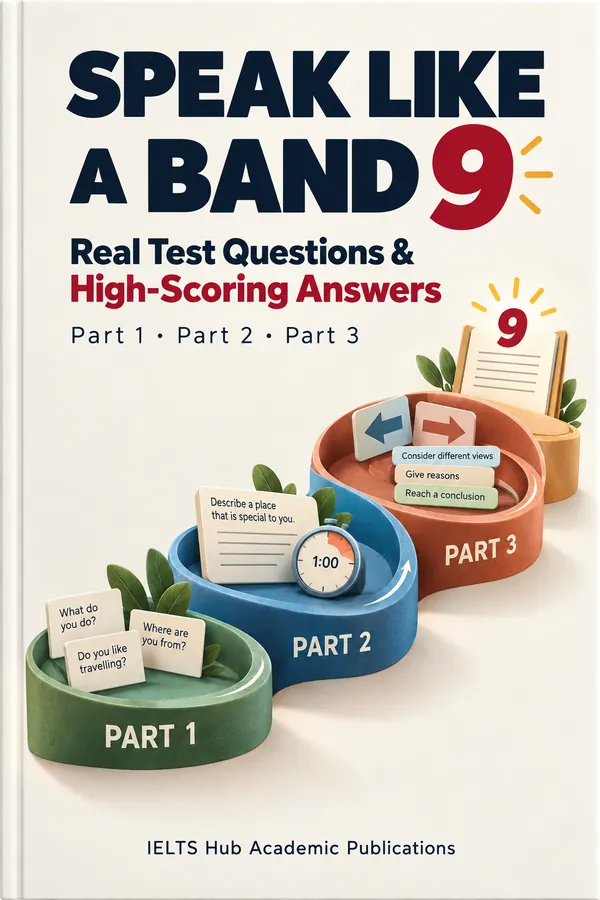
Speaking
Speak Like a Band 9
Real Test Questions & High-Scoring Answers
₹299$9.99CAD 13.99AUD 14.99£7.99NZD 16.99€8.99AED 39SGD 12.99