Speaking test #768
Part 1 · Interview
4 to 5 minutes. The examiner asks about you and familiar topics.
Can you tell me your full name?
Where are you from?
Do you work or are you a student?
Do you drive often?
Oh yeah, I'm a pretty frequent driver. I enjoy getting behind the wheel and hitting the open road. It's just something that comes naturally to me.
Do you want your children to drive in the future?
Absolutely. I think driving is an important skill to have and it gives you a sense of independence and freedom. Plus, it's convenient to be able to transport yourself wherever you need to go.
At what age are people allowed to drive a car in your country?
In my country, you can get your driver's license at the age of 18. I think that's a pretty reasonable age to start driving, as long as you have the proper training and education.
Do you think it's difficult to drive a car?
It can be, depending on the individual. Some people just seem to have a knack for it and pick it up quickly, while others may struggle a bit more. I think the key is to stay focused and stay safe on the road. As long as you do that, driving can be a breeze.
How often do you eat out in a restaurant?
I eat out at restaurants quite frequently, perhaps a few times a week. I find it to be a great way to try new foods and catch up with friends and family.
What type of restaurants do you like best?
I have a real fondness for authentic ethnic restaurants, particularly those that specialize in Indian cuisine. I love the rich and complex flavors that are characteristic of traditional Indian dishes.
What type the restaurants are popular in your country (India)?
In India, there is a wide variety of popular restaurants catering to all kinds of tastes and budgets. You can find everything from street food vendors and casual cafes, to fine-dining establishments and luxury hotel restaurants. Some of the most popular types of restaurants include those serving Indian, Chinese, and Continental cuisine.
When did you last go to a restaurant?
I last went to a restaurant last night. I met up with some friends at a local Italian place and had a lovely time. We shared some antipasti and I had a delicious pasta dish for my main course.
You will have to talk about the topic for one to two minutes. You have one minute to think about what you are going to say. You can make some notes to help you if you wish.
Something you did which was a waste of time
You should say:
- What you did
- Why you did it
- How it was a waste of time
- What you learned from it
I once spent several months binge-watching a popular TV series, which turned out to be a significant waste of time. The show in question was a gripping crime drama that had received rave reviews, and I was eager to see what all the hype was about. I started watching it out of curiosity, but soon found myself hooked and unable to stop.
I justified this excessive viewing by telling myself that it was a form of relaxation and entertainment after long days at work. However, as weeks turned into months, I realized that I was neglecting other important aspects of my life. I was staying up late to watch just one more episode, sacrificing sleep and productivity. Consequently, my work performance suffered, and I became more isolated from my friends and family.
Looking back, I now understand that moderation is key in everything we do. While it's essential to unwind and enjoy some entertainment, it should not come at the cost of neglecting responsibilities and relationships. I learned the importance of setting boundaries and managing my time effectively to ensure a balance between work, leisure, and personal connections. This experience taught me to be more mindful of how I allocate my time and prioritize activities that truly add value to my life.
- Words
- 212
- Sentences
- 11
- Words per sentence
- 19.3
- Speaking time
- about 1.6 min
Counted at 130 words a minute. The exam gives you one to two minutes.
Part 3 · Discussion
4 to 5 minutes. The examiner asks broader questions linked to the cue card topic.
How can different cultures see wasted time in different ways?
The perception of time wasted can vary significantly across different cultures, and it’s fascinating to see how these differences shape people’s attitudes. In some cultures, particularly those that prioritize productivity and efficiency, wasting time is often viewed as a serious transgression. For example, in many Western societies, there’s a strong emphasis on maximizing productivity, so activities perceived as unproductive, like long social gatherings, might be seen as time wasted. Conversely, in collectivist cultures, such as in many parts of Asia, spending time with family and friends is often viewed as invaluable, with the belief that nurturing relationships is far more important than strictly adhering to a schedule. This divergence highlights how cultural values play a crucial role in shaping our understanding of time and its significance.
How much do people usually think that relaxing and having fun is a waste of time?
That's a fascinating question! While some people might view leisure activities as wasting time, I believe the general perspective is shifting. Many now recognize that engaging in hobbies or relaxation is essential for mental health and can actually boost productivity in the long run. For instance, taking short breaks to enjoy leisure pursuits can enhance creativity and focus when returning to work. Overall, I think there's a growing acceptance that leisure activities are not just time well spent, but rather a vital component of a balanced lifestyle.
Why is it important for people to think about their past wasted time, and what good things can come from that thinking?
Reflecting on past experiences of wasted time is incredibly significant for individuals. It allows us to gain valuable insights into our behavior and decision-making processes, helping us understand what led to those moments of inefficiency. By examining these experiences, we can identify patterns or habits that may be holding us back, enabling us to make more informed choices in the future. Moreover, this kind of reflection fosters a sense of personal growth and resilience; it encourages us to see setbacks not just as failures, but as opportunities for learning. Ultimately, these reflections can lead to a more purposeful and fulfilling life, as we become more adept at managing our time and priorities.
Why do some people feel the need to do things they later think are a waste of time?
People often feel compelled to engage in activities they later deem a waste of time due to a mixture of social pressure and personal habits. For instance, many are drawn into trends or hobbies simply because their friends are involved, leading them to invest time in pursuits that don't genuinely interest them. Additionally, some individuals may seek immediate gratification or distraction, which can lead to choices that lack long-term value. It's almost as if they’re caught in a cycle of doing what feels good in the moment, only to reflect later and realize it didn’t contribute to their growth or happiness. Ultimately, this behavior highlights the importance of mindful decision-making and self-awareness in our daily lives.
What changes could happen in society if people paid more attention to how they use their time?
If people became more aware of how they spend their time, I believe we would see a significant shift towards more intentional living. Individuals might prioritize activities that genuinely bring them joy or contribute to their personal growth, leading to a society that values quality over quantity in their experiences. This heightened awareness could also foster a sense of community, as people may choose to engage in more meaningful interactions with others, rather than getting lost in the hustle and bustle of daily life. Additionally, we could witness a decline in stress levels, as people learn to allocate their time more effectively, striking a better balance between work and leisure. Overall, such a transformation could lead to a happier, healthier society where individuals feel more fulfilled and connected to one another.
What steps can people take to reduce the risk of getting involved in activities that waste time without providing any benefits?
To minimize the chances of getting caught up in time-consuming activities that yield little to no benefit, individuals can start by setting clear goals for themselves. When you have a defined purpose, it's much easier to prioritize tasks that align with your objectives. Additionally, practicing mindfulness can be incredibly valuable; by staying present, you can make more conscious decisions about how you spend your time. Another effective strategy is to create a daily schedule that includes specific time slots for activities, allowing you to allocate time wisely and avoid distractions. Finally, regularly assessing your commitments can help you identify and eliminate activities that don't contribute to your personal or professional growth.
Go further with the books

Speaking
Band 7+ Speaking Expressions
300 natural expressions for fluent, flexible speaking
₹199$6.99CAD 8.99AUD 9.99£4.99NZD 10.99€5.99AED 24SGD 8.99

Speaking
Speaking Tips for IELTS
Proven Strategies for Band 8.0+
₹299$9.99CAD 13.99AUD 14.99£7.99NZD 16.99€8.99AED 39SGD 12.99
Speaking
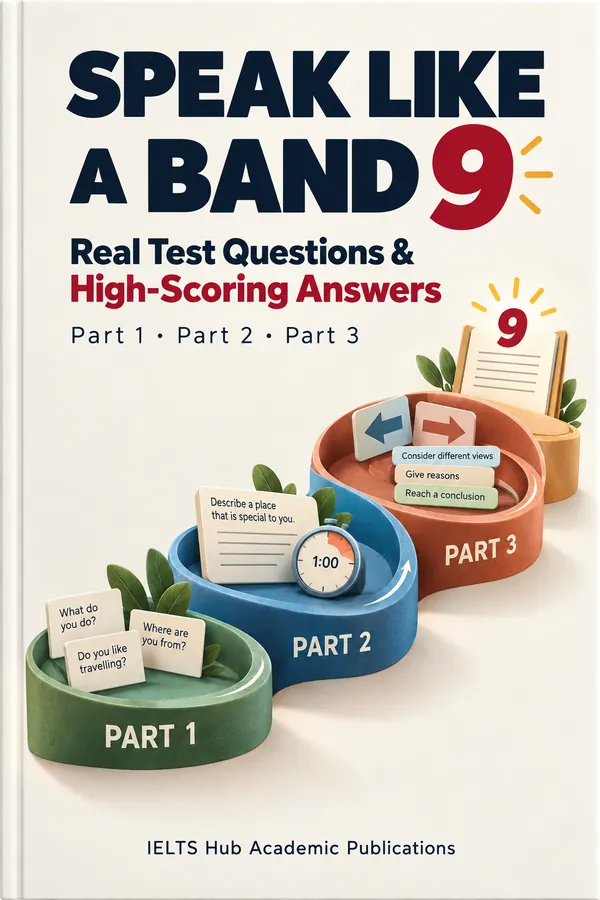
Speak Like a Band 9
Real Test Questions & High-Scoring Answers
₹299$9.99CAD 13.99AUD 14.99£7.99NZD 16.99€8.99AED 39SGD 12.99