Speaking test #783
Part 1 · Interview
4 to 5 minutes. The examiner asks about you and familiar topics.
Can you tell me your full name?
Where are you from?
Do you work or are you a student?
Do you often wear headphones to listen to something? [Why/Why not?
?]y Yes, because wearing the headphones can provide me with a quite environment. And I’m the kind of person who cannot stand the noisy sound especially when I need concentration.
Do you find headphones comfortable to wear? [Why/Why not?
?] Yes, but not always. At first I found it a little uncomfortable but when I’m used to it I often ignore its existence.
In what situation would you never wear headphones? [Why/Why not?
?] Firstly, when I need to show my respect such as in the classroom when the teacher is teaching. Secondly, I need to take my headphones off when it’s banned to take them on, for instance when the plane is taking off or preparing to land.
How popular is it to wear headphones in your country? [Why/Why not?
?] That depends on the people of different ages. For instance, when you are in a university where lots of young people live in, you will find it’s very popular. But, if you take a glance at the morning part where the local old people gather, it’s really a rare thing for you to have the headphones on.
You will have to talk about the topic for one to two minutes. You have one minute to think about what you are going to say. You can make some notes to help you if you wish.
Describe a time when you trusted a stranger
You should say:
- The situation where you encountered the stranger
- Why you decided to trust the stranger
- How the stranger helped you or impacted your life
- Your feelings and thoughts about the experience
The situation where you encountered the stranger
In a bustling market in Mumbai, I found myself lost amidst the labyrinth of stalls selling colorful saris and aromatic spices. Feeling disoriented, I approached a middle-aged woman for directions. Despite her initial reserved demeanor, she kindly offered to guide me to the nearest bus stop. Her warm smile and reassuring tone made me feel at ease, prompting me to trust her in a situation where I would typically be cautious.
Why you decided to trust the stranger
I decided to trust the stranger primarily due to her genuine willingness to help me without any ulterior motives. Her selfless gesture and the way she took the time to ensure my safety struck a chord within me. In a city known for its fast-paced lifestyle and occasional impersonal interactions, her act of kindness stood out as a beacon of humanity. It was this authenticity that convinced me to let go of my apprehensions and rely on her guidance.
How the stranger helped you or impacted your life
The stranger's assistance not only led me safely to my destination but also left a lasting impact on my outlook towards unfamiliar faces. Her simple yet profound act of kindness served as a reminder of the inherent goodness present in people, irrespective of their backgrounds or circumstances. It reaffirmed my belief in the power of human connection and the importance of extending trust to others, even in the midst of uncertainty.
Your feelings and thoughts about the experience
Reflecting on the experience, I am filled with gratitude for the stranger who not only helped me navigate the chaotic streets of Mumbai but also restored my faith in the kindness of strangers. The encounter taught me valuable lessons about trust, empathy, and the beauty of unexpected connections that transcend barriers of language and culture. It remains etched in my memory as a poignant reminder of the transformative impact of a simple act of trust.
- Words
- 296
- Sentences
- 14
- Words per sentence
- 21.1
- Speaking time
- about 2.3 min
Counted at 130 words a minute. The exam gives you one to two minutes.
Part 3 · Discussion
4 to 5 minutes. The examiner asks broader questions linked to the cue card topic.
How do people’s experiences of trusting strangers change in cities compared to the countryside?
That's a fascinating question! In urban environments, people often experience a heightened sense of anonymity, which can lead to a more cautious approach when it comes to trusting strangers. The fast-paced lifestyle and sheer number of people can make interactions feel fleeting and superficial. In contrast, rural areas tend to foster a stronger sense of community, where individuals are more likely to know their neighbors and establish relationships over time. This familiarity can create a more trusting atmosphere, as people often rely on each other for support and resources. Ultimately, the dynamics of trust are shaped by the social fabric of these environments, influencing how open individuals are to connecting with those they don't know.
How much can we say that trusting strangers can result in good things?
Trusting strangers can indeed lead to remarkably positive outcomes, although it largely depends on the context and the individual's judgment. For instance, when we open ourselves up to new experiences and people, we often find unexpected connections that can enrich our lives. Take traveling, for example; by trusting locals and fellow travelers, we can uncover hidden gems and forge friendships that might last a lifetime. However, it’s crucial to maintain a balance and exercise cautious optimism—not every stranger has good intentions. Ultimately, while there’s a risk involved, placing trust in others can foster a sense of community and shared experiences that are truly invaluable.
How important is trust in our relationships, especially with people we don't know well?
Trust plays a crucial role in human relationships, especially with acquaintances or people we don't know well. It serves as the foundation for any interaction, allowing us to feel secure and open up to others. When there's a lack of trust, even the simplest conversations can become strained and awkward. Moreover, trust fosters a sense of community and collaboration, which is essential in both personal and professional settings. Ultimately, building trust, even gradually, can transform relationships and lead to deeper connections. It's fascinating how something so intangible can have such a profound impact on our interactions!
Why do some people find it easier to trust new people than others?
That's a fascinating question! Trust is such a complex and nuanced topic. Some individuals may find it easier to trust strangers due to their inherent personality traits, such as being more open-minded or optimistic. These people often believe in the goodness of others and tend to have a positive outlook on life, making them more inclined to give strangers the benefit of the doubt. On the other hand, those who have had negative experiences in the past may be more cautious and develop a natural skepticism towards unfamiliar faces. Additionally, cultural influences play a significant role; in some societies, there’s a stronger emphasis on community and collective trust, which can encourage individuals to feel more comfortable engaging with strangers. Ultimately, it’s a blend of personal experiences and cultural backgrounds that shapes our ability to trust others.
What would happen in society if people trusted strangers more?
If people were more inclined to trust strangers, I believe we would witness a significant transformation in societal dynamics. First and foremost, there could be a palpable increase in community spirit, as individuals would be more willing to help one another and collaborate on various initiatives. This newfound sense of trust could lead to a surge in social cohesion, ultimately fostering a more inclusive environment where diverse ideas and perspectives are welcomed. Moreover, businesses might thrive as well, as consumers would be more open to trying new products and services from unfamiliar providers. This could stimulate economic growth and innovation, as companies would feel encouraged to take risks and experiment with their offerings. Overall, embracing trust in our interactions with strangers could pave the way for a more harmonious and forward-thinking society.
What steps can be taken to build more trust between people in communities?
To foster a greater sense of trust among individuals in communities, I believe a variety of measures can be implemented. Firstly, community engagement initiatives are essential; organizing events where residents can come together to share their stories and experiences can significantly enhance interpersonal relationships. Secondly, establishing transparent communication channels between community leaders and residents is crucial; when people feel informed and involved in decision-making processes, their trust in one another naturally increases. Furthermore, promoting volunteer opportunities can create a sense of shared purpose, allowing individuals to work side by side for the common good. Ultimately, it's all about creating an environment where people feel valued and connected, which in turn cultivates a more trusting community.
Go further with the books
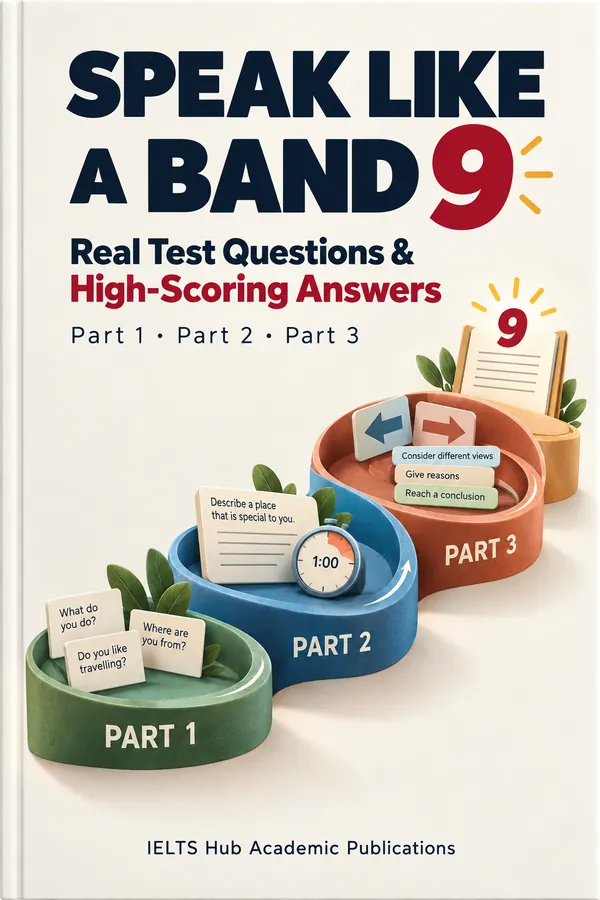
Speaking
Speak Like a Band 9
Real Test Questions & High-Scoring Answers
₹299$9.99CAD 13.99AUD 14.99£7.99NZD 16.99€8.99AED 39SGD 12.99

Speaking
Band 7+ Speaking Expressions
300 natural expressions for fluent, flexible speaking
₹199$6.99CAD 8.99AUD 9.99£4.99NZD 10.99€5.99AED 24SGD 8.99
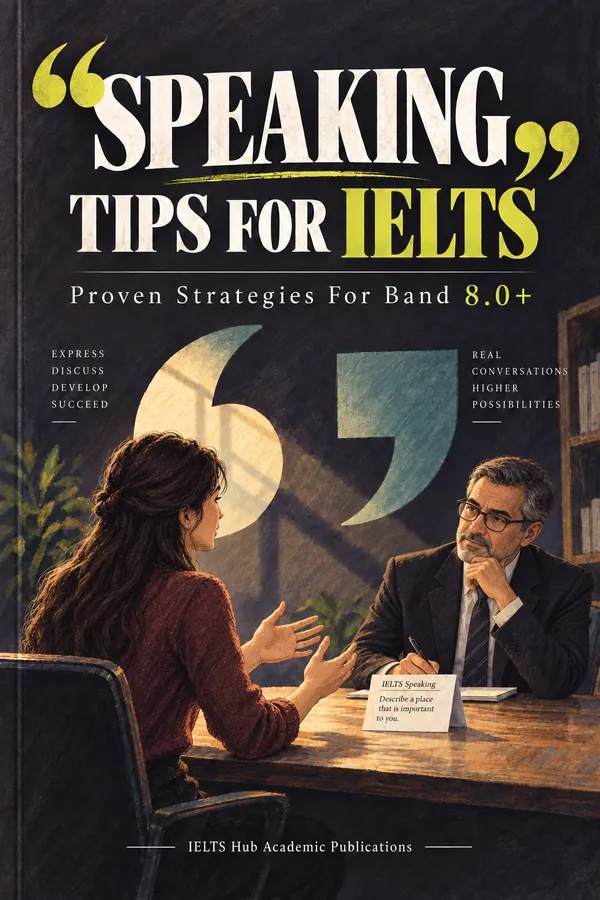
Speaking
Speaking Tips for IELTS
Proven Strategies for Band 8.0+
₹299$9.99CAD 13.99AUD 14.99£7.99NZD 16.99€8.99AED 39SGD 12.99