Speaking test #787
Part 1 · Interview
4 to 5 minutes. The examiner asks about you and familiar topics.
Can you tell me your full name?
Where are you from?
Do you work or are you a student?
Where are you from?
I am from a small city in the midwestern United States. It's a lovely place with a strong sense of community and a lot of beautiful natural surroundings.
Do you like your home town? (Why?
?) Yes, I absolutely love my home town. It has a great quality of life, a friendly atmosphere, and plenty of opportunities for outdoor activities. Plus, it's a great place to raise a family.
Would you prefer to live somewhere else? (Why?
?) I would prefer to live somewhere else for a change of pace. While I love my home town, I think it would be exciting to experience a new culture, try different types of food, and meet new people. Plus, I think it would be a great opportunity to learn and grow as a person.
Do you think your home town is a good place for young people? (Why?
?) I do think my home town is a great place for young people. There are plenty of opportunities to get involved in the community, whether that be through volunteering, internships, or clubs and organizations. Plus, the city has a vibrant arts and culture scene, which I think is important for young people to experience and be exposed to. Overall, it's a great place to grow and develop as a person.
Do you think your home is clean and tidy?
Absolutely, I take great pride in keeping my home clean and tidy. I believe that a clean and organized environment not only looks better, but it also helps with mental clarity and overall well-being.
What housework do you like or dislike doing?
I enjoy doing laundry and ironing as I find it therapeutic, and I dislike doing the dishes as it can be quite tedious.
Did you do some house cleaning when you were young?
Yes, I did. My parents instilled a sense of responsibility in me from a young age, and I was expected to help with household chores. I learned the importance of keeping things clean and organized from a very young age.
Do you help your family cook at home?
Yes, I do. Cooking is a family affair in my household, and we all take turns preparing meals. I enjoy cooking, and it's a great way for me to bond with my family. We all have different specialties, so it's always an exciting experience when we cook together.
You will have to talk about the topic for one to two minutes. You have one minute to think about what you are going to say. You can make some notes to help you if you wish.
Describe an exam that was very hard for you
You should say:
- Which exam it was and when you took it
- Why you found it hard
- How you prepared for the exam
- What was the outcome of the exam
Which exam it was and when you took it
I vividly remember the challenging experience of taking the Common Admission Test (CAT) in India, which I attempted in November 2019. The CAT is a highly competitive entrance exam for admission into prestigious management institutes in the country. The intensity of competition and the complexity of the questions made it one of the hardest exams I have ever encountered.
Why you found it hard
The primary reason why I found the CAT exam so difficult was the time constraints and the level of critical thinking required to solve the problems. The exam tested not just my knowledge but also my ability to think analytically and make quick decisions under pressure. Additionally, the vast syllabus and the unpredictable nature of the questions added to the difficulty level.
How you prepared for the exam
In preparation for the CAT exam, I adopted a rigorous study routine that involved solving numerous practice papers, revising key concepts, and seeking guidance from mentors. I also enrolled in a coaching institute to get expert tips and strategies for tackling the different sections of the exam. Furthermore, I focused on improving my time management skills to ensure I could complete the exam within the stipulated time frame.
What was the outcome of the exam
Despite the immense challenge posed by the CAT exam, my hard work and preparation paid off when the results were announced. I was thrilled to discover that I had scored well above the cutoff for the top management institutes in India. This outcome not only validated my efforts but also opened doors to exciting opportunities for my academic and professional growth.
- Words
- 250
- Sentences
- 12
- Words per sentence
- 20.8
- Speaking time
- about 1.9 min
Counted at 130 words a minute. The exam gives you one to two minutes.
Part 3 · Discussion
4 to 5 minutes. The examiner asks broader questions linked to the cue card topic.
What are the differences between the challenges in hard exams and those in easier tests?
That's a fascinating question! The challenges in difficult exams often stem from their intense pressure and the requirement for deep understanding and application of knowledge. Students might find themselves grappling with complex concepts and time constraints that heighten their anxiety. In contrast, easier assessments typically focus on more straightforward material, allowing students to rely on rote memorization rather than critical thinking. However, this doesn’t mean they are without challenges; some students might struggle due to a lack of engagement or motivation, which can lead to a sense of complacency. Ultimately, both types of assessments test different skills and can evoke varied emotional responses in students.
Some people think hard tests are important for learning, while others disagree. What do you think about this?
I believe that tough exams can play a significant role in the learning process, but they should be balanced with other forms of assessment. On one hand, rigorous testing can help students develop critical thinking skills and resilience, preparing them for future challenges. However, it's essential to recognize that learning is not solely about memorizing facts for a high-stakes exam; it also involves creativity and understanding. Moreover, when exams are overly stressful, they can lead to performance anxiety, which may hinder a student’s ability to demonstrate their knowledge effectively. Therefore, I think a combination of assessments, including practical projects and collaborative work, could provide a more comprehensive evaluation of a student's abilities while still maintaining the benefits of challenging exams.
How important do you think the stress of tough exams is for students' mental health?
The pressure of hard exams can be incredibly significant on students' mental health. The intense competition and high expectations can lead to overwhelming feelings of anxiety and stress, making it difficult for them to perform at their best. Moreover, when students feel they have to live up to societal or parental expectations, it can create a vicious cycle of self-doubt and fear of failure. It’s crucial to recognize that mental well-being is just as important as academic success, and schools should prioritize providing support systems, such as counseling services or stress management programs. Ultimately, fostering a more balanced approach to education could help students not only thrive academically but also maintain their mental health in the long run.
Why do you think students usually find some subjects harder during exams?
I think students often struggle with certain subjects during exams due to a combination of factors. One major reason is that some subjects require a deep understanding of concepts rather than just memorization. For example, subjects like mathematics or science often involve complex problem-solving skills, which can be quite daunting for many students. Additionally, exam pressure can exacerbate these difficulties; when students feel stressed, it can hinder their ability to think clearly and recall information effectively. Lastly, varying teaching methods might not resonate with all learning styles, leading some students to find certain subjects particularly challenging.
What changes could we expect in the future for how tough exams are designed?
That's a fascinating question! I believe we might see a significant shift towards more interactive assessments in the future. With advancements in technology, exams could incorporate virtual reality or gamification elements, making them not only more engaging but also more reflective of real-world scenarios. Additionally, there’s a growing emphasis on holistic evaluation, where skills like critical thinking and problem-solving are prioritized over rote memorization. This could lead to a more balanced approach, allowing students to demonstrate their knowledge in diverse and practical ways. Overall, I think these changes would create a more enriching experience for learners!
What ways can schools use to help students get ready for tough tests?
Educational institutions can adopt a variety of methods to enhance students' readiness for challenging assessments. Firstly, incorporating formative assessments throughout the academic year can help identify areas where students may struggle, allowing for timely interventions. Additionally, providing targeted feedback on assignments and tests can guide students in understanding their weaknesses and improving their skills. Moreover, fostering a growth mindset through workshops or seminars can empower students to view challenges as opportunities for growth rather than threats. Lastly, integrating mock exams that simulate real assessment conditions can significantly alleviate test anxiety and improve performance. By taking these steps, educational institutions can ensure that students are not only knowledgeable but also confident and well-prepared for their assessments.
Go further with the books
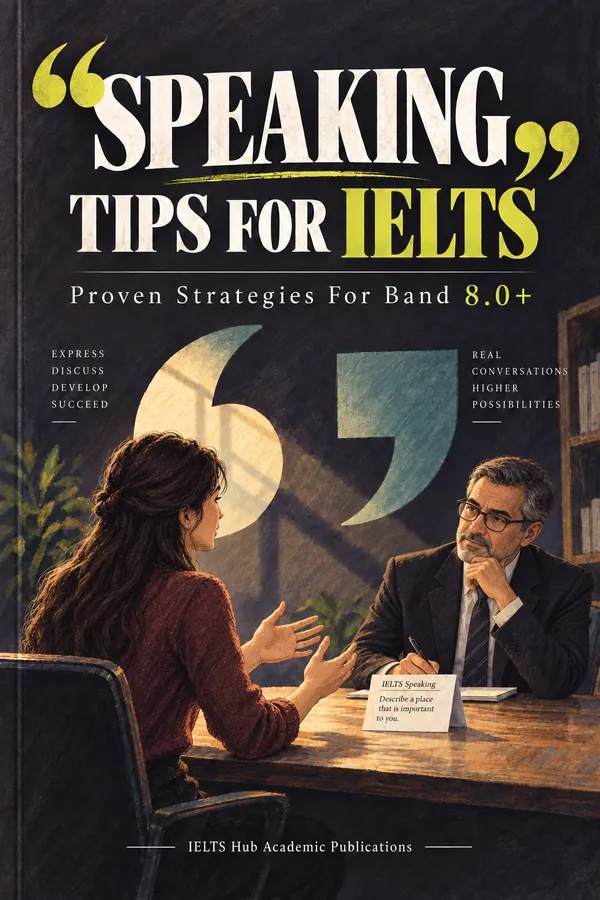
Speaking
Speaking Tips for IELTS
Proven Strategies for Band 8.0+
₹299$9.99CAD 13.99AUD 14.99£7.99NZD 16.99€8.99AED 39SGD 12.99
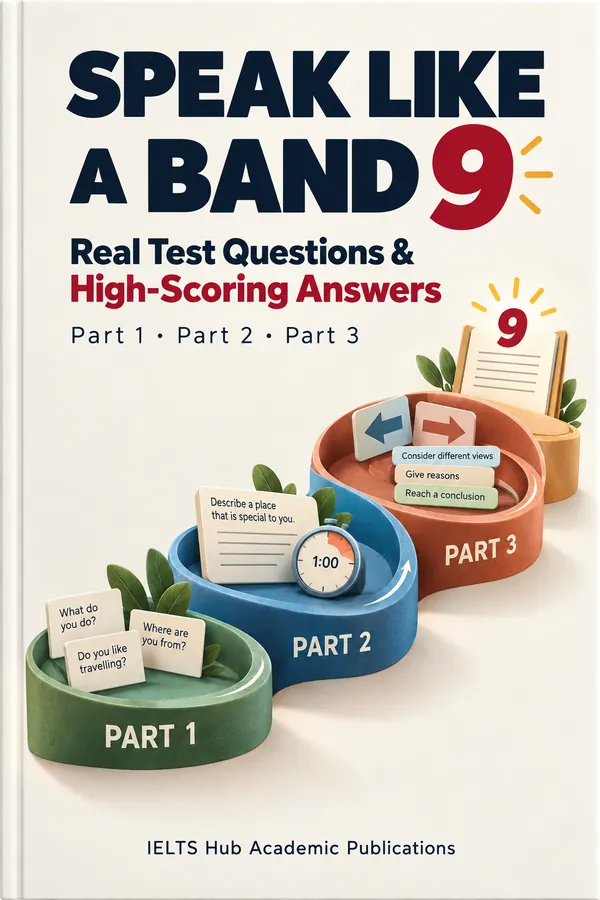
Speaking
Speak Like a Band 9
Real Test Questions & High-Scoring Answers
₹299$9.99CAD 13.99AUD 14.99£7.99NZD 16.99€8.99AED 39SGD 12.99

Speaking
Band 7+ Speaking Expressions
300 natural expressions for fluent, flexible speaking
₹199$6.99CAD 8.99AUD 9.99£4.99NZD 10.99€5.99AED 24SGD 8.99