Speaking test #799
Part 1 · Interview
4 to 5 minutes. The examiner asks about you and familiar topics.
Can you tell me your full name?
Where are you from?
Do you work or are you a student?
Do you like looking at yourself in the mirror? How often?
I absolutely love looking at myself in the mirror. I find it to be a great way to check my appearance and make sure I am looking my best before leaving the house. I typically look in the mirror a few times a day, such as when I wake up in the morning, before I go to bed at night, and occasionally throughout the day when I am getting ready for different events or activities.
Have you ever bought mirrors?
Yes, I have bought mirrors before. I have purchased several mirrors for different rooms in my home, including a large floor mirror for my bedroom and a few smaller mirrors for my bathroom. I also recently purchased a full-length mirror for my entryway, which is great for checking my outfit before heading out the door.
Do you usually take a mirror with you?
No, I do not usually take a mirror with me when I am on the go. I find that most public restrooms and other facilities have mirrors available for use, so I don't typically feel the need to carry one with me. However, if I am going on a trip or will be away from home for an extended period of time, I may bring a small compact mirror with me.
Would you use mirrors to decorate your room?
Yes, I definitely would use mirrors to decorate my room. I think mirrors are a great way to add some visual interest and can also make a room feel larger and more open. I have used mirrors in the past to decorate different rooms in my home, such as hanging a group of small mirrors in my dining room to create a unique wall display. I also love the idea of incorporating a large floor mirror into a room design, as it can make a big impact and can also be functional for getting ready in the morning.
What was your first mobile phone?
My first mobile phone was a Nokia 3310. I remember it being a very basic model with no internet or camera, but it was still a game-changer for me at the time. It was a gift from my parents when I was in high school, and I felt so grown up having my own phone.
Do you often use your mobile phone for texting or calls?
Yes, I use my mobile phone for both texting and calls quite frequently. I find it to be a convenient way to communicate with friends and family, and I also use it for work-related communication. I also use my phone to send and receive emails, which is very helpful.
Will you buy a new one in the future?
Yes, I plan to buy a new phone in the near future. I like to stay up to date with the latest technology and features, so I like to upgrade my phone every couple of years.
How has your mobile phone changed your life?
My mobile phone has changed my life in many ways. It has made communication so much more convenient and easy. I can stay connected with friends and family no matter where I am in the world. It also allows me to access information and stay connected with work and the news. Additionally, it has also made my life easier by having all my contacts, appointments, and notes in one place. Overall, my mobile phone has made my life more productive, organized and efficient.
You will have to talk about the topic for one to two minutes. You have one minute to think about what you are going to say. You can make some notes to help you if you wish.
Describe a problem in your city/ hometown
You should say:
- What is the problem
- How long has it been a problem
- How does it affect the residents
- What solutions have been proposed or implemented
What is the problem
In my hometown in India, one of the prominent issues that have been plaguing the city for several years is the inadequate waste management system. The problem of improper waste disposal has been persistent for over a decade now, leading to a myriad of environmental and health concerns for the residents.
How long has it been a problem
The improper waste management system in my city has been a long-standing problem that continues to worsen with each passing year. Due to the lack of efficient waste disposal mechanisms, the streets are often littered with garbage, leading to foul odors and unsightly surroundings. Moreover, the accumulation of waste in open areas has also become a breeding ground for pests and diseases, posing a serious health risk to the residents.
How does it affect the residents
The residents of the city are greatly affected by this problem as it not only deteriorates the aesthetic appeal of the surroundings but also poses serious health hazards. The foul smell emanating from the garbage dumps makes it difficult for people to enjoy outdoor activities, and the increased risk of diseases spread by pests adds to the residents' concerns about their well-being.
What solutions have been proposed or implemented
Various solutions have been proposed and some initiatives have been implemented to address the issue of waste management in the city. These include awareness campaigns to educate residents about the importance of proper waste disposal, promoting recycling practices, and implementing stricter regulations for waste collection and disposal. However, more concerted efforts and sustainable solutions are needed to effectively tackle this pressing issue and ensure a cleaner and healthier environment for all residents.
- Words
- 255
- Sentences
- 10
- Words per sentence
- 25.5
- Speaking time
- about 2.0 min
Counted at 130 words a minute. The exam gives you one to two minutes.
Part 3 · Discussion
4 to 5 minutes. The examiner asks broader questions linked to the cue card topic.
How are the issues in cities different from those in the countryside?
That's a fascinating question! Urban areas often grapple with issues like overcrowding, which can lead to a strain on public services such as transportation and healthcare. In contrast, rural locations might struggle with limited access to these same services, but they typically enjoy a slower pace of life and a stronger sense of community. Additionally, cities frequently face challenges related to pollution and crime, while rural areas might deal with economic stagnation and fewer job opportunities. Ultimately, both settings have their unique struggles, but it's interesting to see how these challenges shape the lives of the people living there!
Some people think local governments should focus on city problems more than other issues. What do you think about this?
I absolutely agree that local governments should prioritize addressing urban issues, as they directly impact the quality of life for residents. Urban problems like traffic congestion and housing shortages can create significant challenges in daily life. When local authorities focus on these pressing matters, it not only enhances community well-being but also fosters a sense of belonging among residents. Additionally, by tackling urban issues, governments can pave the way for sustainable development, which is crucial for future generations. Overall, I believe that a strong focus on urban challenges can lead to more vibrant and livable cities.
How important do you believe pollution is for the quality of life in cities?
The impact of pollution on the quality of life in cities is profoundly significant. In fact, it can be a game changer for urban dwellers. High levels of air and noise pollution can lead to a myriad of health issues, such as respiratory diseases and heightened stress levels, which ultimately affect people's well-being. Moreover, pollution can diminish the aesthetic appeal of a city, making it less attractive for both residents and tourists alike. In essence, when we allow pollution to escalate, we compromise our collective quality of life, which is something that we should all be concerned about.
Why do you think some city problems continue even with attempts to fix them?
That's a great question! I believe certain problems in cities persist for a variety of reasons. One major factor is the sheer complexity of urban environments; with so many interconnected systems, a solution that works in one area might inadvertently create issues in another. Additionally, limited resources often hinder effective implementation of solutions, whether that be funding, manpower, or even political will. Moreover, there can be a disconnect between policymakers and the communities they serve, leading to initiatives that don't truly address the needs of residents. It's a challenging cycle, but I think with more collaboration and innovative thinking, we can start to break it down.
What changes could happen in the future if we don't fix the current issues in cities?
If the current problems in cities are left unaddressed, we could witness a dramatic decline in the quality of urban life. For instance, overcrowding could become a pressing issue, leading to inadequate housing and strained public services. Additionally, environmental concerns such as pollution might escalate, resulting in serious health implications for city dwellers. We might also see an increase in social inequality, as marginalized communities struggle to access basic amenities and opportunities. Ultimately, if these challenges aren't tackled, cities could evolve into places that are not just uncomfortable but potentially unlivable for many.
What steps can be taken to effectively address the problem of traffic jams in cities?
To tackle the issue of traffic congestion in urban areas effectively, a multifaceted approach is essential. Firstly, investing in public transportation systems can significantly reduce the number of private vehicles on the road. High-quality options like subways, trams, and buses can encourage more people to opt for public transit. Additionally, implementing carpooling initiatives and incentivizing their use through tax breaks or reduced tolls can help to decrease the overall vehicle count during peak hours. Another effective measure is the introduction of smart traffic management systems that use real-time data to optimize signal timings and improve traffic flow. This can prevent bottlenecks and ensure a smoother ride for everyone. Lastly, promoting walkability and cycling through the development of pedestrian-friendly infrastructure and dedicated bike lanes can encourage people to leave their cars at home, fostering a more sustainable urban environment.
Go further with the books
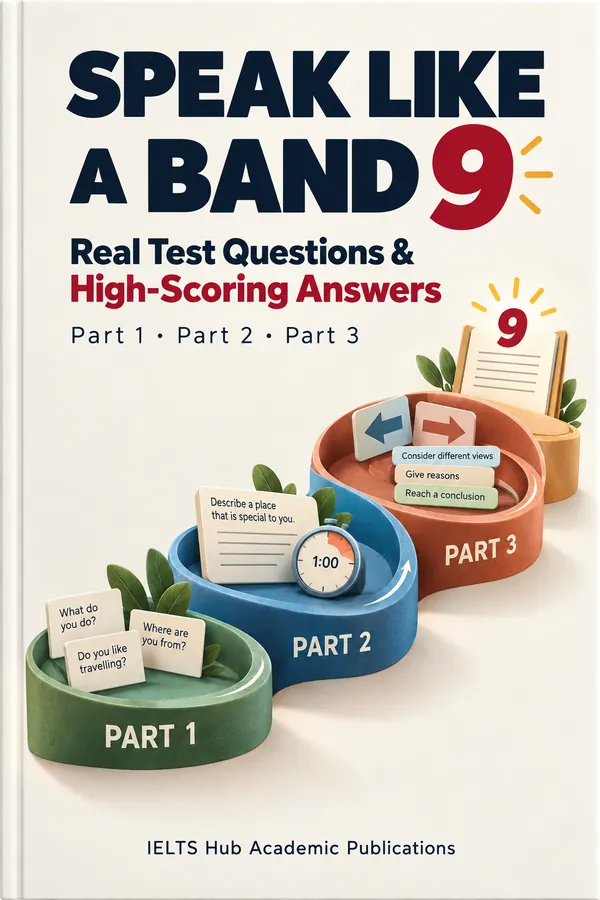
Speaking
Speak Like a Band 9
Real Test Questions & High-Scoring Answers
₹299$9.99CAD 13.99AUD 14.99£7.99NZD 16.99€8.99AED 39SGD 12.99

Speaking
Band 7+ Speaking Expressions
300 natural expressions for fluent, flexible speaking
₹199$6.99CAD 8.99AUD 9.99£4.99NZD 10.99€5.99AED 24SGD 8.99

Speaking
Speaking Tips for IELTS
Proven Strategies for Band 8.0+
₹299$9.99CAD 13.99AUD 14.99£7.99NZD 16.99€8.99AED 39SGD 12.99