Speaking test #806
Part 1 · Interview
4 to 5 minutes. The examiner asks about you and familiar topics.
Can you tell me your full name?
Where are you from?
Do you work or are you a student?
Are you good at remembering numbers?
Yes, I consider myself to be quite good at remembering numbers. I have always had a knack for numbers and have always enjoyed working with them. I find that numbers are a great way to organize and make sense of information, and I am naturally drawn to them.
Are numbers used in your work or studies?
Yes, numbers are heavily used in my work and studies. I am currently studying finance, and numbers are essential in understanding financial concepts and making decisions. In my work as a financial analyst, numbers are also central to my role, as I am constantly analyzing data and making projections.
Are there any numbers that have special meaning in your country?
In my country, the number 7 is considered to be lucky. It is often associated with good fortune and is believed to bring good luck. Additionally, the number 8 is also considered to be lucky as it sounds similar to the word for prosperity in our language.
Did you like math when you were younger?
Yes, I have always loved math. I have always found math to be a fascinating subject, and I have always enjoyed solving problems and working with numbers. I was always very good at math in school, and I am now pursuing a career in finance, which is heavily dependent on math. I still find math to be incredibly exciting and enjoyable.
Have you ever been to any old buildings in your city?
Yes, I have been to several old buildings in my city. One of my favorites is a historic church that dates back to the 19th century. The architecture is absolutely stunning and it's always a pleasure to visit.
Do you prefer to live in an old building or a modern house?
Personally, I prefer to live in a modern house. I appreciate the clean lines and open spaces that are characteristic of contemporary design. However, I do understand the appeal of living in an old building with its own history and charm.
Are there any old buildings you want to see in the future?
Yes, I would love to see the ancient pyramids in Egypt. The pyramids are one of the oldest and most incredible architectural achievements in human history, and I think it would be an amazing experience to see them in person.
Do you think preserving old buildings is important?
Definitely! I think preserving old buildings is crucial for maintaining the cultural heritage and identity of a city or country. These buildings often have a rich history and significance that can be lost if they are demolished or allowed to fall into disrepair. Additionally, they can serve as important tourist attractions and bring economic benefits to the local community.
You will have to talk about the topic for one to two minutes. You have one minute to think about what you are going to say. You can make some notes to help you if you wish.
A friend of your family you remember from your childhood
You should say:
- How you knew this friend
- What this friend did
- How often you saw this friend
- Explain how you felt about this friend
How you knew this friend
During my childhood in India, there was a family friend named Mrs. Sharma who left a lasting impression on me. I knew Mrs. Sharma through my parents as she was a close friend of my mother. She would often visit our house for social gatherings, and her warm and friendly nature made her a favorite among us children.
What this friend did
Mrs. Sharma had a talent for storytelling and would often captivate us with her fascinating tales. She had a knack for making even the simplest of stories come alive with her animated expressions and engaging narrative style. I remember being in awe of her ability to transport us into different worlds through her words.
How often you saw this friend
Despite our busy schedules, we would see Mrs. Sharma at least once a month during our family gatherings or special occasions. Her presence always brought a sense of joy and excitement to the atmosphere, and I eagerly looked forward to her visits. I cherished the moments spent listening to her stories and learning valuable lessons from her experiences.
Explain how you felt about this friend
Reflecting on my childhood memories, I realize that Mrs. Sharma played a significant role in shaping my love for storytelling and connecting with others. Her kindness, wisdom, and vibrant personality left a lasting impact on me, and I will always hold her in high regard. Mrs. Sharma was not just a friend of our family, but a beloved mentor whose influence continues to inspire me to this day.
- Words
- 238
- Sentences
- 18
- Words per sentence
- 13.2
- Speaking time
- about 1.8 min
Counted at 130 words a minute. The exam gives you one to two minutes.
Part 3 · Discussion
4 to 5 minutes. The examiner asks broader questions linked to the cue card topic.
How are friendships in childhood different from relationships in adulthood?
Childhood friendships often thrive on unconditional loyalty and a sense of shared innocence. Kids bond over simple joys, like playing games or sharing snacks, without the complex expectations that often come with adult relationships. In contrast, adult friendships tend to be shaped by shared responsibilities and deeper emotional understanding, as we navigate careers and personal challenges. While childhood friends may drift apart as life circumstances change, adults often work harder to maintain those connections, recognizing their value in a busy world. Ultimately, both types of relationships are crucial, but they reflect the different stages of life we go through.
Some people think that memories from childhood are clearer than those from adulthood. What do you think about this?
I absolutely agree with the idea that childhood memories often feel more vivid than those from adulthood. When we're young, everything is new and exciting, and our emotions tend to be more intense, which can really enhance those memories. For instance, the first time I rode a bike or went to the beach is etched in my mind with such clarity. In contrast, adult life can sometimes feel like a blur, filled with routine and responsibilities that can dull those experiences. Additionally, I think the way we process memories changes as we age; we might have a tendency to focus on the mundane in adulthood, which can overshadow those vibrant childhood moments.
How important do you think family friends are in a child's social development?
I believe that the role of family friends is incredibly significant in shaping a child's social development. These relationships often serve as a support network for children, providing them with additional role models and perspectives outside their immediate family. When children interact with family friends, they learn essential social skills like communication and empathy, which are crucial for forming healthy relationships later in life. Moreover, these connections can expose children to diverse experiences and ideas, fostering a sense of open-mindedness that is vital in today's interconnected world. Overall, family friends contribute to a child's emotional and social growth in ways that can be both profound and lasting.
Why do people keep memories of their childhood friends for so long?
Individuals often hold onto memories of childhood friends because these relationships are typically formed during a time of innocent exploration and unconditional support. Childhood friendships are often free from the complexities that come with adult relationships, making them feel pure and genuine. As we grow older, these memories can serve as a comforting reminder of simpler times, evoking feelings of nostalgia and happiness. Moreover, the shared experiences and adventures create a strong emotional bond, which can last a lifetime. Ultimately, these friendships shape our identities and provide a sense of continuity in an ever-changing world.
How does the way people see childhood friendships change as they get older?
As people grow older, the perception of childhood friendships often evolves significantly. In our youth, these friendships are often based on shared experiences and proximity, such as attending the same school or living in the same neighborhood. However, as we transition into adulthood, we tend to place greater emphasis on quality over quantity. Adult friendships are often built on deeper emotional connections, common interests, and mutual support, which can lead to a more profound sense of companionship. Additionally, life circumstances, such as work commitments and family responsibilities, can make maintaining childhood friendships more challenging, which might lead to a reevaluation of their importance in our lives. Ultimately, while those childhood bonds may fade, they often lay the foundation for understanding what we value in friendships as we navigate the complexities of adult life.
What steps can communities take to help families connect with their friends?
Communities can play a pivotal role in fostering connections among families and friends through a variety of engaging initiatives. For instance, organizing community events such as festivals, picnics, or sports days can create a vibrant atmosphere where people can come together, share experiences, and form new friendships. Additionally, establishing neighborhood groups or clubs based on common interests—like gardening, book reading, or hiking—can encourage families to interact and collaborate. Moreover, local community centers can offer classes or workshops, which not only provide valuable skills but also serve as a platform for families to meet and bond over shared learning experiences. Lastly, promoting volunteer opportunities within the community can instill a sense of togetherness and shared purpose, thereby strengthening the ties between individuals and families. All these measures can significantly enhance social cohesion and create a supportive environment for everyone involved.
Go further with the books
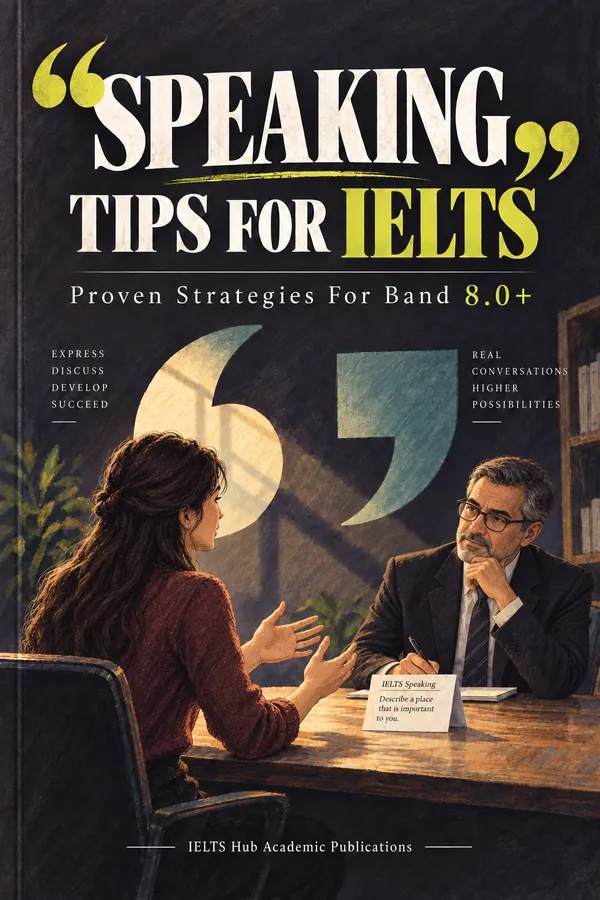
Speaking
Speaking Tips for IELTS
Proven Strategies for Band 8.0+
₹299$9.99CAD 13.99AUD 14.99£7.99NZD 16.99€8.99AED 39SGD 12.99
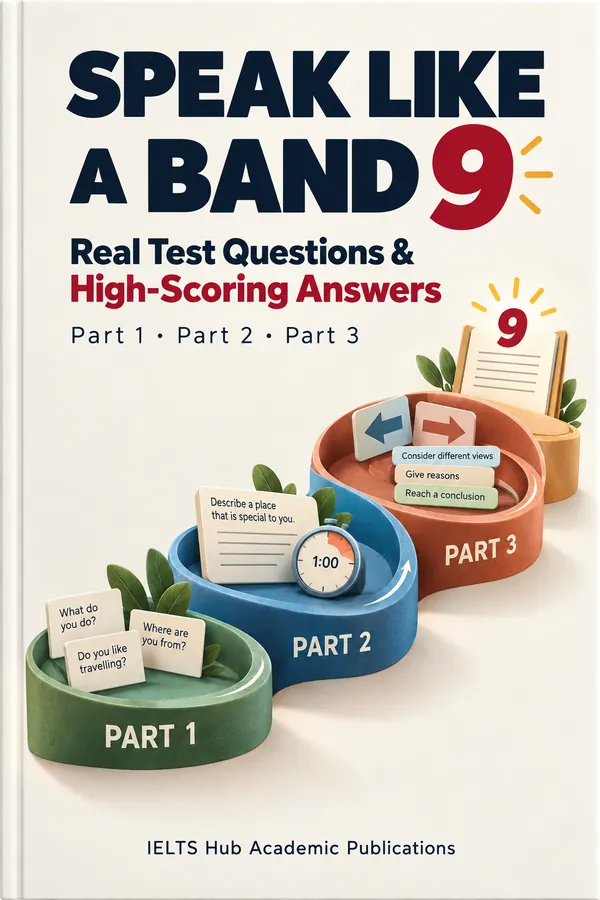
Speaking
Speak Like a Band 9
Real Test Questions & High-Scoring Answers
₹299$9.99CAD 13.99AUD 14.99£7.99NZD 16.99€8.99AED 39SGD 12.99
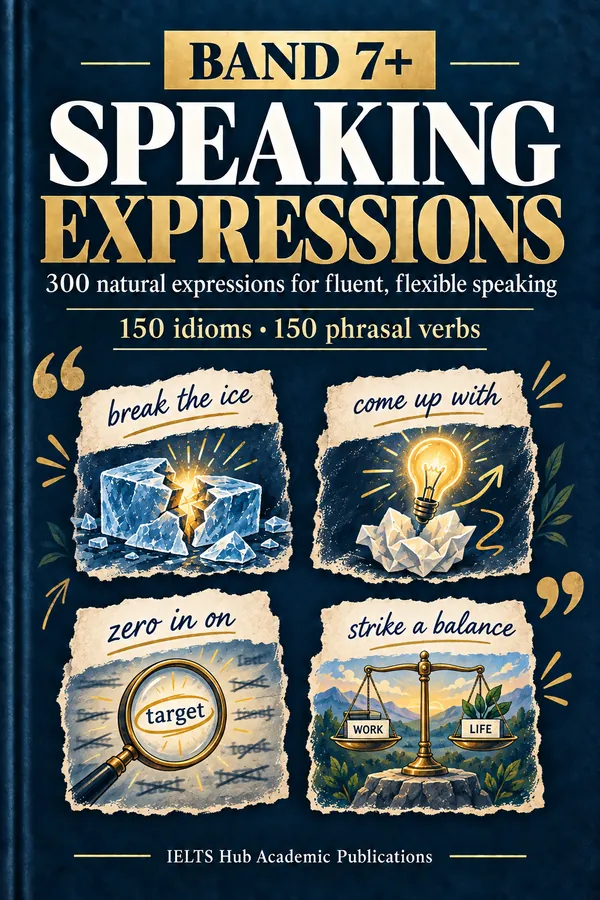
Speaking
Band 7+ Speaking Expressions
300 natural expressions for fluent, flexible speaking
₹199$6.99CAD 8.99AUD 9.99£4.99NZD 10.99€5.99AED 24SGD 8.99