Speaking test #818
Part 1 · Interview
4 to 5 minutes. The examiner asks about you and familiar topics.
Can you tell me your full name?
Where are you from?
Do you work or are you a student?
What do you do to relax?
I find that reading a good book or listening to music are both great ways to relax and unwind. I also enjoy taking walks in nature, as the fresh air and peaceful surroundings help to clear my mind and reduce stress.
Do you think doing sports is a good way to relax?
Absolutely! I believe that participating in sports or other physical activities is an excellent way to relax and de-stress. Not only does it release endorphins and improve overall physical health, but it also provides a sense of accomplishment and a break from daily routine.
Do you think doing sports is a good way to relax?
Yes, I definitely think that doing sports is a good way to relax. It provides an outlet for pent-up energy and emotions, and can also help to improve mental health and overall well-being. Plus, it's a great way to socialize and make new friends.
Do you think students need more relaxing time?
I absolutely think that students need more relaxing time. With the pressure and demands of schoolwork and extracurricular activities, students can easily become overwhelmed and stressed. Allowing them more time to relax and unwind can help to improve their mental and emotional health, and ultimately lead to better academic performance.
Do you like robots?
I absolutely adore robots! The idea of having machines that can perform tasks, interact with humans, and even think for themselves is truly fascinating to me. I find the technology behind robots to be incredibly impressive and I am always excited to see new advancements in the field.
Would you want a robot to work in your home?
I would definitely consider having a robot work in my home. With the increasing need for automation and efficiency, having a robot to assist with tasks such as cleaning, cooking, and even taking care of children could greatly improve the quality of life for many households. Plus, the thought of having a robot butler is quite appealing to me.
What do you think about a robot driving your car?
I think the concept of a robot driving a car is very intriguing. With the advancements in technology, it is becoming increasingly possible to have self-driving cars on the roads. The idea of having a robot drive your car could greatly improve safety and reduce the number of accidents caused by human error. However, I do think there will be a lot of challenges to overcome before this becomes a reality.
Will robots replace human beings in the workplace completely?
I don't believe that robots will replace human beings in the workplace completely. While automation and technology can certainly improve efficiency and productivity, there are certain tasks that require human intuition and creativity. Additionally, many jobs require human interaction and emotional intelligence, which robots may not be able to replicate. However, I do think that robots will become increasingly prevalent in the workplace and will change the way we work.
You will have to talk about the topic for one to two minutes. You have one minute to think about what you are going to say. You can make some notes to help you if you wish.
Describe a time when you got into trouble
You should say:
- What happened
- How you got into trouble
- Who was involved
- How you resolved the situation
What happened
Getting into trouble is not something that happens often in my life, but I vividly remember a particular incident when I found myself in a challenging situation. It was during my high school days when I accidentally broke a window in the school library while playing football with my friends during the lunch break.
How you got into trouble
The incident occurred when I attempted to score a goal, and the ball hit the window with a loud crash, shattering the glass into pieces. The noise attracted the attention of the librarian, who came rushing to the scene and saw the broken window. I immediately realized the trouble I was in as she asked who was responsible for the damage.
Who was involved
My friends and I were the only ones playing in that area, so there was no escaping the fact that we were involved in the mishap. Despite feeling anxious and worried about the consequences, I knew it was essential to take responsibility for my actions. Therefore, I stepped forward and admitted that I was the one who kicked the ball that caused the damage.
How you resolved the situation
To resolve the situation, I apologized sincerely to the librarian and offered to help with the repair costs. I also spoke to the school administration and explained the situation, expressing my remorse and willingness to make amends. Fortunately, they appreciated my honesty and willingness to take responsibility, which helped in mitigating the severity of the situation. In the end, I learned a valuable lesson about accountability and the importance of owning up to mistakes.
- Words
- 253
- Sentences
- 12
- Words per sentence
- 21.1
- Speaking time
- about 1.9 min
Counted at 130 words a minute. The exam gives you one to two minutes.
Part 3 · Discussion
4 to 5 minutes. The examiner asks broader questions linked to the cue card topic.
How are the problems young people face today different from those of earlier generations?
The challenges that young people face today are quite distinct from those encountered by previous generations, primarily due to the rapid pace of technological advancement and the globalized world we live in. For instance, today's youth are often overwhelmed by the constant barrage of information and social media, which can lead to issues like anxiety and social isolation. In contrast, previous generations faced challenges that were more focused on physical interactions and societal norms, such as finding stable employment in a more localized economy. Moreover, the pressure to succeed has intensified, as young people are now competing on a global scale, which can create a sense of overwhelming pressure to excel academically and professionally. It's fascinating to see how these challenges have evolved and how today's youth must navigate a complex landscape with a blend of resilience and adaptability. Ultimately, while every generation has its unique hurdles, the nature and scope of these challenges have certainly transformed in the modern era.
Some people think that dealing with challenges is important for personal growth. How true is this idea?
I absolutely agree that facing difficulties is a crucial part of personal development. When we encounter challenges, it forces us to step outside our comfort zones, which can lead to significant growth. For instance, overcoming obstacles often fosters resilience and adaptability, qualities that are invaluable in both personal and professional realms. Additionally, these experiences can deepen our understanding of ourselves and others, ultimately enriching our lives. In essence, embracing hardships can truly be a transformative journey that shapes our character and enhances our emotional intelligence.
How do mistakes influence a person's character and choices in the future?
Mistakes are incredibly valuable in shaping an individual's character and future decisions. They act as a sort of catalyst for growth, pushing us to reflect on our actions and learn from our experiences. When we encounter setbacks, it often leads to greater resilience and adaptability, qualities that are essential in navigating life's challenges. Moreover, mistakes can foster a sense of empathy, as we become more understanding of others who face similar hurdles. Ultimately, these experiences can guide us toward making more informed and thoughtful choices in the future, enriching our personal development.
Why do you think people often get into tough situations?
Individuals often find themselves in difficult situations due to a variety of factors, both external and internal. Often, life is unpredictable, and unforeseen circumstances can arise, such as sudden job loss or health issues, which can throw a wrench into even the best-laid plans. Additionally, personal choices and decisions, whether influenced by emotions or peer pressure, can lead to unfortunate consequences that complicate one's life. It's also worth noting that people sometimes underestimate their capabilities or overestimate challenges, which can result in a vicious cycle of self-doubt and poor decision-making. Ultimately, these factors combine to create a perfect storm that can lead anyone into a tough spot.
How could the types of problems people face change in the next few decades?
The nature of troubles people face is likely to evolve significantly in the coming decades, primarily due to rapid technological advancements and global challenges. For instance, as automation and artificial intelligence take over more jobs, we might see an increase in economic disparities and job displacement, leading to social unrest. Additionally, with climate change becoming more pressing, issues related to environmental sustainability and resource scarcity could become predominant. Moreover, as our lives become increasingly interconnected through technology, we might also encounter new forms of social isolation and mental health challenges that arise from digital interactions. It's fascinating to think about how society will adapt to these changes, and I believe that resilience and innovation will be key to navigating the complexities that lie ahead. Overall, while the troubles may evolve, the human spirit's capacity to overcome them will likely remain a constant source of hope.
What steps can be taken to help people handle tough situations in their lives?
To help individuals navigate challenging situations more effectively, I believe that a multifaceted approach is essential. Firstly, providing access to mental health resources can significantly empower people to cope with stress and anxiety. Programs that focus on resilience training can equip them with practical tools and techniques to face adversity. Additionally, fostering a strong sense of community through social support networks can make a world of difference; having someone to talk to can alleviate feelings of isolation. Finally, encouraging mindfulness practices, such as meditation and yoga, can help individuals maintain a clear perspective, allowing them to tackle challenges with a more balanced mindset.
Go further with the books
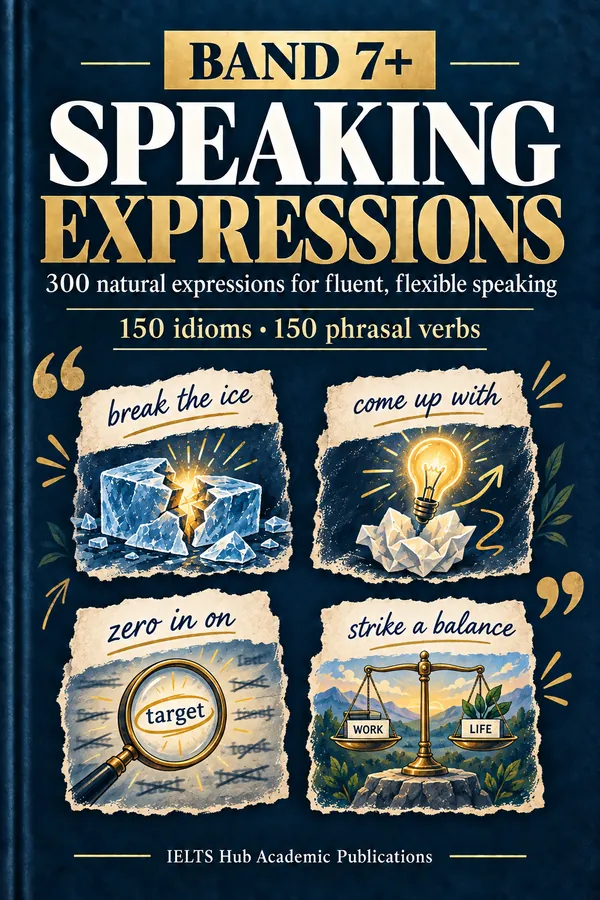
Speaking
Band 7+ Speaking Expressions
300 natural expressions for fluent, flexible speaking
₹199$6.99CAD 8.99AUD 9.99£4.99NZD 10.99€5.99AED 24SGD 8.99
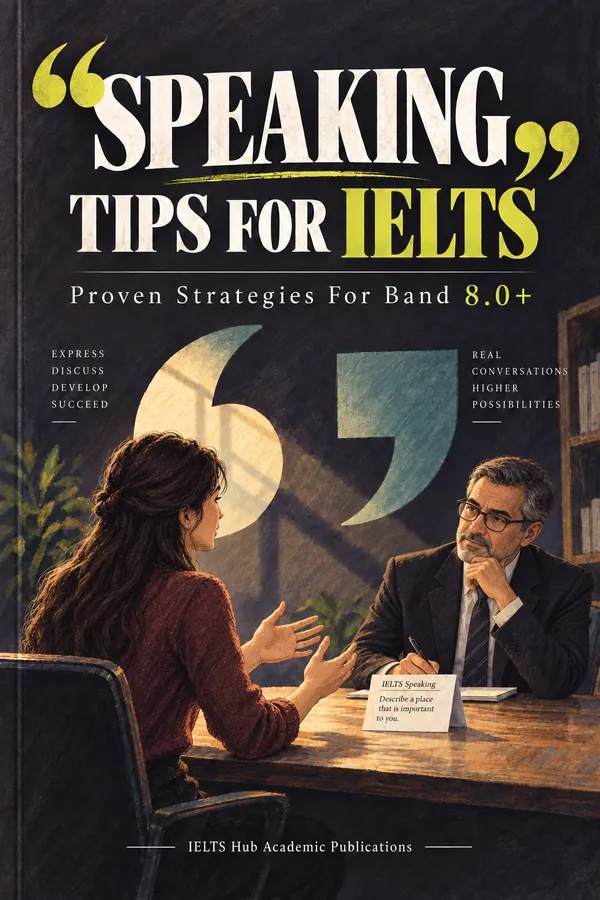
Speaking
Speaking Tips for IELTS
Proven Strategies for Band 8.0+
₹299$9.99CAD 13.99AUD 14.99£7.99NZD 16.99€8.99AED 39SGD 12.99

Speaking
Speak Like a Band 9
Real Test Questions & High-Scoring Answers
₹299$9.99CAD 13.99AUD 14.99£7.99NZD 16.99€8.99AED 39SGD 12.99