Speaking test #821
Part 1 · Interview
4 to 5 minutes. The examiner asks about you and familiar topics.
Can you tell me your full name?
Where are you from?
Do you work or are you a student?
Are you still in contact with your friends from high school?
Yes, I am still in contact with a few of my friends from high school. We keep in touch through social media and occasionally meet up for reunions.
What was your high school like?
My high school was a large public school with a diverse student population. The teachers were dedicated and the facilities were modern and well-equipped. The school offered a variety of extracurricular activities and clubs, which allowed me to explore my interests and passions.
What happened on the first day of high school?
On the first day of high school, I remember feeling a mix of emotions. I was excited to start a new chapter in my education, but also a bit nervous to meet new people and navigate a new school environment. My parents walked me to school and helped me find my classes. I met some of my classmates and we bonded over the shared experience of starting high school.
Did your parents choose your secondary school (= high school) for you?
No, my parents did not choose my high school for me. They gave me options of schools to choose from and supported my decision in the end. I researched and visited different schools before making my final choice. I believe that it is important for students to have a say in their education and make decisions that align with their goals and aspirations.
At what age did you start studying science at school?
I started studying science at the age of 11, when I entered secondary school.
Do you find science a difficult or an easy subject?
I find science to be a challenging but highly rewarding subject. It requires a lot of critical thinking and problem-solving skills, but the concepts and principles taught in science are also fascinating and enlightening.
What was the most interesting science topic for you at school?
The most interesting science topic for me at school was definitely physics. I found the laws of motion and the study of energy and matter to be incredibly intriguing and thought-provoking.
How useful is your knowledge of science in your daily life?
My knowledge of science is extremely useful in my daily life. It helps me to understand the world around me and make informed decisions. For example, my understanding of physics and chemistry helps me to appreciate the technology and appliances I use every day, and my knowledge of biology and health sciences enables me to make informed choices about my own well-being.
You will have to talk about the topic for one to two minutes. You have one minute to think about what you are going to say. You can make some notes to help you if you wish.
Describe a writer you would like to meet
You should say:
- Who the writer is
- What type of writing they are known for
- Why you want to meet them
- What you would discuss or ask them
Who the writer is
I would like to meet Arundhati Roy, a renowned Indian author known for her impactful novels and essays. She gained international acclaim for her debut novel "The God of Small Things," which won the prestigious Man Booker Prize. Arundhati Roy is not only a gifted storyteller but also a fearless activist, using her writing to shed light on social and political issues in India and beyond.
What type of writing they are known for
I am drawn to Arundhati Roy's work because of her ability to seamlessly blend captivating storytelling with thought-provoking social commentary. Her writing delves deep into the complexities of human relationships, societal norms, and power dynamics, making her a truly unique voice in contemporary literature. Meeting her would offer me the opportunity to gain insights into her creative process and the inspiration behind her powerful narratives.
Why you want to meet them
If I had the chance to meet Arundhati Roy, I would love to discuss her perspectives on the role of literature in bringing about social change. I am curious to know how she navigates the fine line between fiction and reality in her writing, especially when addressing sensitive and controversial issues. Additionally, I would seek her advice on how aspiring writers can use their craft to make a positive impact on society.
What you would discuss or ask them
In conclusion, meeting Arundhati Roy would be a dream come true for me as a literature enthusiast. Her formidable intellect, coupled with her unwavering commitment to social justice, sets her apart as a writer worth admiring and learning from. I believe that a conversation with her would not only be intellectually stimulating but also profoundly inspiring, fueling my own passion for writing and advocacy.
- Words
- 267
- Sentences
- 12
- Words per sentence
- 22.3
- Speaking time
- about 2.1 min
Counted at 130 words a minute. The exam gives you one to two minutes.
Part 3 · Discussion
4 to 5 minutes. The examiner asks broader questions linked to the cue card topic.
How do modern writers affect society differently than classic authors?
Contemporary writers and classic authors both wield significant influence, but their impacts manifest in different ways. Classic authors, like Shakespeare or Dickens, often tackled universal themes that resonate through time, shaping societal norms and values in profound ways. Their works laid the groundwork for literary tradition and continue to be referenced, providing a rich tapestry of cultural heritage. On the other hand, contemporary writers tend to engage with pressing social issues, often reflecting the complexities of modern life. They can address topics like technology, identity, and globalization, which resonate with today’s audiences in a way that feels immediate and relevant. This ability to connect with current events and sentiments fosters a sense of collective consciousness among readers, sparking dialogues that can lead to social change. Ultimately, while classic literature provides timeless wisdom, contemporary writing often serves as a mirror to our current realities, pushing us to think critically about the world we live in.
How much do you think meeting a writer can change how someone views literature?
Meeting a writer can significantly influence a person's perspective on literature, often in profound ways. When you have the chance to engage with a writer, you gain insights into their creative process and the motivations behind their work, which can transform how you perceive their writing. It’s one thing to read a book and form your own interpretations, but hearing the author's thoughts can open up new dimensions and deepen your appreciation. Additionally, a personal connection with a writer can instill a sense of inspiration and aspiration in individuals, particularly young readers or aspiring writers, making literature feel more accessible and relatable. Overall, such encounters can foster a more nuanced understanding of the literary world and its diverse voices.
How do writers influence cultural or social movements?
Writers play a pivotal role in shaping cultural and social movements by providing a voice to the voiceless and articulating the sentiments of the masses. Through their works, they can challenge societal norms and provoke thought, often igniting conversations that lead to significant change. For instance, authors like George Orwell and Toni Morrison have not only told compelling stories but also raised awareness about pressing issues such as inequality and oppression. Their ability to weave nuanced narratives encourages readers to reflect on their own beliefs and behaviors, fostering a greater sense of empathy and understanding. Ultimately, writers can act as catalysts for transformation, inspiring action and mobilizing communities toward a common goal.
Why do people often feel a close bond with some authors or their books?
People often feel a strong connection to certain authors or their works because literature has a unique way of reflecting our own experiences and emotions. When we read a book, we often find ourselves immersed in the characters' struggles and triumphs, which can resonate deeply with our personal lives. This emotional resonance creates a bond between the reader and the author, making it feel as though the author truly understands their thoughts and feelings. Additionally, the themes explored in literature—such as love, loss, and identity—are universal and timeless, allowing readers from all walks of life to forge these connections. Ultimately, literature can be a mirror to our souls, revealing truths about ourselves that we might not have recognized otherwise.
What changes could happen in the book world in the next ten years, especially with popular types of stories?
In the next decade, I think we’ll witness some fascinating shifts in the literary world, particularly with the rise of digital storytelling. As technology continues to evolve, we might see more interactive narratives that engage readers in ways we can only imagine right now. Popular genres like science fiction and fantasy are likely to expand even further, potentially incorporating elements of augmented reality or virtual reality, which could immerse readers in the story like never before. Additionally, I believe that the trend of diverse voices will gain even more prominence, as readers increasingly seek out stories that reflect a multitude of perspectives and experiences. This could lead to a richer literary landscape where genres blend together, creating entirely new categories. Overall, the next decade is bound to be an exciting time for literature, offering fresh innovations that could redefine how we connect with stories!
What steps can be taken to encourage more interaction between readers and writers in today's digital world?
To foster a deeper connection between readers and writers in today’s digital landscape, several innovative measures can be implemented. Firstly, interactive platforms like blogs and social media can be enhanced to facilitate real-time discussions, allowing readers to comment and engage directly with writers. This two-way communication not only enriches the reader’s experience but also provides valuable feedback for authors. Additionally, hosting virtual book clubs or live Q&A sessions can create a vibrant community where fans and writers can exchange thoughts and ideas in a more personal setting. Finally, encouraging writers to share their creative processes through behind-the-scenes content can make their work feel more accessible and relatable, further bridging the gap between them and their audience.
Go further with the books
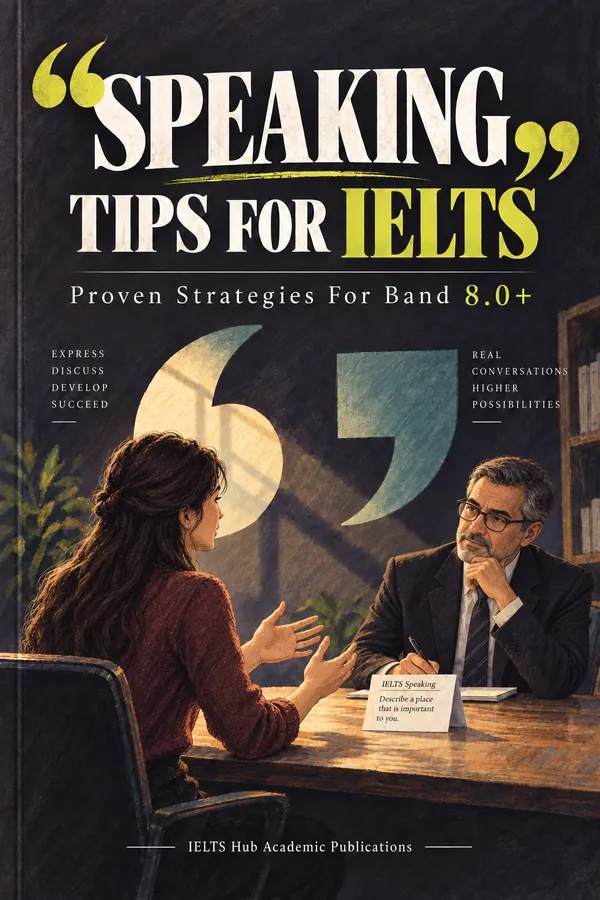
Speaking
Speaking Tips for IELTS
Proven Strategies for Band 8.0+
₹299$9.99CAD 13.99AUD 14.99£7.99NZD 16.99€8.99AED 39SGD 12.99
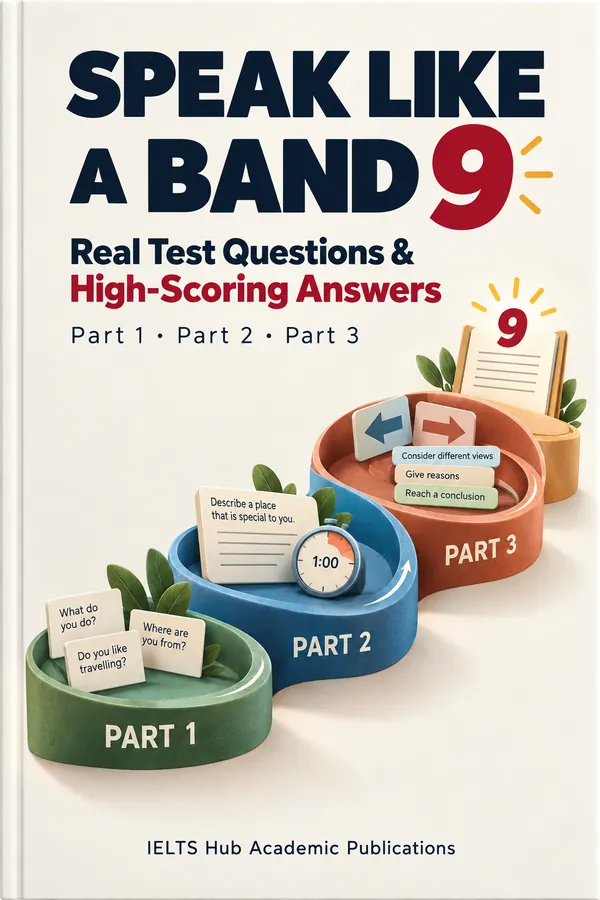
Speaking
Speak Like a Band 9
Real Test Questions & High-Scoring Answers
₹299$9.99CAD 13.99AUD 14.99£7.99NZD 16.99€8.99AED 39SGD 12.99
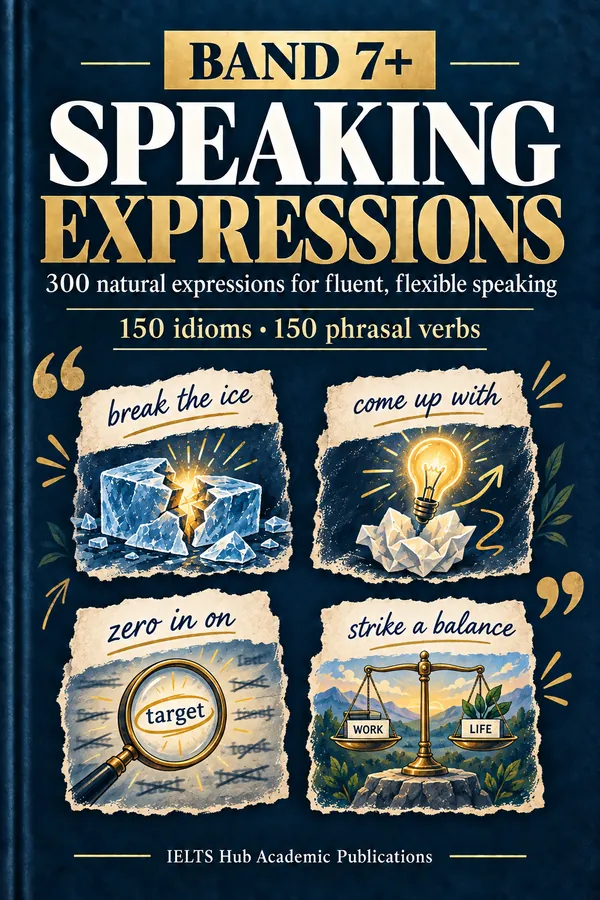
Speaking
Band 7+ Speaking Expressions
300 natural expressions for fluent, flexible speaking
₹199$6.99CAD 8.99AUD 9.99£4.99NZD 10.99€5.99AED 24SGD 8.99