Speaking test #825
Part 1 · Interview
4 to 5 minutes. The examiner asks about you and familiar topics.
Can you tell me your full name?
Where are you from?
Do you work or are you a student?
What do you usually do on your birthday?
On my birthday, I usually spend time with my friends and family. We usually have a nice dinner or go out to a fun activity. I also like to treat myself to something special, like a massage or a new piece of clothing.
What did you do on your birthday when you were young?
When I was young, I used to have big birthday parties with all of my friends. We would play games and have lots of snacks. My parents would always try to make it a really special day for me.
Is it important for you to celebrate your birthday?
Yes, celebrating my birthday is definitely important to me. It's a chance for me to reflect on the past year and think about all of the things I've accomplished. It's also a great excuse to spend time with my loved ones and have some fun.
Which birthdays are considered important in your country?
In my country, all birthdays are considered important, but certain milestone birthdays are often given extra attention. For example, turning 16 or 18 is often seen as a rite of passage and is celebrated with special parties or ceremonies. Turning 30 or 40 is also often seen as a significant milestone, and people often throw big parties or go on special trips to mark the occasion.
Do you like to see the sky?
Oh absolutely, I find the sky to be one of the most mesmerizing and awe-inspiring sights in nature. The vast expanse of blue, the different hues and shades it can take on, and the ever-changing clouds all make for a truly captivating view.
Which is the best place in your hometown (Bathind) to see the stars?
In my hometown of Bathind, I would have to say that the best place to see the stars is at the top of the local hill. The air is clear and the view is unobstructed, making for a perfect spot to stargaze on a clear night.
Do you prefer the sky in the morning or the sky at night?
That's a tough question, as both have their own unique beauty. The sky in the morning is often painted with vibrant hues of orange, pink, and purple as the sun rises, creating a truly breathtaking sight. On the other hand, the sky at night is a canvas of twinkling stars, constellations, and the moon, which is equally mesmerizing.
Can you see the moon and stars at night where you live?
Yes, I am fortunate enough to live in an area where light pollution is minimal, so I am able to see the moon and stars quite clearly at night. It's always a magical experience to look up at the night sky and see the glittering stars and the glowing moon.
You will have to talk about the topic for one to two minutes. You have one minute to think about what you are going to say. You can make some notes to help you if you wish.
When you spoke with someone in a foreign language
You should say:
- Who the person was
- What language you spoke
- Where and when the conversation took place
- How you felt about the conversation
Who the person was
In the bustling city of Mumbai, where diverse cultures intertwine, I had the pleasure of engaging in a conversation with a French tourist during a cultural festival last winter. The gentleman I spoke with was a middle-aged traveler named Pierre, who was exploring the vibrant streets of Mumbai to experience its rich traditions and warm hospitality.
What language you spoke
Our conversation unfolded in French, a language I have been learning for several years out of sheer passion for its eloquence and melodious tones. Despite occasional linguistic hurdles, Pierre and I managed to exchange anecdotes about our respective cultures and shared a few laughs over amusing cultural differences. It was truly a delightful experience to converse in a foreign language, bridging the gap between our worlds through the beauty of communication.
Where and when the conversation took place
The setting for our interaction was a traditional art exhibition at a local museum, where colorful paintings and intricate sculptures served as a backdrop to our linguistic exchange. Surrounded by artistic masterpieces and immersed in a captivating dialogue with Pierre, I felt a sense of cultural enrichment and connection that transcended language barriers. The ambiance of the museum added an extra layer of charm to our interaction, making it a memorable experience for both of us.
How you felt about the conversation
Reflecting on the conversation afterwards, I couldn't help but feel a profound sense of fulfillment and gratitude for the opportunity to engage with someone from a different corner of the world in a language other than my own. The exchange not only broadened my cultural horizons but also reinforced my belief in the power of language to foster understanding and forge meaningful connections across borders. It was a truly enriching experience that left me with a newfound appreciation for the beauty of linguistic diversity and the magic of cross-cultural communication.
- Words
- 293
- Sentences
- 11
- Words per sentence
- 26.6
- Speaking time
- about 2.3 min
Counted at 130 words a minute. The exam gives you one to two minutes.
Part 3 · Discussion
4 to 5 minutes. The examiner asks broader questions linked to the cue card topic.
How can speaking a foreign language be different from using your own language?
The experience of speaking a foreign language can be quite different from using one's native language, primarily due to the emotional connection we have with our mother tongue. When we communicate in our native language, we often express ourselves with a sense of ease and confidence, as it's deeply ingrained in our identity. In contrast, using a foreign language can sometimes feel like navigating uncharted waters, where we may struggle with vocabulary and grammar, leading to feelings of frustration or self-consciousness. Moreover, the cultural nuances embedded in a foreign language can add an additional layer of complexity. For instance, idiomatic expressions and cultural references can be challenging to grasp, which may hinder effective communication. Yet, on the flip side, mastering a foreign language can be incredibly rewarding, offering a unique perspective on different cultures and fostering a sense of accomplishment. Overall, while the two experiences are fundamentally different, both contribute to personal growth and broaden our horizons.
How much do you think learning another language can change how someone sees the world?
Learning a foreign language can profoundly shape a person's worldview in numerous ways. Firstly, it opens up a whole new spectrum of cultural nuances and perspectives that are often embedded within a language. For instance, idiomatic expressions and phrases carry unique meanings that can only be fully appreciated through the lens of that culture. Additionally, when individuals engage with speakers of another language, they often find themselves more empathetic and understanding of different social issues and traditions. This exposure can lead to a greater sense of global citizenship, as one starts to appreciate the diversity in human experiences. Overall, I believe that mastering a foreign language not only enriches communication but also fosters a more inclusive and open-minded perspective on life.
How important is it for people to speak a foreign language in today’s world?
In today’s global society, the ability to communicate in a foreign language is absolutely paramount. With the world becoming increasingly interconnected, being multilingual empowers individuals to engage with diverse cultures and fosters deeper understanding. It opens up a wealth of opportunities, whether for career advancement or forging international friendships. Moreover, in an era where digital communication transcends borders, those who can speak multiple languages are often at a distinct advantage. Ultimately, learning a foreign language not only enhances personal growth but also contributes to a more inclusive and harmonious world.
Why do you think some people learn foreign languages more easily than others?
I believe several factors contribute to why some people find it easier to learn foreign languages than others. For starters, cognitive abilities play a significant role; individuals with a strong aptitude for language often excel in picking up new vocabulary and grammar structures. Additionally, exposure to different cultures can enhance language learning; those who frequently interact with native speakers or immerse themselves in the language are likely to grasp nuances and pronunciation more effectively. Motivation is another crucial element; learners who are genuinely passionate about a language tend to persist through challenges, making their learning journey more enjoyable and fruitful. Finally, personal experience also matters—someone who has traveled extensively or lived abroad might find it easier to adapt to new languages compared to someone who hasn't had those opportunities.
How could the importance of foreign languages in global business change in the future?
The role of foreign languages in international business is likely to become even more crucial as globalization continues to accelerate. With the rise of digital communication, people are connecting across borders more than ever, which emphasizes the need for effective communication. In the future, we might see a greater emphasis on multilingual proficiency as businesses seek to tap into diverse markets. Moreover, advancements in technology, such as real-time translation tools, could facilitate smoother interactions, but they will never fully replace the nuances of human language. Ultimately, those who are fluent in multiple languages will have a significant competitive edge, enabling them to build stronger relationships and foster collaboration across cultures.
What steps can we take to help more people learn foreign languages well?
To encourage more people to become proficient in foreign languages, I believe a multifaceted approach is essential. First and foremost, integrating language learning into the school curriculum from an early age can lay a solid foundation. Additionally, offering immersive experiences, such as study-abroad programs or cultural exchange initiatives, can significantly enhance motivation and practical understanding. Furthermore, leveraging technology through language-learning apps and online platforms could make learning more accessible and engaging for all age groups. Lastly, fostering a community where people can practice languages through conversation clubs or social meetups can create a supportive environment, making the learning process not only effective but also enjoyable!
Go further with the books

Speaking
Band 7+ Speaking Expressions
300 natural expressions for fluent, flexible speaking
₹199$6.99CAD 8.99AUD 9.99£4.99NZD 10.99€5.99AED 24SGD 8.99
Speaking
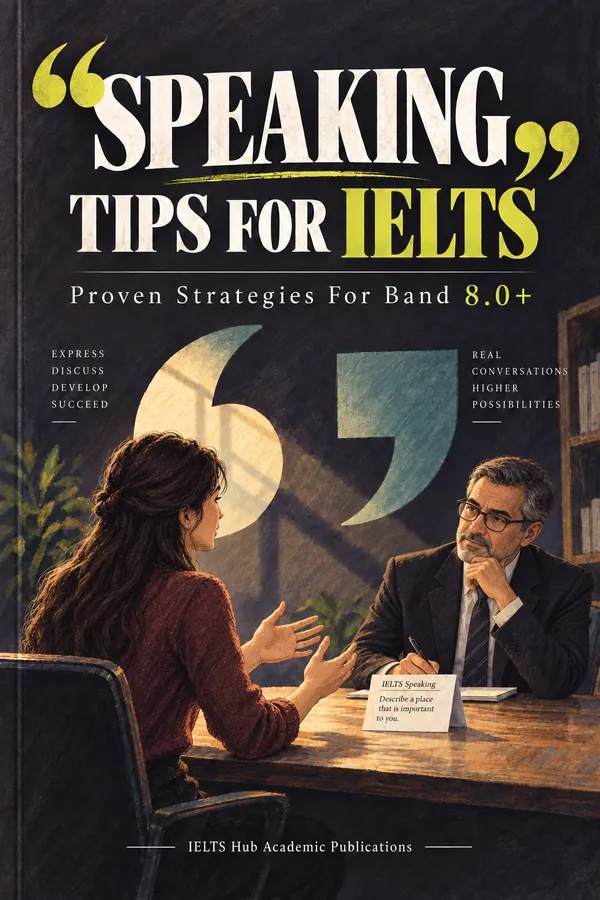
Speaking Tips for IELTS
Proven Strategies for Band 8.0+
₹299$9.99CAD 13.99AUD 14.99£7.99NZD 16.99€8.99AED 39SGD 12.99
Speaking
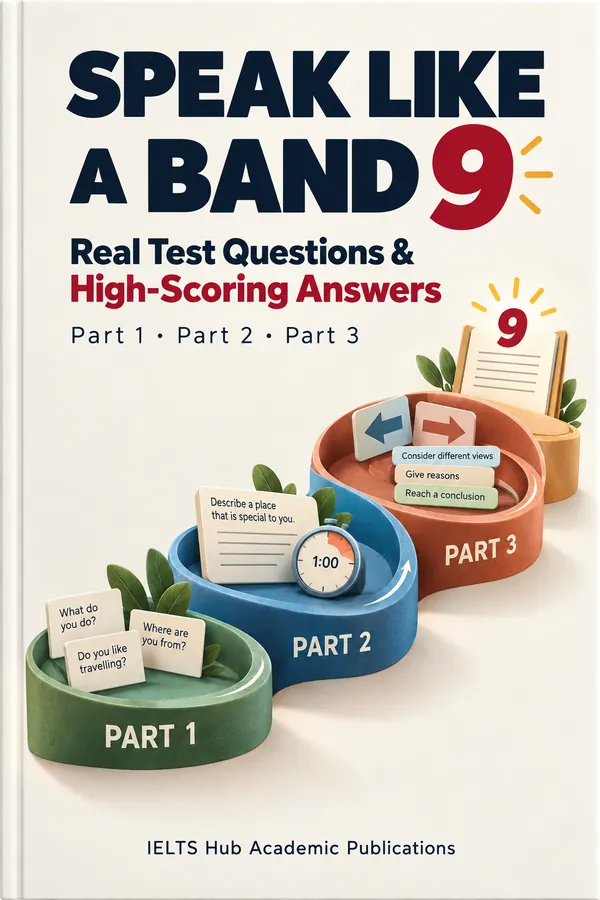
Speak Like a Band 9
Real Test Questions & High-Scoring Answers
₹299$9.99CAD 13.99AUD 14.99£7.99NZD 16.99€8.99AED 39SGD 12.99