Speaking test #830
Part 1 · Interview
4 to 5 minutes. The examiner asks about you and familiar topics.
Can you tell me your full name?
Where are you from?
Do you work or are you a student?
What sports do you like?
Oh, I absolutely adore sports! My favorites are definitely soccer and tennis. I love the thrill of the game and the adrenaline rush it gives me.
Where did you learn how to do it?
I learned how to play soccer and tennis through various youth programs in my local community. I also had some great coaches who helped me develop my skills and improve my technique.
Did you do any sport when you were young?
Yes, I was very active as a child. I played soccer and tennis, as well as other sports like basketball and volleyball. It was always a big part of my life and I loved being part of a team.
Do you think students need more exercise?
Absolutely! Exercise is so important for physical and mental well-being, and I think students can benefit greatly from incorporating more physical activity into their daily routine. Whether it's through organized sports or simply going for a daily walk or run, regular exercise can help students stay healthy and focused in school.
In your country, do people use boats?
Yes, in my country, people definitely use boats. It's a popular pastime, especially during the warmer months.
What do they use boats for?
People use boats for all sorts of things, such as fishing, leisurely cruising, or water sports like wakeboarding or water skiing. It really just depends on the individual's personal interests.
Would you like to own a boat?
I must admit, I've always been fascinated by the idea of owning a boat. There's just something so peaceful and exhilarating about being out on the water. So yes, I would definitely like to own a boat someday.
Would you shop online or in a store for a boat?
Well, it really depends on the size and type of boat I was looking for. If it was something small and simple, I might be more inclined to shop online. But if it was a larger, more complex purchase, I would probably prefer to go to a store to see the boat in person and ask questions of a salesperson.
You will have to talk about the topic for one to two minutes. You have one minute to think about what you are going to say. You can make some notes to help you if you wish.
Describe a time when you had to wait in a traffic jam
You should say:
- Reason for being in the traffic jam
- How long you had to wait
- Your feelings during the wait
- What you did to pass the time
Reason for being in the traffic jam
I remember a particularly frustrating experience of being stuck in a traffic jam during my visit to Mumbai, India. The reason behind the traffic congestion was a sudden heavy downpour that flooded the streets and caused chaos on the roads. I was traveling to the airport to catch a flight and found myself caught in the gridlock.
How long you had to wait
I ended up waiting for what seemed like an eternity, approximately three hours, in the standstill traffic. As minutes turned into hours, my initial annoyance escalated to a feeling of helplessness. I was anxious about missing my flight and felt trapped in the sea of vehicles surrounding me. The relentless honking of horns and the slow progress added to my growing impatience.
Your feelings during the wait
To pass the time and distract myself from the mounting stress, I decided to listen to music on my phone. I also struck up a conversation with the fellow passengers in the nearby cars, sharing our exasperation and exchanging stories to lighten the mood. Additionally, I took the opportunity to observe the bustling street life around me, marveling at the resourcefulness of street vendors navigating through the jam selling snacks and drinks.
What you did to pass the time
Finally, after what felt like an eternity, the traffic started moving again, and I reached the airport just in time to catch my flight. Despite the ordeal, the experience taught me patience and the importance of staying calm in challenging situations. It was a vivid reminder of the unpredictable nature of urban life in India and the resilience of its people in navigating everyday obstacles like traffic jams.
- Words
- 259
- Sentences
- 13
- Words per sentence
- 19.9
- Speaking time
- about 2.0 min
Counted at 130 words a minute. The exam gives you one to two minutes.
Part 3 · Discussion
4 to 5 minutes. The examiner asks broader questions linked to the cue card topic.
What are the differences between traffic jams in cities and those in the countryside?
Traffic jams in urban areas are typically much more severe and frequent than those in rural locations. In cities, the sheer volume of vehicles, coupled with a high population density, often leads to congestion during peak hours. On the other hand, rural areas tend to have lower traffic volumes, which means that while there might be occasional slowdowns, it's generally more manageable. Additionally, urban traffic jams are often exacerbated by roadworks and public transport issues, whereas rural traffic can be influenced by factors like agricultural activities or seasonal tourism. Overall, the nature and impact of traffic jams in these two settings can be quite distinct, reflecting the different lifestyles and infrastructures.
Some people think that traffic jams are something we can't avoid in today's world. What do you think about this?
I can definitely see why some people think that traffic jams are an unavoidable part of modern life. With the rapid growth of urban populations and the increasing number of vehicles on the road, it's almost like a perfect storm for congestion. However, I believe that while they are prevalent, they are not entirely unavoidable. Cities can implement better public transport systems and encourage carpooling or the use of bicycles, which can significantly reduce the number of cars on the road. Plus, advancements in technology, like traffic management systems, can help alleviate some of the frustration of gridlock. Ultimately, it’s about making smarter choices and investing in infrastructure that can lead to a more fluid transportation experience.
How do traffic jams affect people's decisions about how they travel?
Traffic jams can significantly sway people's decisions about how they choose to get around. When faced with lengthy delays and congested roads, many individuals opt for alternative modes of transport, such as bicycles or public transit, to avoid the frustration of being stuck in traffic. This shift not only reflects a desire for efficiency but also highlights a growing awareness of environmental issues, as many people are increasingly concerned about their carbon footprint. Moreover, the inconvenience of traffic can encourage the use of ride-sharing services, which have surged in popularity due to their convenience and flexibility. Overall, traffic congestion serves as a powerful motivator for individuals to explore more sustainable and time-efficient options in their daily commutes.
Why do you think traffic jams are becoming a bigger problem in many cities worldwide?
Traffic congestion has become an increasingly pressing issue in urban areas for several reasons. Firstly, there’s a significant rise in the number of vehicles on the roads, largely due to population growth and urbanization. This surge leads to overwhelming traffic during peak hours, which can be incredibly frustrating for commuters. Additionally, many cities have not adapted their infrastructure to accommodate this influx, resulting in poorly designed roads and inadequate public transport systems. Lastly, the increasing trend of online shopping has also contributed to the problem, as delivery vehicles clog up streets, exacerbating the situation. Overall, it’s clear that without thoughtful planning and innovative solutions, traffic congestion will continue to be a major headache for cities worldwide.
How could new technology change how often or how bad traffic jams are in the future?
Advancements in technology could significantly transform the landscape of traffic management and, in turn, influence the frequency and severity of traffic jams. For instance, the integration of smart traffic systems that utilize AI to analyze real-time data can optimize traffic flow, reducing congestion during peak hours. Moreover, the rise of autonomous vehicles might lead to more efficient driving patterns, as these vehicles can communicate with one another to minimize sudden stops and starts, which are often culprits of traffic jams. Additionally, the development of ride-sharing apps and platforms could encourage more people to use public transportation or share rides, ultimately decreasing the number of cars on the road. Overall, technology holds the potential to make our roads much more efficient and less prone to the frustrating gridlock we often experience today.
What steps can city planners take to reduce the effect of traffic jams on daily commuters?
City planners have a vital role in mitigating the impact of traffic congestion on daily commuters. One effective measure is to enhance public transport systems, making them more accessible and efficient, which can encourage people to opt for mass transit instead of private vehicles. Additionally, implementing smart traffic management systems could significantly improve traffic flow, as these systems can adapt signals based on real-time traffic conditions. Furthermore, developing more bike lanes and pedestrian-friendly pathways can promote alternative modes of transport, which not only eases congestion but also contributes to a healthier lifestyle. Ultimately, fostering a culture of shared transportation, such as carpooling or ride-sharing, can further alleviate pressure on our roads.
Go further with the books
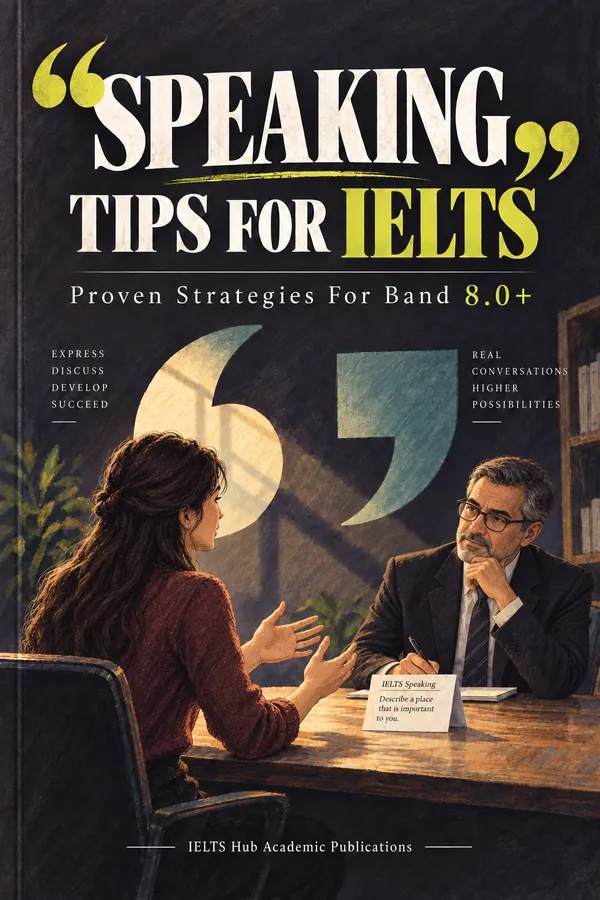
Speaking
Speaking Tips for IELTS
Proven Strategies for Band 8.0+
₹299$9.99CAD 13.99AUD 14.99£7.99NZD 16.99€8.99AED 39SGD 12.99
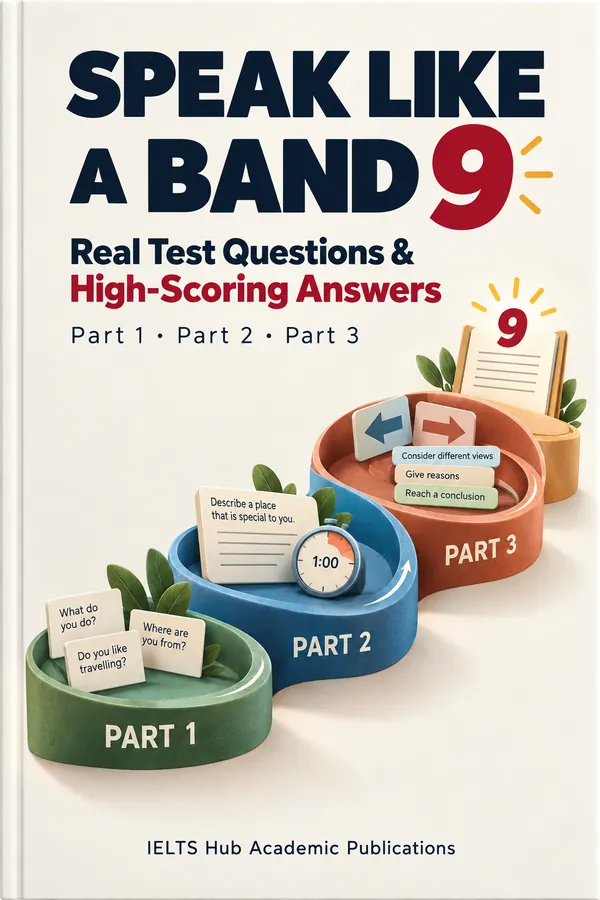
Speaking
Speak Like a Band 9
Real Test Questions & High-Scoring Answers
₹299$9.99CAD 13.99AUD 14.99£7.99NZD 16.99€8.99AED 39SGD 12.99
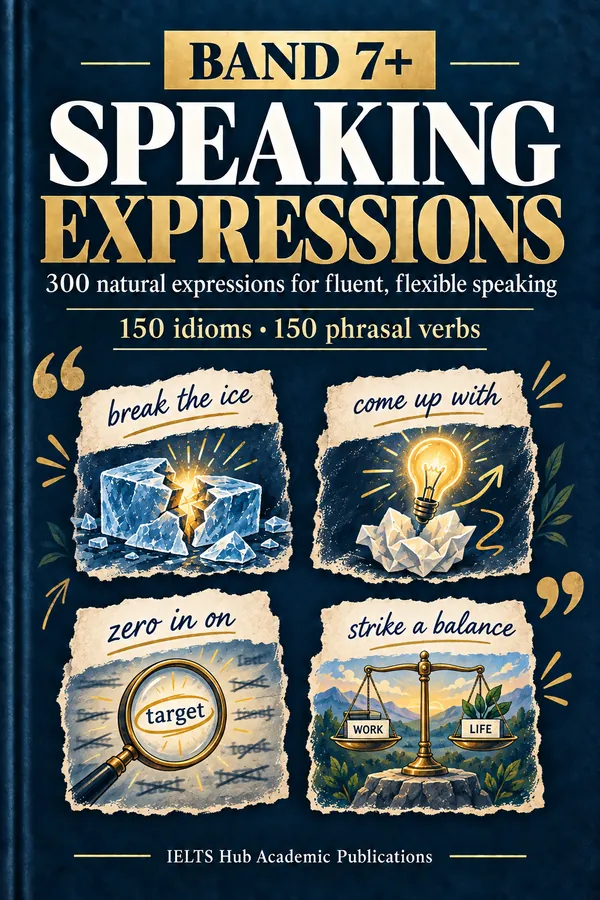
Speaking
Band 7+ Speaking Expressions
300 natural expressions for fluent, flexible speaking
₹199$6.99CAD 8.99AUD 9.99£4.99NZD 10.99€5.99AED 24SGD 8.99