Speaking test #837
Part 1 · Interview
4 to 5 minutes. The examiner asks about you and familiar topics.
Can you tell me your full name?
Where are you from?
Do you work or are you a student?
Do people in my country like to drink coffee or tea?
In my country, it's quite common for people to enjoy both coffee and tea. While some individuals may have a preference for one over the other, many enjoy drinking both depending on the occasion or their mood. It's not uncommon to see people sipping on a cup of coffee in the morning, and then switching to tea in the afternoon or evening.
Which do you prefer drinking, tea or coffee?
Personally, I have a slight preference for tea over coffee. I find that tea has a more calming and soothing effect on me, and I enjoy the wide variety of flavors and aromas that it offers. I also appreciate the fact that tea is generally considered to be a healthier option, as it contains antioxidants and other beneficial compounds.
Which do you prepare for your guests at home, tea or coffee?
When I have guests over at my home, I like to offer both tea and coffee as options. I typically have a selection of different teas available, such as green tea, black tea, and herbal blends, as well as a variety of coffee beans to choose from. I find that this allows my guests to select their drink of choice, and it also allows for some interesting conversations about tea and coffee culture.
When was the last time you drank tea or coffee?
The last time I drank tea or coffee would have been earlier today. I usually start my mornings with a cup of coffee to help wake me up and get me going, and then I'll switch to tea later in the day. In fact, I'm currently sipping on a cup of green tea as I answer these questions. It's a nice way to unwind and relax after a long day.
Who was your favorite teacher when you were young?
My favorite teacher when I was young was my primary school English teacher, Mrs. Smith. She was incredibly kind and patient, and always made an effort to connect with each of her students on a personal level. She was also an excellent communicator and was able to make learning fun and interactive. I will always be grateful for her guidance and support, as she played a significant role in my development as a writer and a reader. Q
Would you want to be a teacher in the future?
I would definitely consider becoming a teacher in the future. I have always been drawn to the idea of being able to inspire and guide young minds, and I believe that teaching is a noble and rewarding profession. Additionally, I am passionate about education and would enjoy the opportunity to work with students on a daily basis. Q
Have you ever had bad teachers before?
Yes, I have had bad teachers before. Unfortunately, I have had a few teachers who were disinterested, unorganized, and unapproachable. They were not able to create a positive learning environment, and as a result, I found it difficult to engage with the material and to stay motivated. However, I believe that these experiences have also taught me the importance of finding a teacher who is able to inspire and guide me.
You will have to talk about the topic for one to two minutes. You have one minute to think about what you are going to say. You can make some notes to help you if you wish.
Something you have shared with others
You should say:
- What you shared
- Whom you shared it with
- How you shared it
- Why you chose to share it
What you shared
I would like to talk about a traditional Indian recipe that I recently shared with my friends. It was a recipe for "Paneer Tikka," a popular Indian dish made with marinated chunks of paneer (Indian cottage cheese) cooked in a tandoor (clay oven).
Whom you shared it with
I decided to share this recipe with my group of international friends who were curious about Indian cuisine. I thought it would be a great way for them to experience a taste of my culture and also bond over cooking together.
How you shared it
To share the recipe, I invited my friends over to my place for a cooking session. We gathered all the necessary ingredients and I demonstrated the steps involved in preparing the dish. We had a fun time marinating the paneer, skewering them, and grilling them to perfection.
Why you chose to share it
I chose to share this recipe because I believe that food has a unique ability to bring people together and create memorable experiences. By sharing a part of my culture through this recipe, I was able to foster a sense of connection and understanding among my friends, allowing them to appreciate the flavors and traditions of India.
- Words
- 188
- Sentences
- 9
- Words per sentence
- 20.9
- Speaking time
- about 1.4 min
Counted at 130 words a minute. The exam gives you one to two minutes.
Part 3 · Discussion
4 to 5 minutes. The examiner asks broader questions linked to the cue card topic.
How do people usually share their things or experiences with others in different cultures?
That's a fascinating question! In many cultures, sharing possessions or experiences is deeply rooted in social traditions. For instance, in collectivist societies, people often engage in communal living, where resources like food and shelter are shared among families or communities. This fosters a strong sense of belonging and unity. Conversely, in more individualistic cultures, sharing might take the form of social gatherings or events where experiences, like travel stories or culinary delights, are exchanged, highlighting personal achievements while still connecting with others. In both cases, sharing not only strengthens bonds but also enriches the community by allowing individuals to learn from one another's diverse experiences. Ultimately, whether through possessions or stories, the act of sharing serves as a bridge that connects people across cultural divides.
Why might some people be reluctant to share their things or experiences?
There are several reasons why individuals might feel hesitant to share their personal belongings or experiences. For one, many people have a strong sense of privacy and value their personal space, which makes them reluctant to open up. Additionally, there’s often a fear of vulnerability; sharing something deeply personal can feel like exposing oneself to potential judgment or misunderstanding. Moreover, past experiences may play a role; if someone has been hurt or taken advantage of in the past, they might be understandably cautious about sharing again. Ultimately, it’s a complex interplay of trust, past experiences, and an innate desire to protect one’s emotional well-being.
How important is sharing in building relationships with friends and family?
Sharing plays a pivotal role in fostering relationships among friends and family. When we share our thoughts, feelings, and experiences, it creates a sense of intimacy and trust that strengthens our bonds. For example, when friends open up about their struggles or joys, it not only deepens their connection but also promotes a culture of empathy and understanding. Moreover, sharing experiences, whether it's a meal or a memorable event, can lead to cherished memories that further solidify these relationships. Overall, I believe that the act of sharing is fundamental in nurturing meaningful connections and ensuring that relationships flourish over time.
Why do some people seem to share their thoughts and feelings more easily than others?
That's a fascinating question! I believe that a lot of it comes down to personal experiences and upbringing. For some individuals, growing up in an environment where open communication was encouraged can instill a sense of comfort in sharing their thoughts and feelings. On the other hand, those raised in more repressive settings might find it challenging to express themselves, fearing judgment or misunderstanding. Moreover, personality traits play a significant role; extroverted people often find it easier to articulate their emotions, while introverts may naturally keep things bottled up. Ultimately, it’s a complex interplay of environment, personality, and sometimes even cultural factors that dictates how freely people communicate their inner thoughts.
How could sharing change in the future with more digital communication?
The evolution of sharing in the digital age is a fascinating topic! As technology continues to advance, I believe we will see a significant shift towards more instantaneous and seamless forms of sharing. For instance, platforms that utilize augmented reality might enable individuals to share experiences in real-time, allowing friends and family to feel as though they are together, even if they are miles apart. Additionally, the rise of social media influencers has changed the landscape of sharing, as people are more inclined to share content that aligns with their personal brands or values. Overall, the act of sharing will likely become even more intertwined with our daily lives, fostering deeper connections while also raising questions about privacy and authenticity.
What steps can be taken to motivate more people to share their stories with others?
To encourage more people to share their experiences, we could start by creating platforms that foster open communication. For instance, community events or workshops where individuals can gather and share stories in a supportive environment could be incredibly effective. Additionally, leveraging social media can play a significant role; by promoting hashtags or campaigns centered around sharing personal experiences, we can tap into a wider audience. Moreover, offering incentives, such as recognition or even small rewards for those who share their stories, could motivate more individuals to participate. Ultimately, it's about creating a culture where sharing is celebrated and valued, making it easier for people to connect over their unique journeys.
Go further with the books
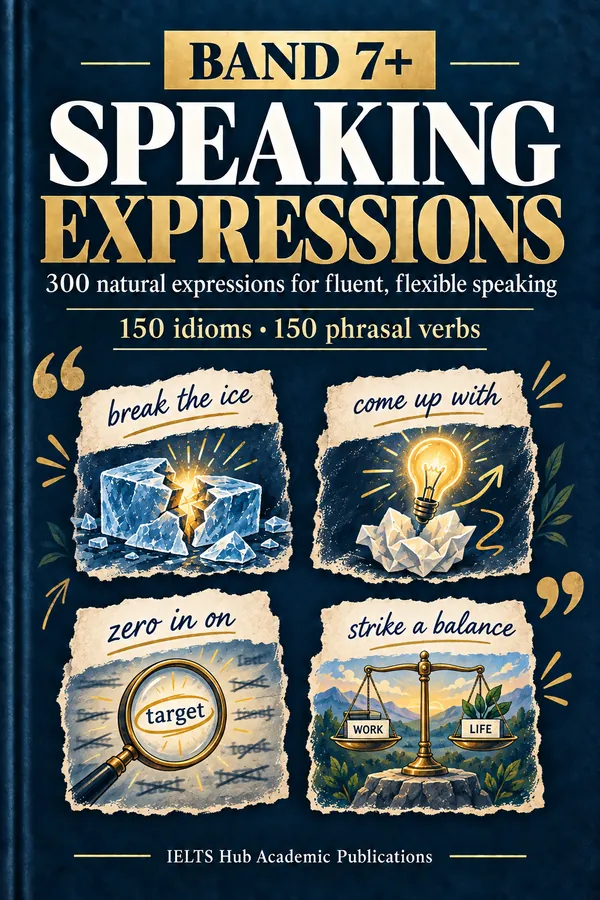
Speaking
Band 7+ Speaking Expressions
300 natural expressions for fluent, flexible speaking
₹199$6.99CAD 8.99AUD 9.99£4.99NZD 10.99€5.99AED 24SGD 8.99
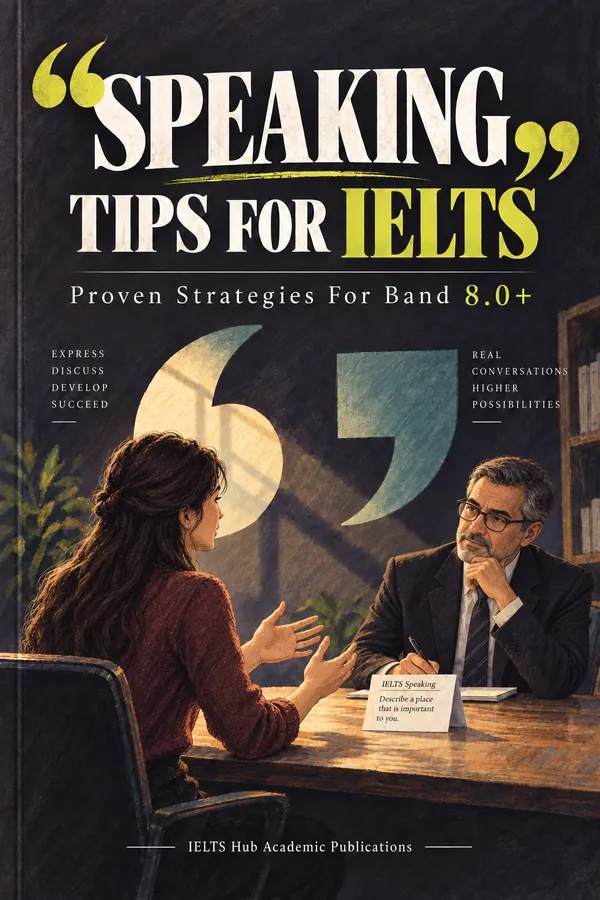
Speaking
Speaking Tips for IELTS
Proven Strategies for Band 8.0+
₹299$9.99CAD 13.99AUD 14.99£7.99NZD 16.99€8.99AED 39SGD 12.99
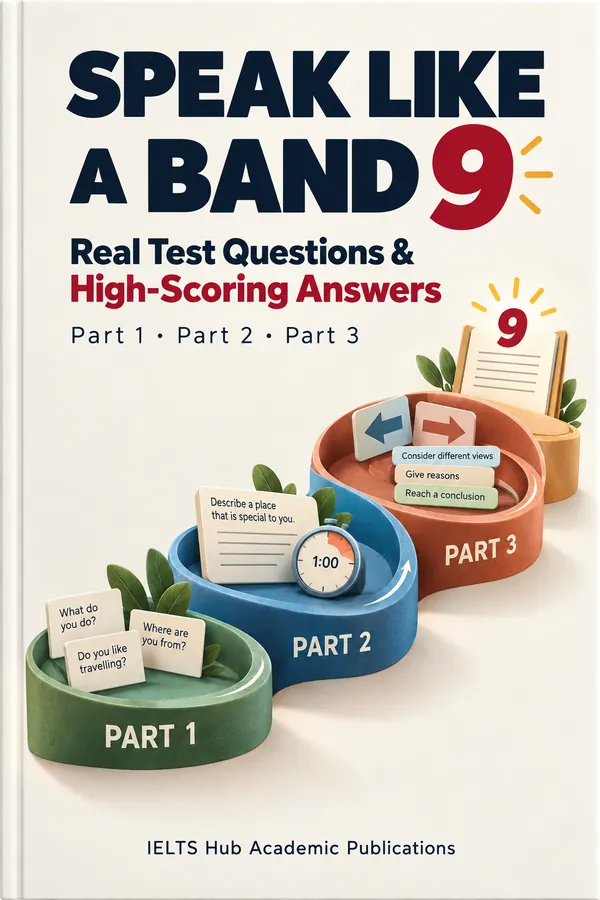
Speaking
Speak Like a Band 9
Real Test Questions & High-Scoring Answers
₹299$9.99CAD 13.99AUD 14.99£7.99NZD 16.99€8.99AED 39SGD 12.99