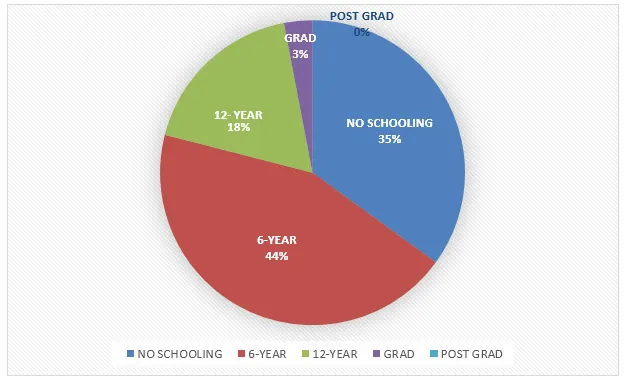
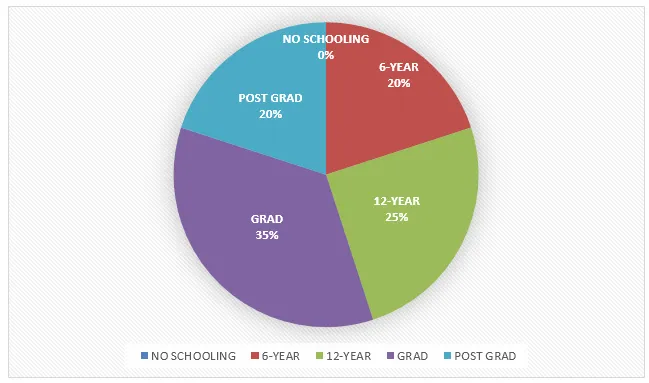
The pie charts illustrate the changes in the highest level of education achieved by women in Sri Lanka between 1965 and 1995.
Overall, it is clear that the proportion of women who had no formal education decreased significantly over the 30-year period, while there was a marked increase in the percentage of women who had completed a degree. In contrast, the proportion of women who had only completed primary or secondary education remained relatively stable.
In 1965, over half of the women (55%) had not received any formal education, and only a small minority (5%) had completed a degree. The majority of the remaining women had either completed primary education (20%) or secondary education (20%). By 1995, the percentage of women with no formal education had dropped dramatically to just 10%, while the proportion of women who had completed a degree had surged to 40%.
Meanwhile, the percentages of women who had completed primary and secondary education had changed little, standing at 25% and 25% respectively in 1995. This indicates that while the overall level of education among women in Sri Lanka had improved significantly, there was still a substantial proportion of women who had not progressed beyond primary or secondary education.